How a Bangladeshi Garment Maker Beats West Asia Energy Crunch With Solar Power
4A Yarn Dyeing supplies Walmart, Gap and Next from a Savar factory that runs on 40% self-generated solar power, while a survey of 134 knitwear factories shows 55% face order cancellations from gas shortages.
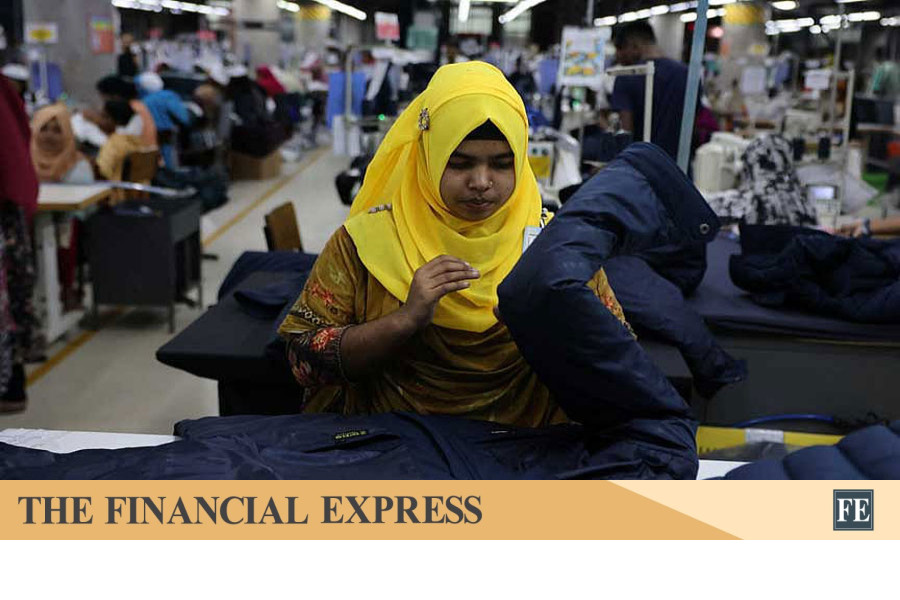
Savar, Dhaka, September 22, 2026 — While a gas and power crisis has disrupted production at most Bangladeshi garment makers, at 4A Yarn Dyeing — a supplier to Walmart, Gap and Next — workers stitch hoodies and attach brand logos uninterrupted, at least for now. The reason, the company says, is that since 2019 it has generated its own power, including through solar panels, making it an exception in Bangladesh's garment industry — the world's second-biggest apparel exporter after China.
☀ The West Asia crisis has worsened energy shortages in Bangladesh, where much of the electricity is generated using natural gas, furnace oil and diesel. A recent survey of 134 knitwear factories found that 55 per cent had seen buyers cancel or cut orders because of gas and power shortages since late August, and 78 per cent had partially halted production. The factories also reported shipment delays and discounted orders to buyers. 4A, by contrast, has so far avoided that fate.
🏭 Inside 4A Yarn Dyeing's Energy Strategy
The 4A factory on the outskirts of Dhaka employs nearly 7,500 workers and meets around 40 per cent of its electricity needs through solar, with the rest supplied mainly through its own gas and diesel generation.
💬 “We never stayed at a single-source energy dependency. We had backups for everything,” said Abdullah Hil Nakib, co-owner and chairman of 4A Yarn Dyeing, in an interview with Reuters. “We need some sort of certainty. But the cost of doing business has increased. First there was a shortage of oil, then a shortage of gas.”
Costlier diesel has pushed 4A's production costs up by 2 to 3 per cent, adding up to Tk 5 million ($40,950) to its monthly fuel bill, Nakib said. The company is now planning to install an industrial-scale battery system that would allow operations to continue for several hours if power sources fail — an investment that few smaller garment factories can afford.
💬 “We've been able to absorb the extra costs, but not every factory can afford to do that,” Nakib said, pointing to the factory roofs that are nearly covered in solar panels.
⚠ Fuel Price Hike Piles More Pressure on Industry
The pressure on factories intensified on Monday when Bangladesh raised fuel prices by up to 17.4 per cent — diesel up Tk 20 per litre to Tk 135, octane up to Tk 165 — a move the government said was necessary because of soaring global prices and higher shipping costs due to the West Asia conflict triggered by US-Israeli attacks on Iran earlier this year.
Soaring gas import costs are slowing the country's industrial growth, causing electricity outages and hurting spending on development projects due to higher gas subsidies, Bangladesh's power minister said last week.
📊 Bangladesh's ready-made garment (RMG) sector accounts for more than 80 per cent of export earnings, employs about 4 million workers and contributes around 10 per cent to gross domestic product. The sector is also the country's single largest source of formal employment for women.
👥 Industry Voices: Thin Margins and Buyer Hesitation
Some manufacturers have incurred additional costs by shipping goods by air or offering discounts to meet delivery deadlines after energy-related disruptions. The result is visible in the order books.
💬 Shahidullah Azim, a garment exporter, said: “Our margins are already very thin, and the fuel price hike will squeeze them further. It is becoming increasingly difficult for us to absorb higher production and transportation costs while remaining competitive.”
Azim said a Canadian buyer that had been expected to order 25,000 pieces ultimately placed an order for only 8,000, which he attributed to declining buyer confidence amid Bangladesh's economic and energy challenges.
💬 Mohiuddin Rubel, additional managing director of Denim Expert Ltd, which supplies brands including H&M, noted that while companies may be able to absorb higher fuel costs, gas shortages and power cuts are more worrying, given that those problems are not as intense in competitors like Vietnam and India.
💬 “Whether we hold our position against other sourcing countries or lose ground to them depends on how well we manage it,” Rubel said.
📈 Knitwear Survey Snapshot
The knitwear factory survey — conducted amid the worst of the late-August gas shortage — provides the most quantitative picture yet of how deep the disruption has been:
- 📊 55 per cent of 134 knitwear factories surveyed reported buyer cancellations or order cuts due to gas and power shortages since late August.
- 📊 78 per cent had partially halted production.
- 📊 Factories reported shipment delays and discounted orders to buyers as they scrambled to meet deadlines.
💼 Why 4A's Model Is Hard to Replicate
💡 4A's energy strategy — rooftop solar, own gas generators, diesel backups and a planned industrial battery system — represents a level of capital investment that is beyond the reach of most small and mid-sized Bangladeshi garment factories. Bangladesh's RMG sector is dominated by factories with annual revenues under $20 million, many of which run on a single gas connection with limited redundancy.
Industry analysts say the energy crisis will accelerate a long-discussed consolidation in the sector, with larger, better-capitalised factories absorbing orders from smaller players who cannot guarantee production continuity. That, in turn, could reshape the ownership structure of the world's second-largest apparel exporter.
🌏 Regional Competitive Context
💼 The risk for Bangladesh is that buyers diversify sourcing to competitors where energy is more reliable. Vietnam, the second-largest apparel exporter in Asia after Bangladesh, relies primarily on hydroelectric and coal-fired power and has not faced the same gas-shortage disruption. India, which has its own textile manufacturing base in Tamil Nadu and Gujarat, has also maintained a more stable power supply through domestic coal reserves.
For 4A Yarn Dyeing, the multi-source energy model is now a competitive moat. For the wider Bangladeshi RMG sector, the question is whether enough factories can replicate that model — or whether the country's export competitiveness will erode before they do.
The Bangladesh Garment Manufacturers and Exporters Association (BGMEA) and the Bangladesh Knitwear Manufacturers and Exporters Association (BKMEA) have called for an urgent government plan to ensure priority gas supply to export-oriented factories, warning that the current shortage threatens the country's position as a global sourcing hub.
Bangladesh's apparel export target for FY27 is $48 billion. With knitwear factories already reporting order losses and discounts to manage delivery deadlines, the realistic attainment of that target now hinges substantially on how quickly the energy situation stabilises — and how many more factories can follow 4A's path to self-reliant power.
This news was originally published by The Financial Express. For the full original report, please visit: https://thefinancialexpress.com.bd/economy/how-a-bangladeshi-garment-maker-fights-west-asia-energy-crunch
📬 Get Bangladesh Trade News in your inbox
Weekly digest of export industry news, policy updates, and market analysis.
📰 Related Stories


✍️ More from System Administrator