H&M Operating Profit Improves But Sales Still Sluggish: Implications For Bangladesh RMG Suppliers
Swedish fashion retailer H&M reports Q3 operating profit of 6.04 billion Swedish crowns ($608.63m), up from 4.91 billion a year earlier, as CEO Daniel Erver's cost-control push bears fruit. But sales growth remains at 1% — a signal for Bangladesh's RMG sector.
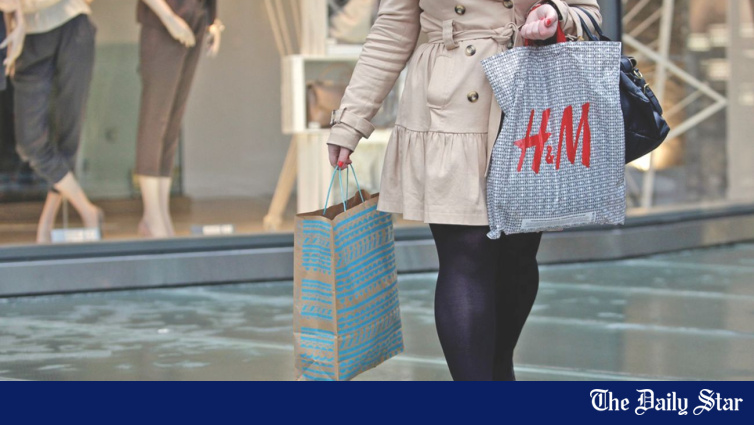
Stockholm, September 25, 2026 — Swedish fashion retailer H&M on Thursday reported a stronger-than-expected third-quarter operating profit as CEO Daniel Erver said his push to control costs and make sourcing more efficient was bearing fruit. The results carry significant implications for Bangladesh's RMG sector — one of H&M's largest sourcing destinations.
📊 Since Erver became CEO in January 2024, H&M's profitability has improved — but investors are still waiting for signs he can boost sales growth in the face of fierce competition from Shein and Zara owner Inditex.
💰 Q3 Financial Results
- 💰 Q3 operating profit: 6.04 billion Swedish crowns ($608.63 million)
- 💰 Previous year Q3: 4.91 billion crowns
- 💰 Analyst forecast (LSEG poll): 5.14 billion crowns — H&M beat the forecast by approximately 17 per cent.
- 💰 Gross profit margin: widened to 54.0 per cent (from 52.9 per cent a year earlier)
- 💰 Analyst margin forecast: 53.4 per cent — H&M beat by 0.6 percentage points.
- 💰 Margin improvement driver: partly thanks to tariff refunds.
📈 Sales Growth Remains Sluggish
Sales were still sluggish, though. H&M said sales in September would rise by 1 per cent in local currencies — the same growth rate as the June-August quarter. H&M shares were down 2 per cent at the open following the announcement.
💬 “They are still struggling to lift sales growth,” said Lucas Mattsson, analyst at Inderes, adding that profit was “relatively in line” with the markets' expectations adjusted for the tariff refund effects.
👕 Sourcing Strategy Shift
H&M is increasing the share of clothes it buys in-season as it tries to react faster to fashion trends and increasingly unpredictable weather. This shift has significant implications for Bangladesh's RMG suppliers — who have traditionally been positioned for longer lead-time, higher-volume orders.
The in-season buying model — pioneered by fast-fashion competitors like Zara — requires:
- 👕 Shorter production lead times — typically 2-4 weeks from order to delivery.
- 👕 Greater flexibility — in order quantities and styles.
- 👕 Closer buyer-supplier collaboration — with real-time production updates.
- 👕 Stronger design and product development capability — at the supplier level.
For Bangladesh's RMG sector — which has historically competed on cost and volume rather than speed and flexibility — this shift represents both a challenge and an opportunity.
📦 Inventory Build-Up
Inventories were up 9 per cent in currency-adjusted terms in the quarter, which H&M said was due to disruption in global supply chains. This inventory build-up reflects the broader challenges facing global apparel supply chains in 2026 — including:
- 📦 West Asia conflict — disrupting shipping routes through the Red Sea and Suez Canal.
- 📦 Port congestion — at major transhipment hubs.
- 📦 Container availability — with intermittent shortages.
- 📦 Freight rate volatility — making just-in-time inventory management difficult.
For Bangladesh's RMG sector, the inventory build-up at H&M could mean:
- ⚠ Reduced order volumes in the coming quarters — as H&M works through existing inventory.
- ⚠ Delayed or cancelled orders — as buyers adjust to higher inventory levels.
- ⚠ Pressure on prices — as buyers seek to recover inventory carrying costs.
💼 Logistics Investment
The retailer is also investing in logistics as online sales grow, and said it would gradually start using new warehouses in Europe this year and next to improve its capacity and product availability.
This logistics investment could shift some sourcing patterns — with H&M potentially favouring suppliers closer to European markets for certain product categories. However, Bangladesh's cost advantage in basic apparel categories is likely to remain intact.
💰 Persson Family Stake Increase
Meanwhile, the billionaire heirs of H&M founder Erling Persson have been quietly increasing their stake, fuelling speculation they could eventually take the group private. A potential privatisation could:
- 🏢 Reduce public reporting requirements — making it harder for suppliers to track H&M's financial performance.
- 🏢 Enable longer-term strategic decisions — without quarterly earnings pressure.
- 🏢 Potentially change sourcing strategy — if the family prioritises different metrics than public market investors.
🌏 Why H&M Matters For Bangladesh's RMG Sector
H&M is one of the largest buyers of Bangladeshi RMG products. Key facts about the H&M-Bangladesh relationship:
- 👕 H&M sourcing from Bangladesh: Bangladesh is one of H&M's top sourcing destinations.
- 👕 H&M supplier factories in Bangladesh: several hundred factories produce for H&M.
- 👕 Product categories: including knitwear, woven garments, denim, and accessories.
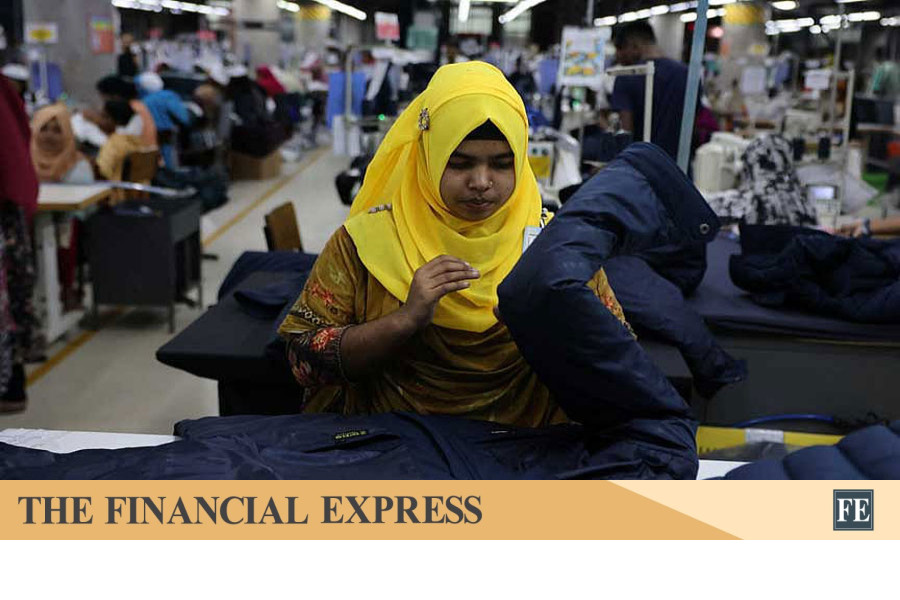
- 👕 Worker employment: hundreds of thousands of Bangladeshi workers are employed in H&M supply chain factories.
- 👕 Sustainability partnership: H&M has been a long-standing partner in Bangladesh's green factory movement — with many LEED-certified factories in its supply chain.
💼 Implications For Bangladesh's RMG Export Target
Bangladesh has set an FY27 RMG export target of $48 billion. The H&M results carry several implications for this target:
- ✅ Profitability improvement — H&M's improved margins could allow it to absorb some cost increases from suppliers, supporting continued orders.
- ⚠ Sluggish sales growth — 1 per cent growth suggests limited new order expansion.
- ⚠ Inventory build-up — could lead to reduced orders in coming quarters.
- ⚠ Sourcing strategy shift — in-season buying requires supplier capability upgrades.
- 📋 Logistics investment — could partially shift sourcing patterns.
📊 H&M vs Competitors: The Fast Fashion Landscape
H&M's results come against the backdrop of intense competition in the global fast-fashion market:
- 🇨🇳 Shein — the Chinese ultra-fast-fashion platform has disrupted the market with its real-time data-driven model, offering thousands of new styles daily at very low prices.
- 🇪🇸 Zara (Inditex) — the original fast-fashion pioneer, with a vertically integrated model and strong design capability.
- 🇩🇪 C&A — European value retailer competing in similar segments.
- 🇺🇸 GAP, American Eagle — American retailers facing their own competitive pressures.
- 🇺🇸 Walmart, Target — mass-market retailers with growing private-label apparel.
Bangladesh's RMG sector supplies to all of these retailers — meaning the competitive dynamics among them directly affect Bangladeshi factory orders and pricing.
💬 Special Compensation Programme For Asian Suppliers
The original article noted that H&M will introduce a special compensation programme for its Asian suppliers to improve factory conditions. This is significant for Bangladesh — where H&M has been a leading buyer in sustainability initiatives. The compensation programme could include:
- 💰 Wage supplements — to support living wage initiatives.
- 💰 Factory safety investments — building on the Accord on Fire and Building Safety legacy.
- 💰 Environmental compliance support — including wastewater treatment and chemical management.
- 💰 Skills training programmes — for worker capacity building.
For Bangladeshi factories in H&M's supply chain, this programme could provide additional resources to meet the rising compliance standards demanded by international buyers — while also addressing the broader sustainability agenda that is becoming increasingly important in apparel sourcing decisions.
📜 Looking Ahead
For Bangladesh's RMG sector, H&M's Q3 results present a mixed picture. On one hand, improved profitability and a tariff refund-driven margin expansion suggest H&M has the financial capacity to maintain its sourcing from Bangladesh. On the other hand, sluggish sales growth and inventory build-up could lead to order moderation in coming quarters.
The shift towards in-season buying and the special compensation programme for Asian suppliers signal that H&M's sourcing model is evolving — with implications for which Bangladeshi factories will benefit and which will face competitive pressure.
For Bangladesh's RMG manufacturers, the message is clear: the factories that can deliver shorter lead times, greater flexibility, and stronger compliance will be the winners in H&M's evolving sourcing model — while those that remain dependent on traditional long-lead-time, high-volume orders may face growing competitive pressure.
This news was originally published by The Daily Star. For the full original report, please visit: https://www.thedailystar.net/business/global-economy/news/hm-operating-profit-improves-sales-still-sluggish-4282276
📬 Get Bangladesh Trade News in your inbox
Weekly digest of export industry news, policy updates, and market analysis.
📰 Related Stories
✍️ More from System Administrator