Bangladesh Energy Crisis: Some Relief in 2027, More in 2028, Crisis-Free by 2030
Government benches blamed past misguided policies for the power and energy crisis. State Minister Aninda Islam outlined 3-phase plan: short-term relief by 2027, more relief by 2028, crisis-free by 2030. Includes 150 gas wells, 2 new FSRUs, Rampal restart.
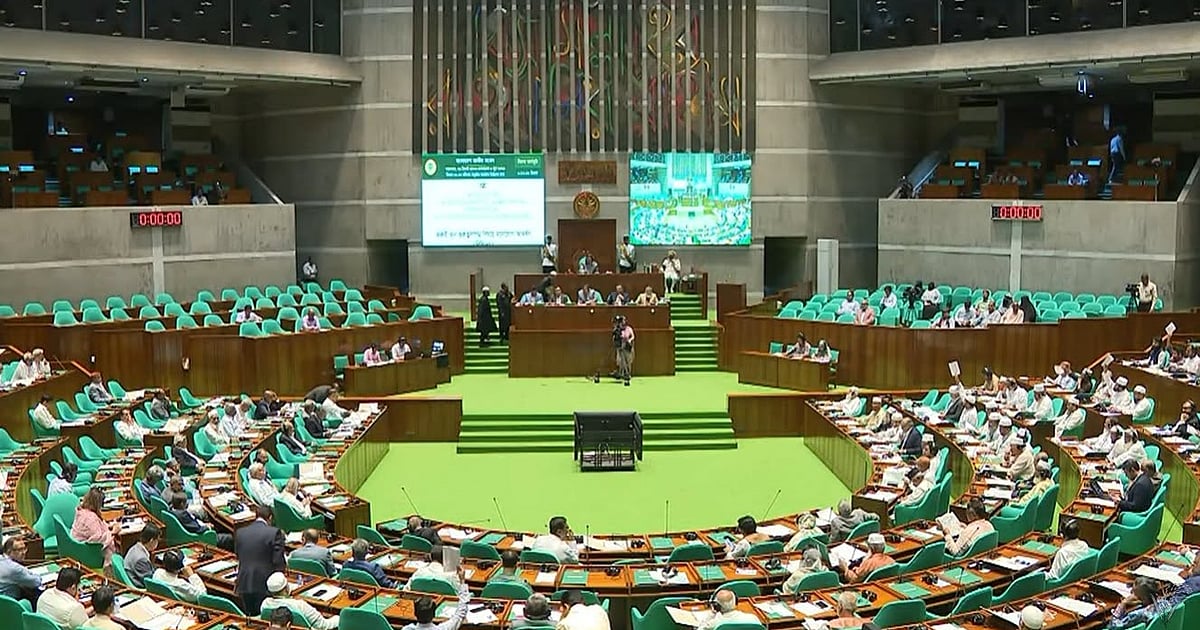
⚠ Dhaka, Bangladesh — The ruling party members of parliament (MPs) have blamed past misguided policies, corruption and mismanagement for the power and energy crisis. Outlining the government’s plans to overcome the crisis in Parliament on Monday, they said the government’s goal is to provide some relief in 2027, more relief in 2028 and take it to a state free of energy crisis by 2030.
📊 The opposition also agreed to this statement, saying that the current crisis is a continuation of problems from the past. However, they also identified incumbent government’s corruption, indecision and a lack of accountability as contributing factors that intensified the already existing problems.
🏛 Parliament Discussion Notice
📊 The discussion on the power and energy crisis took place in Parliament on Monday. The notice for a brief discussion was submitted by Opposition Leader and Jamaat-e-Islami Ameer Shafiqur Rahman on ‘taking effective measures to prevent disruptions to power generation, unemployment from factory closures, and severe disruption to the national economy caused by the acute energy and gas crisis’.
👥 Participants in the discussion:
- 🏛 Home Minister Salahuddin Ahmed — on behalf of government
- 🏛 State Minister for Power and Energy Aninda Islam — on behalf of government
- 🏛 State Minister for Planning Zonayed Saki — on behalf of government
- 🏛 Opposition Leader Shafiqur Rahman — on behalf of opposition
- 🏛 MP Nazibur Rahman — on behalf of opposition
💬 Home Minister: Past Mismanagement Inherited
💬 Taking part in the discussion, Home Minister Salahuddin Ahmed said: “This suffering was not created by us. This suffering was created globally; this suffering was created by the previous system. The past 17 years of mismanagement have left this suffering behind. They left all these problems for the nation, building power plants without making any arrangements for energy. They did not know where the gas would come from, yet the pipelines were built.”
💬 On the issue of capacity charge for power plants, the home minister said: “This was left behind by fascist Sheikh Hasina; we inherited it. But now, given the need for electricity, the honourable prime minister has probably approved three rental power companies. On what basis? No capacity charge. No power, no money! This is what our patriotism is.”
💬 Referring to the power agreement with Adani, Salahuddin Ahmed said no agreement with any country can be cancelled overnight. Arrangements had been made to import electricity from across the border at a high price.
💬 State Minister Aninda Islam: 3-Phase Plan
💬 Taking part in the discussion, State Minister for Power Aninda Islam said the current crisis had been caused by misguided policies, corruption and mismanagement in the past. Since taking office, the government has been taking practical steps to deal with the situation.
💬 Outlining short-, medium- and long-term plans to tackle the energy and power crisis, the state minister said: “Our plan is that by this time next year, we should be able to feel some relief compared with the current situation. By 2028, we should be able to feel even more relief, and by 2030, we want to reach a point where we no longer face any crisis. For that we have adopted short-, medium- and long-term plans. The name of the plan is ‘We have a plan’.”
📊 Key Elements of the Plan
📊 Key initiatives announced:
- 🛢 150 new gas wells — drilling under way at 30; target to add 2,320 mmcfd to national grid by 2031
- 🚢 2 new FSRUs — contracts to be signed this year; another FSRU in south-western region
- 🚢 2,800 mmcfd from FSRUs by 2030
- 🛢 LNG terminal at Matarbari — process under way
- 🔌 4,000 MW from furnace-oil-fired power plants
- 🛢 Rampal power plant — 660MW unit to restart
- ☀ Renewable energy prioritised
- 🔍 Deep sea gas exploration — bidding round launched 24 May
- 🚂 Railway infrastructure for coal transport from Barapukuria
💬 State Minister Zonayed Saki: Criticises Past Policies
💬 State Minister for Planning Zonayed Saki criticised the previous government, saying its energy policy had been formulated to benefit a handful of favoured individuals. As a result, he said, no arrangements were made for gas exploration and extraction in the country; instead, electricity management was based on import and energy policies that created dependence on imports.
💬 Special individuals were given benefits in the import of LNG. The current government has taken initiatives to explore for gas while safeguarding the national interest, he added.
💬 Opposition Leader: Willing to Cooperate
💬 Taking part in the discussion and highlighting the nature of the crisis, Opposition Leader Shafiqur Rahman offered assistance from the opposition to help find a solution. He said: “The government has already taken many measures. From our perspective, not all of them have been in the national interest. Some have even been against the national interest.”
💬 The opposition leader said that if the government sought cooperation, they could bring their team of technical experts in to work with the government. “We do not want credit; we want a solution to the problem,” he said.
📊 Strategic Context: Bangladesh Energy Crisis
📊 For Bangladesh’s energy sector, the Parliament discussion underscores the severity of the current crisis:
- 🛢 Gas supply deficit — 1,667 mmcfd short of 4,000 mmcfd demand
- 🛢 LNG spot market — $28+/MMBtu vs ~$14 contracted
- 🛢 Qatar LNG disruption — 60% of imports affected by Strait of Hormuz
- 🔌 Industrial gas rationing — ceramics, textiles, steel affected
- 💰 Capacity charge burden — inherited from past rental power contracts
- 📊 Adani power agreement — high-cost electricity imports
📈 Implications for Industries
📊 For Bangladesh’s industrial sector, the 3-phase plan offers some hope but also raises concerns:
- ✅ Short-term (2027) — some relief expected from new gas wells and FSRUs
- ✅ Medium-term (2028) — more relief from additional wells and LNG terminal
- ✅ Long-term (2030) — crisis-free state with renewable energy and domestic gas
- ⚠ Implementation risk — 150 gas wells is an ambitious target
- ⚠ Foreign investment — depends on attracting oil and gas companies
- ⚠ Geopolitical risk — Middle East conflict could prolong LNG crisis
✅ For Bangladesh’s broader economic strategy, the Parliament discussion signals that the government acknowledges the severity of the energy crisis and has a plan to address it — though the timeline extends to 2030, meaning industries will need to continue coping with rationing and high costs for several more years. The success of the plan will depend on execution — particularly the ability to drill 150 new gas wells, secure foreign investment for exploration, and diversify LNG supply sources beyond Qatar.
🌏 For Bangladesh’s export community — particularly RMG, textiles, ceramics, and steel manufacturers — the energy crisis timeline means continued cost pressures and production disruptions for the foreseeable future. Companies that can invest in captive power generation, rooftop solar, and energy efficiency measures will be better positioned to weather the crisis until the government’s 2030 vision of a crisis-free energy sector materialises — if it does.
This news was originally published by Prothom Alo English. For the full original report, please visit: https://en.prothomalo.com/bangladesh/parliament/pz2csqbm7a
📬 Get Bangladesh Trade News in your inbox
Weekly digest of export industry news, policy updates, and market analysis.
📰 Related Stories