Bangladesh Bank Removes Two-Year Cap on Bank Administrators: Open-Ended Resolution Tenure

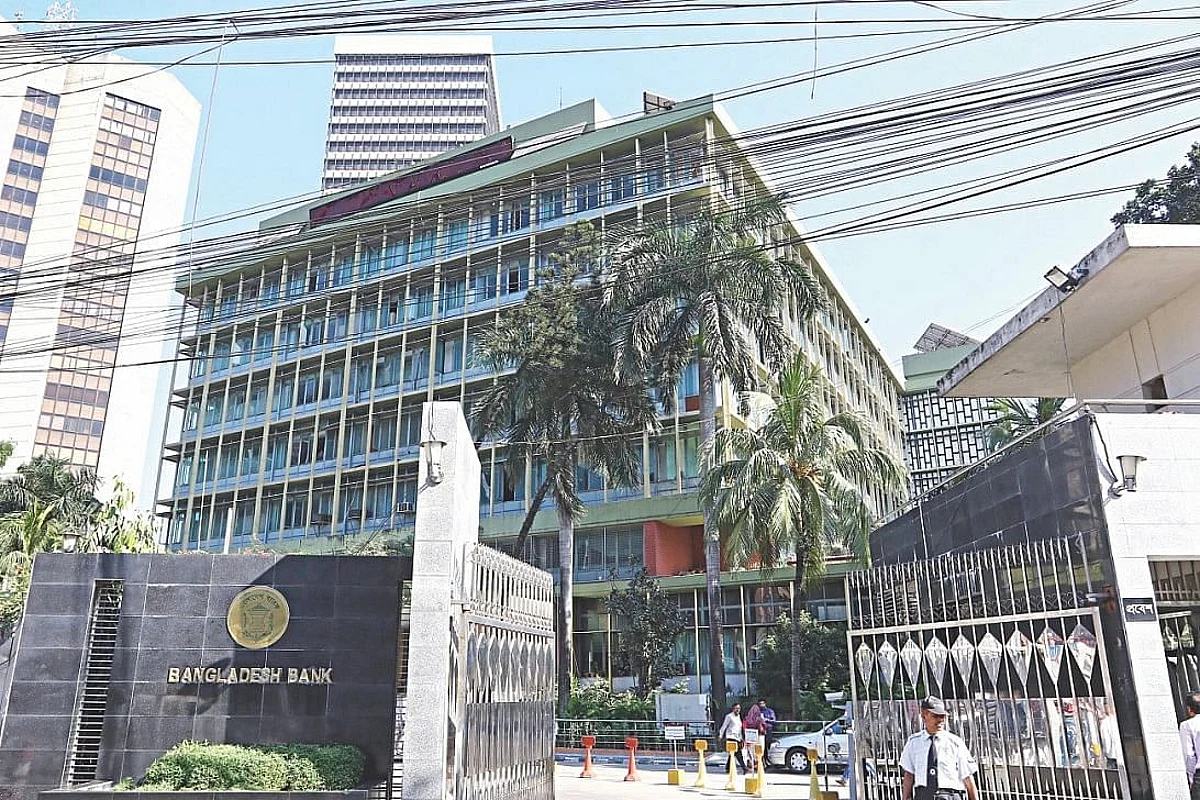
Dhaka, August 11, 2026 — Bangladesh Bank has formally removed the two-year cap on the tenure of temporary administrators appointed to run troubled banks and non-bank financial institutions, removing a constraint that central bank officials had privately described as “the single biggest obstacle to effective resolution.” The change, gazetted on August 10 as part of the “Regulations for Temporary Administration under the Bank Resolution Act, 2026 (Amendment)”, gives administrators open-ended tenure subject only to annual review by the central bank’s Board of Directors.
🏛️ What Changed and Why
When the original Regulations for Temporary Administration under the Bank Resolution Act were issued in June 2026, they contained a hard cap: temporary administrators appointed to a troubled bank could serve a maximum of two years, with a possible extension of six months in exceptional circumstances. The cap was modelled on international precedents (the EU BRRD recommends 18–24 months for early intervention) and was intended to prevent administrator appointments from becoming permanent management substitutions.
In practice, however, the cap created three problems that undermined resolution effectiveness:
- ⚠️ Rushed resolution: With only 24 months to assess, restructure and stabilise a troubled bank, administrators were tempted to pursue the fastest exit — which usually meant a fire-sale merger at unfavourable terms or an under-prepared liquidation. Several administrators had requested extensions but were denied because the “exceptional circumstances” threshold was set very high
- ⚠️ Loss of institutional knowledge: When an administrator’s term ended mid-resolution, the new administrator had to spend 4–6 months getting up to speed on the bank’s complex loan book, related-party transactions and governance failures. This cost the resolution process dearly in momentum and continuity
- ⚠️ Strategic gaming by incumbent boards: Some bank boards under administrator control deliberately slowed down information sharing in the first 18 months, knowing the administrator’s term would expire before any meaningful resolution could be implemented
The amended regulation removes the cap entirely and replaces it with an annual performance review by the Bangladesh Bank Board. An administrator can now serve until the resolution process is complete — whether that takes 18 months or 5 years. The BB Board can remove an administrator for cause at any time, but the default is now continuity.
📊 The Banks Affected
The change directly affects the 11 banks and 4 NBFIs currently under BB intervention:
- 🏢 Sammilito Islami Bank (5 merged Islamic banks: Islami Bank Bangladesh, Social Islami Bank, Union Bank, Al-Arafah Islami Bank, Shahjalal Islami Bank) — under administrator since November 2024
- 🏢 ICB Islami Bank — under administrator since January 2025
- 🏢 National Bank Limited — under administrator since March 2025
- 🏢 Padma Bank — under administrator since April 2025 (continuing from earlier restructuring)
- 🏢 Four NBFIs declared non-viable: Aviva Finance, Fareast Finance, FAS Finance, International Leasing — under administrator since August 9, 2026
- 🏢 Five additional banks under enhanced supervision but not yet under full administrator control — subject to Asset Quality Reviews by EY, KPMG and Deloitte from January 2027
For each of these institutions, the original two-year cap was approaching or had already been reached. The Sammilito Islami Bank administrator, appointed in November 2024, was due to hit the two-year mark in November 2026. The ICB Islami Bank administrator was due in January 2027. The change allows all of them to continue without disruption.
💬 BB Governor’s Statement
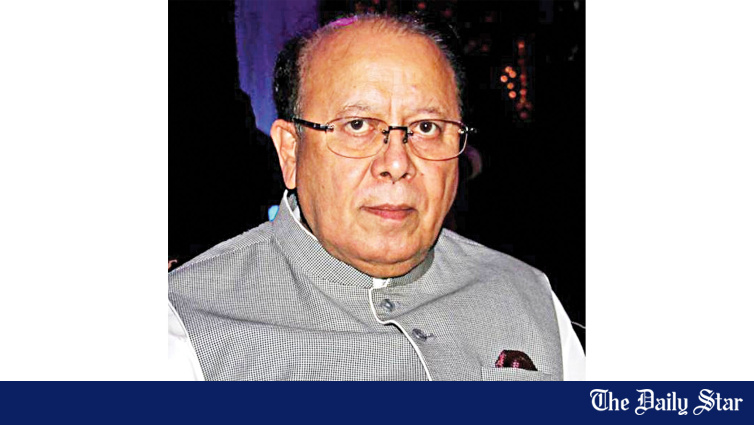
Bangladesh Bank Governor Md. Mostaqur Rahman, in a press briefing on August 10 evening, defended the change as essential to credible resolution: “The two-year cap was a well-intentioned safeguard, but it created perverse incentives. A resolution must take as long as the underlying problems require — not as long as an arbitrary clock permits. We have replaced the cap with annual performance review by the BB Board. If an administrator is delivering, they continue. If not, they are replaced. That is the right accountability mechanism.”
The Governor also addressed concerns about accountability: “The cap was a proxy for accountability — a blunt instrument that assumed any administrator serving beyond two years had become entrenched. The real accountability lies in the annual performance review, in the publication of resolution milestones, in parliamentary oversight, and in the ultimate outcome of the resolution itself. We are strengthening all four.”
🏛️ What the Annual Review Will Cover
The amended regulation specifies that the annual review by the BB Board will assess administrators on six performance dimensions:
- 📈 Asset recovery: Progress on recovering non-performing loans, related-party assets and fraudulent transfers (target: 15 per cent annual recovery of identified bad assets)
- 📈 Governance reform: Implementation of new board structure, internal controls, risk management framework and compliance function
- 📈 Capital restoration: Progress on recapitalisation, whether through new shareholder injection, strategic investor placement or merger
- 📈 Operational normalisation: Restoration of correspondent banking relationships, return to profitability, restoration of regulatory capital ratios
- 📈 Legal action: Prosecution of former directors and executives implicated in financial crimes (target: at least 3 criminal complaints filed per year)
- 📈 Resolution roadmap execution: Adherence to milestones in the bank-specific resolution plan approved by BB
An administrator receiving “unsatisfactory” on three or more dimensions for two consecutive years will be replaced. An administrator receiving “satisfactory” or above on all six dimensions will be eligible for an extension of one additional year, automatically renewable.
🌏 International Context
The removal of the two-year cap aligns Bangladesh with the practice in most advanced jurisdictions. The United States’ FDIC, the United Kingdom’s Bank of England Resolution Directorate, and Germany’s BaFin all permit administrator appointments to extend for the duration of the resolution, with performance review but no fixed cap. The EU BRRD recommends a 24-month initial period but explicitly allows extensions subject to national regulator discretion.
The IMF, in its July 2026 staff report on Bangladesh, had specifically recommended removal of the two-year cap, calling it “a structural impediment to effective resolution that could force premature decisions on complex bank restructurings.” The IMF had also recommended that the cap be replaced with a performance-based review mechanism — precisely what the amended regulation now provides.
🤝 Industry and Civil Society Response
The Association of Bankers, Bangladesh (ABB) welcomed the change. “The cap was always going to be a problem for complex resolutions like Sammilito Islami Bank, where you have five merged entities with five different loan books, five different IT systems and five different governance failures,” said the ABB chairman. “Two years is not enough to fix that. The annual review mechanism is a better safeguard than an arbitrary time cap.”
The Bangladesh Association of Banks (BAB), representing bank owners, was more cautious, noting that “the removal of the cap increases the power of the central bank over individual banks” and calling for “clear, transparent and published criteria for the annual review.” BAB has asked that the BB publish the review criteria and methodology in advance, and that administrators be required to publish quarterly progress reports.
The Consumers Association of Bangladesh (CAB) welcomed the change but cautioned about depositor protection: “The longer an administrator stays, the more important it is that depositor interests remain the top priority. We urge the central bank to publish, for each bank under administration, the current status of deposits, the timeline for return of deposits above the DIC limit, and the projected recovery rate for uninsured deposits.”
📋 The Broader Reform Architecture
The removal of the cap is part of a broader sequence of banking-sector reforms that Bangladesh Bank has implemented in 2026:
- 🎯 January 2026: 18-month NPL action plan announced, targeting reduction of system-wide NPL ratio from 36 per cent to 18 per cent by December 2027
- 🎯 March 2026: Asset Quality Review framework finalised; EY, KPMG and Deloitte engaged to audit 11 banks from January 2027
- 🎯 May 2026: Tk 60,000 crore private sector credit stimulus announced for September disbursement
- 🎯 July 2026: Bank Resolution Act 2025 (Original) fully operational
- 🎯 August 9, 2026: Four NBFIs declared non-viable; resolution process initiated
- 🎯 August 10, 2026: Cabinet approves Bank Resolution Amendment Act 2026, including statutory Bank Resolution Corporation, bridge bank, bail-in tool, resolution fund
- 🎯 August 10, 2026: Two-year cap on administrator tenure removed (this announcement)
Together, these reforms represent the most comprehensive banking-sector restructuring in Bangladesh’s history — one that will determine whether the country can restore depositor confidence, attract foreign investment and finance the post-LDC graduation growth trajectory.
🌏 The Strategic Logic
For Bangladesh Bank, the removal of the cap is not just an administrative adjustment — it is a strategic signal. The central bank is communicating to incumbent bank boards, to depositors, to international investors and to the IMF that it intends to see the resolution process through to completion, regardless of how long that takes. The message is: there will be no rushed mergers, no fire-sale liquidations, no political compromises that sacrifice depositor interests to keep incumbents in place. The resolution will take as long as the underlying problems require.
For the 11 banks and 4 NBFIs currently under BB intervention, this means that administrators now have the time to do the work properly — to investigate the loan books, to recover fraudulent transfers, to restructure viable borrowers, to attract strategic investors, to negotiate mergers from a position of strength rather than deadline-driven weakness. The first test of the new framework will come in November 2026, when the Sammilito Islami Bank administrator’s original two-year term would have expired. Under the new regulation, the administrator will continue, subject to the annual review.
✅ What Comes Next
The amended regulation took effect immediately upon gazette notification on August 10. Bangladesh Bank will publish the first annual review of administrator performance in December 2026, covering the calendar year 2026 for the 8 banks currently under administration. The Bank Resolution Corporation, once established under the Bank Resolution Amendment Act 2026 (expected October 2026), will take over the review function from the BB Board. The IMF’s next review under the Extended Credit Facility, in October 2026, is expected to formally acknowledge the change as a structural benchmark achievement.
For Bangladesh’s banking sector, the message is now unambiguous: the resolution framework is no longer a temporary intervention — it is a permanent, performance-managed process that will continue until the sector is clean. The two-year cap, like the broader set of reform constraints that preceded it, has been removed. What remains is the harder work of actually fixing the banks.
This news was originally published by The Daily Star. For the full original report, please visit: https://www.thedailystar.net/business/news/bangladesh-bank-removes-two-year-cap-bank-administrators-4244636
Related on BangladeshExport
📬 Get Bangladesh Trade News in your inbox
Weekly digest of export industry news, policy updates, and market analysis.
📰 Related Stories


✍️ More from System Administrator