Bangladesh Bank Asset Quality Review: 11 Troubled Banks Face International Audit from January 2027

Dhaka, August 7, 2026 — Eleven troubled Bangladeshi banks are set to undergo Asset Quality Reviews (AQRs) by international audit firms from January 2027, as the Bangladesh Bank expands its most ambitious banking sector diagnostic programme in history — with World Bank financing, 120-day completion deadlines, and a scope covering at least 80 percent of each bank's total assets, including forensic examination for fraud and wilful default.
🏢 The Programme
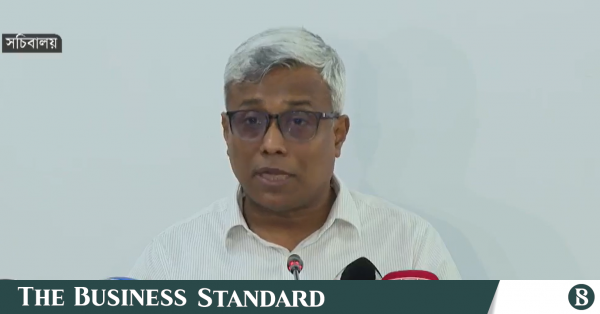
The central bank on Monday invited expressions of interest from qualified international consulting and audit firms to conduct the reviews, according to a notice published in national newspapers. Bangladesh Bank Executive Director Arief Hossain Khan said the central bank intended to gradually expand the AQR programme. "We have already completed Asset Quality Reviews of six banks. From January next year, several more banks will come under the process. We will first assess the financial health of each bank and then determine what measures are required in each case," he told The Business Standard.
📅 Timeline and Eligibility
According to the notice, interested firms must submit their expressions of interest by 3:00 pm BST on August 31, 2026. The selected firm is expected to begin work in January 2027 and complete the assignment within 120 calendar days of signing the contract — a tight timeline that reflects the urgency of getting the diagnostic results before the next budget cycle.
- 📅 EOI submission deadline: August 31, 2026, 3:00 pm BST
- 🚀 Work begins: January 2027
- ⏳ Completion window: 120 calendar days
- 📊 Banks under review: 11 (identities to be disclosed after EOI evaluation)
- 📋 Coverage threshold: At least 80% of each bank's total assets
- 💰 Funding source: World Bank Financial Sector Support Project-II
🔍 Scope of the Review
The appointed firm will conduct a comprehensive assessment of the selected banks' asset quality and risk management practices. The review will cover at least 80 percent of each bank's total assets and examine compliance with Bangladesh Bank regulations on provisioning, large exposures and related-party identification. Auditors will also verify the accuracy of information submitted by the banks and independently assess collateral valuations where necessary — addressing a long-standing concern that Bangladeshi banks have inflated collateral values to mask provisioning shortfalls.
The scope of the assignment includes:
- 🕵️ Wilful defaulter & connected lending identification — targeting the politically connected lending that has been at the heart of Bangladesh's banking crisis
- 💰 Regulatory capital & Tier 1 capital adequacy assessment under domestic and international standards (Basel III)
- 📉 Stress testing based on baseline and adverse macroeconomic scenarios for the next three years
- 📊 Liquidity analysis — Liquidity Coverage Ratio (LCR) and Net Stable Funding Ratio (NSFR)
- 🔎 Forensic examination to detect fraud or unlawful lending activities
- 📜 Reporting — inception report, monthly progress reports, and final diagnostic report signed by a senior partner based overseas
🏛️ Eligibility Criteria for Audit Firms
The Bangladesh Bank said applicant firms must have at least 15 years of professional experience, including a minimum of 10 years in AQR, banking supervision or credit risk review. Their multidisciplinary teams must include chartered accountants, Financial Risk Managers, Certified Anti-Money Laundering Specialists or Basel III specialists — ensuring that the review teams have both the technical depth and the international credibility needed for findings to withstand legal and political scrutiny.
🌏 World Bank Funding and Strategic Significance
The World Bank-financed Financial Sector Support Project-II is funding the initiative, which aims to strengthen the financial resilience of the banking sector and improve risk management. The World Bank's involvement is significant for three reasons: (i) it signals international endorsement of Bangladesh Bank's reform agenda, (ii) it provides funding independence from domestic political pressures, and (iii) it imposes World Bank procurement and governance standards that reduce the risk of irregularities in the selection of audit firms.
📊 The Six Prior AQRs: What Was Found
The Bangladesh Bank previously appointed Ernst & Young and KPMG to conduct AQRs of six banks. Ernst & Young reviewed Exim Bank, Social Islami Bank, and ICB Islami Bank, while KPMG assessed First Security Islami Bank, Global Islami Bank and Union Bank. Following those reviews, five of the banks were merged to form the Sammilito Islami Bank, while ICB Islami Bank continues to operate under an administrator appointed by the central bank.
According to the reports prepared by the international audit firms, the six banks had widespread loan irregularities, with non-performing loan ratios ranging from 50 percent to 95 percent — meaning that in the worst case, only 5 percent of the loan book was performing. Among the five merged banks, four had been controlled by the S Alam Group, while Exim Bank had been controlled by Nazrul Islam Mazumder, chairman of Nassa Group.
- 📉 Six prior AQR banks' NPL ratios: 50%–95%
- 🏢 E&Y reviewed: Exim Bank, Social Islami Bank, ICB Islami Bank
- 🏢 KPMG reviewed: First Security Islami Bank, Global Islami Bank, Union Bank
- 🤝 Outcome: Five banks merged into Sammilito Islami Bank; ICB Islami still under BB administrator
- 👥 S Alam Group banks: 4 of the 5 merged banks
- 👥 Exim Bank prior control: Nazrul Islam Mazumder (Nassa Group)
📊 Banking Sector Stress: The Numbers
Bangladesh's banking sector currently has non-performing loans of Tk 5.89 lakh crore, equivalent to 32.26 percent of total outstanding loans of Tk 18.25 lakh crore. Of the country's 61 banks, 17 have non-performing loan ratios of more than 50 percent, while 23 banks face a combined capital shortfall of Tk 2.82 lakh crore — meaning that nearly two-thirds of the banking system has capital below the regulatory minimum required to absorb losses. The 11 banks selected for the new AQR round are widely understood to be drawn from this group of capital-short, high-NPL institutions.
💰 Sammilito Islami Bank Recapitalisation
Under the government's restructuring plan, the Sammilito Islami Bank will have paid-up capital of Tk 35,000 crore. Of this, Tk 20,000 crore has been provided by the government through recapitalisation, while the remaining Tk 15,000 crore will come through a share or equity structure involving depositors — a hybrid structure that effectively converts depositor claims into equity, raising governance and accountability questions that the new AQRs may need to address for the broader banking sector.
The Bangladesh Bank has also established an Insurance Trust Fund (ITF) of around Tk 12,000 crore to provide liquidity support during the restructuring and merger process. It has already disbursed Tk 3,792 crore from the fund, with further support to be provided as required — a liquidity backstop that has prevented depositor panic but that cannot be sustained indefinitely without a credible recovery plan.
🏛️ Coordination with Other Reforms
The central bank has appointed the chairman and managing director of the Sammilito Islami Bank. The administrator of Exim Bank has already been withdrawn (July 30, 2026), while administrators at the remaining banks (Social Islami Bank withdrawn August 7, with First Security, Global Islami and Union Bank expected by August 15) will be removed in phases to help restore depositor confidence and strengthen the stability of the banking sector — a sequence that runs in parallel with the broader 18-month NPL action plan that targets the 36 percent system-wide NPL ratio disclosed by BB Governor Md Mostaqur Rahman.
🌏 Why This Matters for Trade and the Economy
The asset quality review programme has direct implications for Bangladesh's export economy. The country's RMG, textile, agro-processing and pharmaceutical exporters depend on bank credit for working capital, letters of credit and pre-shipment finance. When 17 of 61 banks have NPL ratios above 50 percent, the credit pipeline seizes up — forcing the central bank to inject liquidity through special facilities and forcing exporters to rely on a shrinking pool of healthier banks. The Tk 60,000 crore private sector credit stimulus announced for September is, in part, a response to this credit contraction.
A successful AQR programme would achieve three things: (i) it would force honest recognition of losses that have been hidden through evergreening and forbearance, (ii) it would enable the central bank to differentiate between banks that need recapitalisation, banks that need management changes, and banks that need to be merged or wound down, and (iii) it would restore depositor and investor confidence by demonstrating that the sector's true condition is being assessed by independent international auditors rather than by politically compromised domestic regulators.
✅ What Comes Next
Three milestones will shape the trajectory of the AQR programme over the next 12 months. First, the August 31 EOI submission deadline will reveal which international audit firms are interested in the contract — the calibre of applicants will be an early signal of the programme's credibility. Second, the contract signing in late 2026 will determine whether the 120-day timeline can be met — any delay would push the findings into 2028 and reduce their policy relevance. Third, the publication of the final diagnostic reports in mid-2027 will determine whether the central bank and the government have the political will to act on the findings — including potentially forcing further mergers, recapitalisations, or even license revocations for the most troubled institutions. For Bangladesh's 6 crore depositors and its millions of trade-dependent businesses, the stakes could not be higher.
This news was originally published by The Business Standard. For the full original report, please visit: https://www.tbsnews.net/economy/banking/11-troubled-banks-face-asset-quality-test-intl-firms-january-1508636
📬 Get Bangladesh Trade News in your inbox
Weekly digest of export industry news, policy updates, and market analysis.
📰 Related Stories