Bangladesh Apparel Sector Needs Worker-Centred Plan for Green Transition: Stakeholders
Industry stakeholders call for just transition with tripartite dialogue, reskilling, and social protection
TBS Report
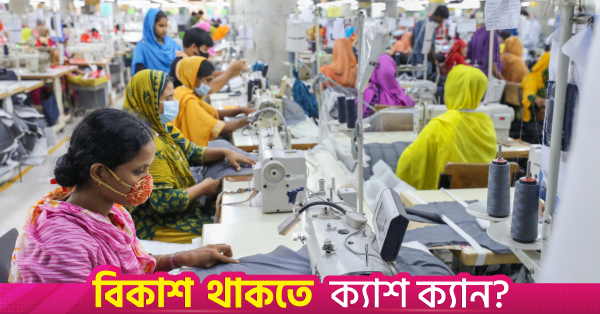
Bangladesh's transition towards renewable and low-carbon energy in the apparel sector must prioritise workers' job security, skills development, social protection and rights, speakers said at a multi-stakeholder dialogue in Chattogram on 25 August 2026, warning that industrial modernisation and green technologies should not come at the cost of employment in a sector that employs more than four million workers.
The dialogue, titled "Improving Policy Arrangements for Just Energy Transition (JET) in Bangladesh's Apparel Sector from a Labour Perspective", was held at Hotel Saint Martin in the port city. The National Alliance for Just Transition Bangladesh (NAJTB), Bangladesh Labour Foundation (BLF), and Manusher Jonno Foundation (MJF), with support from Oxfam Bangladesh, jointly organised the event — bringing together trade unions, factory inspectors, environmental regulators, employers' representatives and civil society groups in a sector that accounts for the lion's share of Bangladesh's export earnings.
Speaking at the event, AKM Ashraf Uddin, executive director of BLF and secretary of NAJTB, said workers must remain at the centre of the energy transition, with adequate social protection, reskilling opportunities and worker-focused planning. He argued that the transition conversation in Bangladesh has so far been dominated by infrastructure and emissions questions, with labour-side concerns — including retrenchment risk, skills mismatch and occupational safety during factory upgrades — treated as an afterthought rather than a design parameter.
Dr Masud Kamal, professor of sociology at Chittagong University, framed the energy transition not merely as a technological process but also as a socio-technical transformation. He stressed the need for distributive justice so that workers do not bear the costs of decarbonisation alone — a concern rooted in the reality that many Bangladeshi garment workers are women with limited alternative formal-sector employment options and weak social safety net coverage.
Md Zubaer Alam, programme officer at BLF, called for translating just transition principles into concrete policies through institutional accountability and coordination among government agencies, trade unions, civil society and regulators. The call reflects a widely shared view in the labour movement that existing environmental and labour compliance regimes — run separately by the Department of Environment and the Department of Inspection for Factories and Establishments — need a structured interface if green factory transitions are not to leave workers behind.
Jamir Uddin, director of the Department of Environment, Chattogram Region, said environmental compliance and renewable energy adoption must go hand in hand with worker reskilling and social protection — an unusually explicit endorsement of the just-transition framing from a senior environmental regulator. Mohammad Mahabubul Hasan, deputy inspector general of the Department of Inspection for Factories and Establishments, Chattogram, stressed regular social dialogue, regulatory oversight and worker safety during industrial and technological transitions.
During a panel discussion, Md Hafij Ahmed Mozumder, director of the Divisional Labour Office, Chattogram, said vulnerable workers needed to be retrained and reskilled to prevent structural unemployment — a risk that is heightened as factories adopt automated cutting, robotics-assisted sewing and digital quality control systems that displace entry-level operators. Kazi Md Shafiqul Islam Titu, chairman of the Standing Committee on Religious Affairs at Bangladesh Garment Manufacturers and Exporters Association (BGMEA), said workforce development must progress alongside green infrastructure, signalling employer recognition that skills investment cannot be decoupled from capital investment.
Sheikh Abdul Mannan, president of both the Chattogram Chapter of IndustriAll Bangladesh Council (IBC) and the Bangladesh Garment Textile Leather Workers Federation (BGTLWF), warned that modernisation should not become an excuse for job cuts and called for training workers in green technologies. Md Ali Shahin, head of Advocacy at Young Power in Social Action (YPSA), called for local vulnerability mapping and a dedicated Just Transition Fund for marginalised workers — a proposal that would, if adopted, channel public finance into retraining and income support for workers displaced by factory-level decarbonisation.
Rezoanul Haque Azom, senior officer at Bangladesh Institute of Labour Studies (BILS) and joint secretary of NAJTB, said a one-size-fits-all approach would not work and called for sector-specific assessments in Chattogram, where the concentration of knit and woven dyeing-finishing units makes the energy and water transition particularly labour-intensive. Speaking at the discussion, The Business Standard's Senior Correspondent Mizanur Rahman Yousuf said, "We cannot have a green factory infrastructure while keeping workers in the dark. Transition roadmaps must reflect ground realities."
Participants called for tripartite dialogue, meaningful worker participation, reskilling, social protection, employment security, occupational safety and trade union rights in the transition process. They also said lessons from the apparel sector should inform just-transition plans for other sectors, including shipbreaking, leather, transport, agriculture, fisheries and waste management — each of which faces its own decarbonisation and automation pressures. The organisers called for a national policy framework integrating climate and energy goals with decent work, social protection, skills development, collective bargaining and meaningful worker participation.
The Chattogram dialogue comes at a pivotal moment for Bangladesh's apparel sector. The country now hosts the world's largest concentration of LEED-certified green factories, but the policy debate has so far focused largely on the environmental and brand-compliance side of the equation. The 25 August dialogue signals an emerging consensus — across labour, employer and regulatory voices — that the next phase of the green transition must be measured not only in megawatts of rooftop solar installed, but also in workers retrained, social protection extended and trade union rights protected during the shift.
This news was originally published by The Business Standard. For the full original report, please visit: https://www.tbsnews.net/economy/rmg/apparel-sector-needs-worker-centred-plan-green-transition-stakeholders-1524871
Related on BangladeshExport
📬 Get Bangladesh Trade News in your inbox
Weekly digest of export industry news, policy updates, and market analysis.
📰 Related Stories