Bangladesh Government To Sign Airbus Deal For 10 Aircraft In October As Biman Fleet Expansion Reaches 35 Planes
Package includes four A350-900s and six A321neos; supplementary Boeing agreement for 11 more jets at $2.7 billion signed in New York during UNGA.
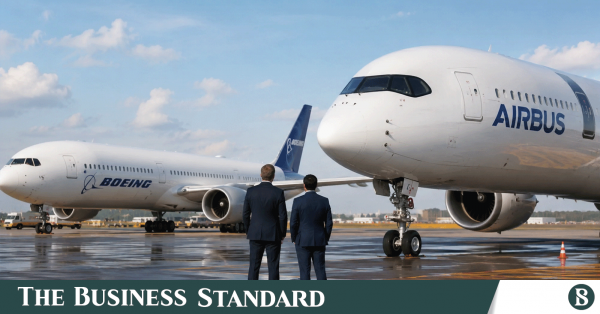
✈ The government of Bangladesh will sign an agreement with Airbus in October 2026 to purchase 10 aircraft for Biman Bangladesh Airlines, taking the national flag carrier''s planned new-aircraft pipeline to 35, Civil Aviation and Tourism Minister M Rashiduzzaman Millat said on 29 September 2026. "Yes, we are buying 10 Airbus aircraft. The agreement will be signed in October," Millat told journalists at the Secretariat.
📊 The proposed Airbus package comprises four A350-900 widebody aircraft and six A321neo narrowbody jets, the minister said. The Airbus deal, together with Biman''s two Boeing agreements, would take the airline''s planned new-aircraft pipeline to 35, comprising 19 widebody and 16 narrowbody aircraft. This represents one of the most ambitious fleet expansion programmes in Biman''s history, and signals a fundamental repositioning of the national carrier''s competitive stance in Bangladesh''s fast-growing aviation market.
💰 Supplementary Boeing deal signed at UNGA
Biman''s latest deal for 11 additional Boeing jets will cost around $2.7 billion, the minister added. According to Millat, the latest Boeing agreement was signed in New York on 23 September 2026 under a "Right to Purchase Additional Aircraft" provision in the 14-aircraft purchase agreement signed on 30 April 2026. Biman Board Chairman Rumi A Hossain and Boeing Senior Vice President of Commercial Sales and Marketing Brad McMullen signed the agreement on the sidelines of the 81st session of the United Nations General Assembly in New York.
The supplementary agreement covers five Boeing 787-10 widebody aircraft and six Boeing 737-8 narrowbody aircraft. The 11 aircraft will cost around $2.7 billion, with the price based on the same rate agreed under the April contract. Together with the latest agreement, Biman''s Boeing acquisition programme now comprises 13 Boeing 787-10 Dreamliners, two 787-9 Dreamliners and 10 Boeing 737-8 aircraft.
The April agreement covered 14 aircraft, including 10 Boeing 787-10s, two 787-9s and two 737-8s, with deliveries scheduled between November 2031 and October 2035. Biman has requested Boeing to deliver at least one aircraft earlier, possibly in 2027 or 2028. Boeing has not publicly disclosed the price, financing arrangements, or delivery schedule for the additional 11 aircraft.
👥 Fleet mix rationale
Biman determined the aircraft mix based on its network and fleet planning, aircraft range, passenger capacity, expected passengers per flight, and required weekly frequencies. The widebody aircraft will primarily be deployed on high-demand Middle Eastern routes as well as long-haul routes to Europe and North America, while the narrowbody aircraft will serve regional and shorter-distance routes and gradually replace Biman''s ageing Boeing 737-800s.
Two existing Boeing aircraft will be grounded next year, reducing Biman''s fleet to 19 aircraft in 2027. The fleet expansion is intended to address what the government sees as a gap between passenger demand and Biman''s capacity. "We are following the Ethiopian Airlines model in expanding Biman''s fleet," Millat said, noting that Ethiopian Airlines now has 167 aircraft, compared with 19 in Biman''s fleet.
🌏 Why Biman needs to expand
Biman currently serves slightly more than 20% of the country''s total air travel demand, leaving around 80% to foreign airlines, the minister said. "This is why the government has taken a timely initiative to remove the aircraft shortage," Millat said, adding that there was no geopolitical consideration behind the procurement decisions — an implicit reference to concerns that the dual Boeing-Airbus procurement strategy might be driven by diplomatic considerations rather than commercial ones.
The Ethiopian Airlines model that Millat referenced is significant. Ethiopian has grown from a small national carrier into Africa''s largest airline, with a fleet of 167 aircraft serving destinations across Africa, Europe, Asia and the Americas. The airline has been a major driver of Ethiopia''s economic development, supporting tourism, trade and foreign exchange earnings. Bangladesh''s government clearly sees similar potential for Biman — though the gap between the two airlines'' current fleet sizes (19 vs 167) highlights the scale of the challenge.
Biman is also seeking to lease 10 aircraft to meet immediate demand, although no deal has been finalised yet, Millat said. The lease arrangement would help bridge the gap between current capacity and demand while the new Boeing and Airbus aircraft are being delivered over the coming years.
🤝 Network expansion plans
The expanded fleet would allow Biman to increase frequencies on high-demand routes, particularly in the Middle East, while creating scope to explore new destinations such as Sydney and increase services to Japan. The airline is also pursuing the resumption of flights to New York — a long-standing ambition that has been held back by Bangladesh''s Category 2 rating under the US Federal Aviation Administration''s International Aviation Safety Assessment programme.
The Middle East routes are particularly important for Biman because they serve the large Bangladeshi expatriate community in Saudi Arabia, the UAE, Qatar, Oman and other Gulf states. Higher frequencies on these routes would not only serve passenger demand but also support Bangladesh''s remittance inflows, which are a critical source of foreign exchange for the country.
The narrowbody A321neo and Boeing 737-8 aircraft would serve regional routes to South Asia, Southeast Asia and China — markets where Biman currently faces intense competition from low-cost carriers such as AirAsia, IndiGo, and SriLankan Airlines. The new narrowbody aircraft would give Biman the fuel efficiency and range needed to compete effectively on these routes.
💰 Financing the fleet expansion
On financing, Millat said Biman, as a public limited company, would pay for the aircraft from its own earnings and through appropriate financing arrangements. As deliveries would take place in phases, payments would also be made gradually, he said. "The financial capacity of Biman, route revenues and projected future growth were taken into consideration in formulating the plan," Millat said, adding that the purchases would not put direct pressure on the government budget.
The financing structure is significant because it distances the aircraft purchases from the government''s already-strained fiscal position. With government borrowing from banks surging to Tk 16,601 crore in the first two months of FY27 — up from just Tk 463 crore in the same period last year — any direct government financing of the Biman fleet expansion would have been politically and fiscally difficult. By structuring the purchases as Biman''s own commercial obligations, the government has insulated the fiscal accounts from the immediate impact of the aircraft acquisition programme.
However, as a state-owned airline, Biman''s financial obligations ultimately carry implicit government guarantee. If Biman''s revenues do not grow as projected, or if the airline cannot service its aircraft acquisition debt, the government would likely need to step in with financial support. The success of the fleet expansion programme therefore depends on Biman''s ability to translate the new aircraft into higher revenues, improved market share and sustainable profitability.
🌏 Strategic significance for Bangladesh
The Airbus and Boeing fleet expansion programme is strategically significant for Bangladesh for several reasons. First, it represents a major commitment to developing the country''s aviation sector as a driver of economic growth — supporting tourism, trade, and the country''s large expatriate workforce. Second, the dual Boeing-Airbus strategy gives Biman the flexibility to choose the right aircraft for each route, while also creating competitive tension between the two manufacturers on price and financing terms. Third, the fleet expansion positions Biman to capture a larger share of the country''s fast-growing air travel demand, which has been increasingly dominated by foreign airlines.
For Boeing and Airbus, the Biman deals are also strategically significant. Bangladesh''s aviation market is one of the fastest-growing in Asia, with passenger traffic expected to triple over the next two decades driven by a growing middle class, expanding expatriate travel, and increasing tourism. Securing a major share of Biman''s fleet expansion gives both manufacturers a foothold in this strategically important market — and signals their confidence in Bangladesh''s long-term aviation growth story.
The October signing of the Airbus agreement will mark the formal launch of Biman''s most ambitious fleet expansion programme in decades. The success of the programme will depend on Biman''s ability to execute on its network expansion plans, manage the operational complexity of a mixed Boeing-Airbus fleet, and translate the new aircraft into sustainable financial performance. The coming years will be critical for the national carrier — and for Bangladesh''s broader aviation ambitions.
This news was originally published by The Business Standard. For the full original report, please visit: https://www.tbsnews.net/bangladesh/govt-ink-deal-airbus-10-aircraft-oct-millat-1557306
📬 Get Bangladesh Trade News in your inbox
Weekly digest of export industry news, policy updates, and market analysis.
📰 Related Stories