QatarEnergy Suspends LNG Supply To Bangladesh Until November Amid Strait Of Hormuz Closure
Force majeure declared as Strait of Hormuz closure disrupts LNG shipments to Bangladesh, Pakistan and Italy; Qatar's LNG exports fallen 96% by end of August.
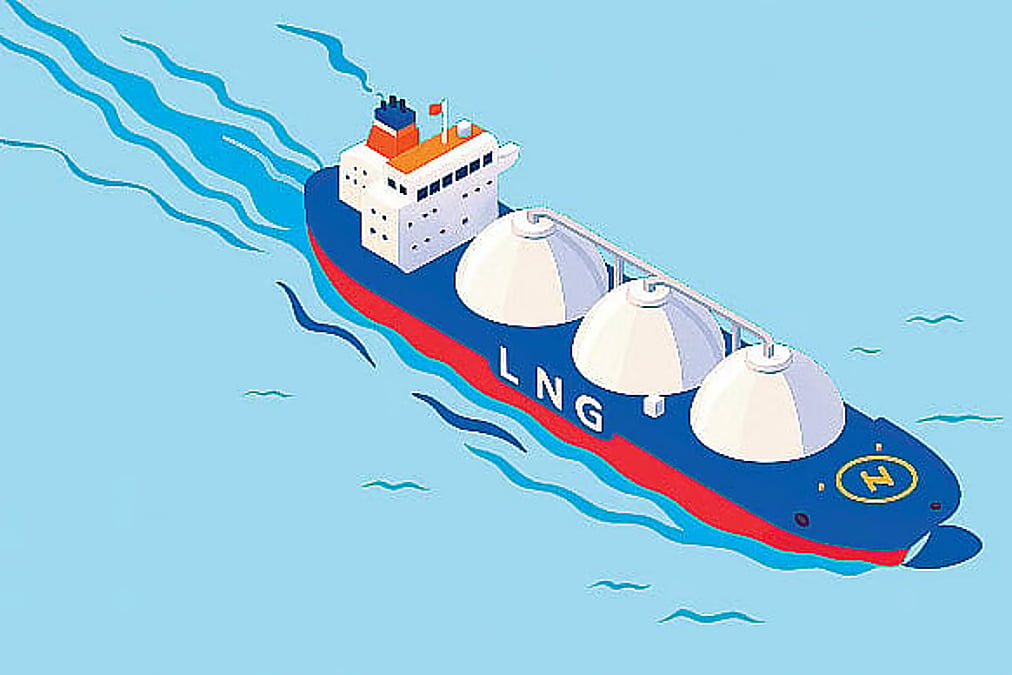
⚠ QatarEnergy will not be able to supply liquefied natural gas (LNG) to Bangladesh, Pakistan and several other Asian countries until November 2026, in a major supply disruption that exposes the fragility of Bangladesh''s energy import dependence. The decision was taken as supply operations have been disrupted by the closure of the Strait of Hormuz, one of the world''s most critical maritime chokepoints for LNG and oil shipments. For the same reason, QatarEnergy will also be unable to supply LNG to Italian power and energy company Edison until early December.
📊 Supply disruptions began in April 2026 due to the US-Iran war, when the Strait of Hormuz was effectively closed to commercial shipping following military exchanges between the two countries. QatarEnergy then announced that it was suspending supplies for the first time due to force majeure — a legal declaration that allows a party to a contract to suspend performance due to circumstances beyond their control. The period has since been extended several times, according to Reuters, with the latest extension pushing the suspension through to November for Bangladesh and Pakistan, and early December for Edison.
🌏 Why the Strait of Hormuz closure matters
The Strait of Hormuz is the narrow waterway between Iran and Oman that connects the Persian Gulf to the Gulf of Oman and the Arabian Sea. Roughly one-third of the world''s seaborne oil trade and a significant share of global LNG trade passes through the strait, making it one of the most strategically important maritime chokepoints in the world. The closure of the strait following the US-Iran war has effectively cut off Qatar — the world''s largest LNG exporter — from its Asian and European customers, triggering a global LNG supply shock that has pushed prices sharply higher.
Qatar is among the countries that have suffered the most economic losses due to the war with Iran. According to Reuters calculations, Qatar''s LNG exports had fallen by 96 percent by the end of August 2026 — a staggering decline that reflects the near-total shutdown of its export capability. Data from energy information and analysis firm ICIS showed that Qatar exported only 18 LNG cargoes between January and August 2026, compared with 509 during the same period last year. That represents a more than 96% year-on-year decline in cargo volumes — a near-total collapse of Qatar''s LNG export business.
👥 Impact on Bangladesh''s energy security
The QatarEnergy suspension matters deeply for Bangladesh because the country relies on imported LNG to address gas shortages in power generation and industrial operations. Bangladesh has invested heavily in LNG import infrastructure over the past decade, including the Moheshkhali floating LNG terminals and onshore regasification facilities, to bridge the gap between domestic gas production and rising demand from the power and industrial sectors.
If supply disruptions from Qatar continue for an extended period, Bangladesh may have to source LNG from alternative suppliers — including spot market purchases from the United States, Australia, Mozambique and other LNG exporters that do not rely on the Strait of Hormuz. However, this will come at a significantly higher cost, given that spot LNG prices have spiked in response to the global supply shock triggered by the strait''s closure.
Bangladesh has already been struggling with LNG subsidy costs, which hit Tk 10,300 crore in the first three months of FY27 according to Petrobangla data. The QatarEnergy suspension will only exacerbate these subsidy pressures, as the country is forced to purchase more expensive spot LNG to maintain power generation and industrial gas supply.
💰 Global LNG market dynamics
The global LNG market is now in a state of significant dislocation. Winter is approaching in the Northern Hemisphere, and gas consumption in Europe will increase in the coming days as the continent needs gas to keep homes warm during winter. Gas demand typically increases in Europe during this period, putting additional pressure on already-tight global supplies. Since the Russia-Ukraine war began, Europe has reduced its reliance on Russian gas — meaning that Europe is now more dependent than ever on LNG from the Middle East, the United States and other suppliers.
According to information on the European Commission''s website, legislation has been enacted to completely stop gas imports from Russia by the end of 2026. As a result, Europe''s reliance on LNG from the Middle East has increased — but the closure of the Strait of Hormuz has now cut off much of that supply, creating a perfect storm for European energy security. Italy has said it is confident of meeting the European Union''s target for gas storage, but Germany and several other countries are trying to increase their gas reserves quickly amid growing concerns about winter supply security.
🤝 Edison cancellation adds to supply pressure
In a message posted on an Italian energy market platform, Edison said QatarEnergy would cancel the delivery of six more LNG cargoes. This would bring the total number of LNG cargoes that Edison has not received from QatarEnergy to 35 — a substantial volume of gas that the Italian company will now need to source from alternative suppliers, further tightening the European LNG market.
The Edison cancellation is significant because it shows that the QatarEnergy supply disruption is affecting not just Asian customers like Bangladesh and Pakistan, but also European buyers who are already grappling with the broader energy security challenges created by the Russia-Ukraine war and the continent''s transition away from Russian gas.
📊 What Bangladesh should expect
For Bangladesh, the implications of the QatarEnergy suspension are serious and multifaceted:
- ⚠ Higher LNG import costs: With spot LNG prices elevated and Qatar supplies suspended, Bangladesh will need to pay more for alternative LNG cargoes, putting pressure on the country''s already-strained foreign exchange reserves.
- ⚠ Increased subsidy burden: The government''s LNG subsidy, already at Tk 10,300 crore for the first three months of FY27, will likely rise further as more expensive spot LNG is procured.
- ⚠ Power generation risks: If LNG supply disruptions worsen, Bangladesh may face gas shortages in power generation, leading to load shedding or increased reliance on more expensive liquid fuel-based power plants.
- ⚠ Industrial gas supply risks: Industrial consumers — particularly export-oriented sectors such as RMG, textiles and pharmaceuticals — could face gas supply disruptions that affect production schedules and export commitments.
- ⚠ Competition for cargoes: As supply worsens, it could become difficult for Bangladesh to secure LNG even at higher prices. During a supply crisis, countries with greater purchasing power will prioritise securing their own supplies, and Bangladesh may find it difficult to compete with them.
🌏 Strategic context for Bangladesh''s energy policy
The QatarEnergy suspension underscores the strategic vulnerability of Bangladesh''s heavy reliance on imported LNG for energy security. While domestic gas production has been declining for years and new exploration has been slow to deliver results, Bangladesh has increasingly turned to imported LNG to bridge the gap — exposing the country to the kind of geopolitical supply shocks that are now materialising.
The crisis should prompt a broader reassessment of Bangladesh''s energy strategy. Options include accelerating domestic gas exploration, expanding renewable energy capacity, increasing energy efficiency in industry and buildings, and diversifying LNG import sources to reduce dependence on any single supplier. Bangladesh may also need to consider strategic gas storage infrastructure that would allow the country to build buffer stocks during periods of ample supply, providing a cushion during disruptions like the current one.
The coming months will be critical for Bangladesh''s energy security. With QatarEnergy supplies suspended until at least November, the country will need to navigate a tight global LNG market, manage the subsidy burden of higher-cost spot purchases, and ensure that power generation and industrial gas supply are not disrupted. How well Bangladesh manages this crisis will be a key test of the country''s energy security framework — and a reminder of the strategic importance of diversifying energy sources and suppliers in an era of growing geopolitical risk.
This news was originally published by Prothom Alo English. For the full original report, please visit: https://en.prothomalo.com/business/local/875q4qo7gh
📬 Get Bangladesh Trade News in your inbox
Weekly digest of export industry news, policy updates, and market analysis.
📰 Related Stories