UAE Halts All Trade and Financial Dealings With Iran After Tanker Attacks: Implications for Bangladesh
Dubai, August 19, 2026 — The United Arab Emirates has suspended all trade and financial dealings with Iran — in a dramatic escalation of the Gulf state's stance against Tehran after reporting an Iranian missile attack directed at UAE ships. The announcement, made on Tuesday (19 August 2026) by UAE foreign ministry communications director Afra Al Hameli, marks the most significant commercial rupture between the two Gulf neighbours in decades — with profound implications for regional trade routes, energy markets, and Bangladesh's energy security.
📊 The Announcement
- 📅 19 August 2026 (Tuesday) — announcement date
- 🤝 Afra Al Hameli — UAE foreign ministry communications director (spokesperson)
- 🚧 All trade, commercial exchanges, financial transactions — halted with Iran
- 📅 "Until further notice" — indefinite suspension
- 📜 Trigger: Iranian missile attack — directed at UAE ships
- 📜 Tanker targeting — Abu Dhabi accused Tehran of repeatedly targeting UAE tankers at sea in recent weeks
- 🚧 Recalled ambassador — early in the conflict
- 🚧 Iran-linked schools + hospital shut — including Iranian state-linked hospital in Dubai
- 🚧 Community centre closed — in March 2026 at height of war
📜 The Statement
"In light of regional escalations... all trade, commercial exchanges, and financial transactions with Iran have been halted until further notice," said UAE foreign ministry communications director Afra Al Hameli in a statement that signals a fundamental restructuring of UAE-Iran commercial relations. The comprehensive nature of the suspension — covering trade, commercial exchanges, AND financial transactions — goes well beyond the typical diplomatic sanctions response and effectively cuts off all formal economic ties between the two Gulf states.
The announcement comes after a period of relative calm in the UAE — with no Iranian missiles aimed at the country since May 2026, after the UAE bore the brunt of attacks in the early weeks of the Middle East war that began at the end of February. However, Abu Dhabi has accused Tehran of repeatedly targeting its tankers at sea in recent weeks — suggesting that the maritime dimension of the conflict has continued even as direct missile attacks on UAE territory have paused.
🌐 Historical UAE-Iran Trade Ties
The suspension marks a significant break in centuries-old commercial relationships between the UAE and Iran — two countries that share deep cultural, historical, and economic ties as neighbouring states across the Gulf:
- 👥 Iranian community in UAE — sizeable Iranian expatriate population, particularly in Dubai
- 💰 Major trading partner — UAE has been a major trading partner for US-sanctioned Iran, particularly before the war
- 🤝 Centuries-old links — between coastal communities, trade routes, and family networks
- 💰 Re-export trade — UAE (particularly Dubai) served as a re-export hub for goods flowing to and from Iran
- 🏢 Iranian businesses in UAE — significant Iranian-owned commercial presence in Dubai and Sharjah
- 💰 Banking ties — UAE-based banks have historically handled Iran-related transactions within compliance constraints
- 💼 Cultural exchange — extensive people-to-people ties through migration, marriage, and business partnerships
The suspension therefore not only halts direct UAE-Iran trade but also disrupts a complex web of commercial relationships that have sustained both economies for generations — with ripple effects extending across the Gulf region and beyond. For Iranian businesses operating in UAE free zones, the announcement creates immediate operational uncertainty, while UAE-based exporters who depended on the Iran market face sudden revenue loss.
🚢 Tanker Attacks: The Maritime Trigger
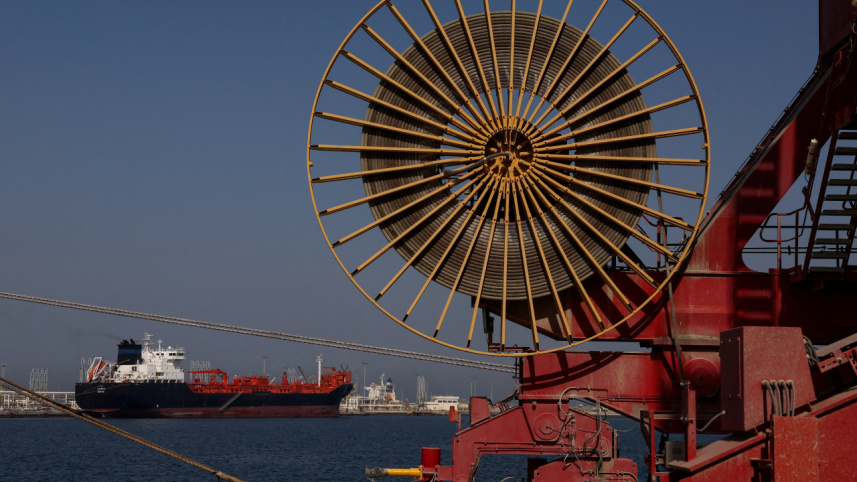
The immediate trigger for the suspension — Iranian missile attacks on UAE ships, including tanker targeting — reflects the broader maritime dimension of the Middle East conflict. Iran's strategy of targeting commercial shipping in the Gulf appears to be an asymmetric response to the broader US-Israel military campaign — allowing Tehran to inflict economic costs on Gulf states aligned with US interests without directly engaging US or Israeli military forces.
For the global energy market, the tanker attacks are particularly significant because they:
- 🚢 Reduce shipping capacity — tankers damaged or destroyed cannot transport oil
- 💰 Increase insurance premiums — war risk insurance for Gulf shipping has risen sharply
- 🚢 Force routing changes — some shipping diverted around the Cape of Good Hope
- 💰 Reduce oil supply — physical disruption to oil exports
- 💰 Drive price volatility — already contributing to oil hitting a three-week high of $91.47/barrel
- 🚢 Reduce LNG supply — similar disruption to LNG shipping through Hormuz
The UAE's response — cutting all trade and financial ties with Iran — signals Abu Dhabi's assessment that the tanker attacks represent an intolerable escalation that requires a comprehensive economic response. The fact that this response comes from the UAE — historically one of the Gulf states most inclined to maintain commercial ties with Iran despite Western sanctions — underscores the severity of the tanker attacks and the breakdown in UAE-Iran relations.
🌐 Implications for Bangladesh's Energy Security
For Bangladesh — which is already facing an acute energy crisis with LNG subsidy overshoot, gas shortages, and the Excelerate FSRU accident — the UAE-Iran commercial rupture carries several direct implications:
- ⛽ LNG supply chain disruption — UAE's commercial ties with Iran included energy sector cooperation; the rupture may affect UAE's role as an LNG transhipment hub
- 🚢 Tanker attack escalation — increased risk to LNG and oil tankers transiting Hormuz, potentially disrupting Bangladesh's LNG imports from Qatar and other Gulf suppliers
- 💰 Oil price pressure — the rupture reinforces geopolitical risk premium in oil prices, sustaining $90+ Brent crude
- 💰 LNG price pressure — continued supply uncertainty supports elevated spot LNG prices ($22+/MMBtu)
- 💵 Subsidy burden — sustained high energy prices increase Bangladesh's LNG and oil subsidy costs
- 💵 FX pressure — higher energy import bills increase dollar demand
- 🌐 Trade diversion — UAE-Iran trade halt may redirect trade flows through alternative channels, potentially affecting Bangladesh-UAE trade
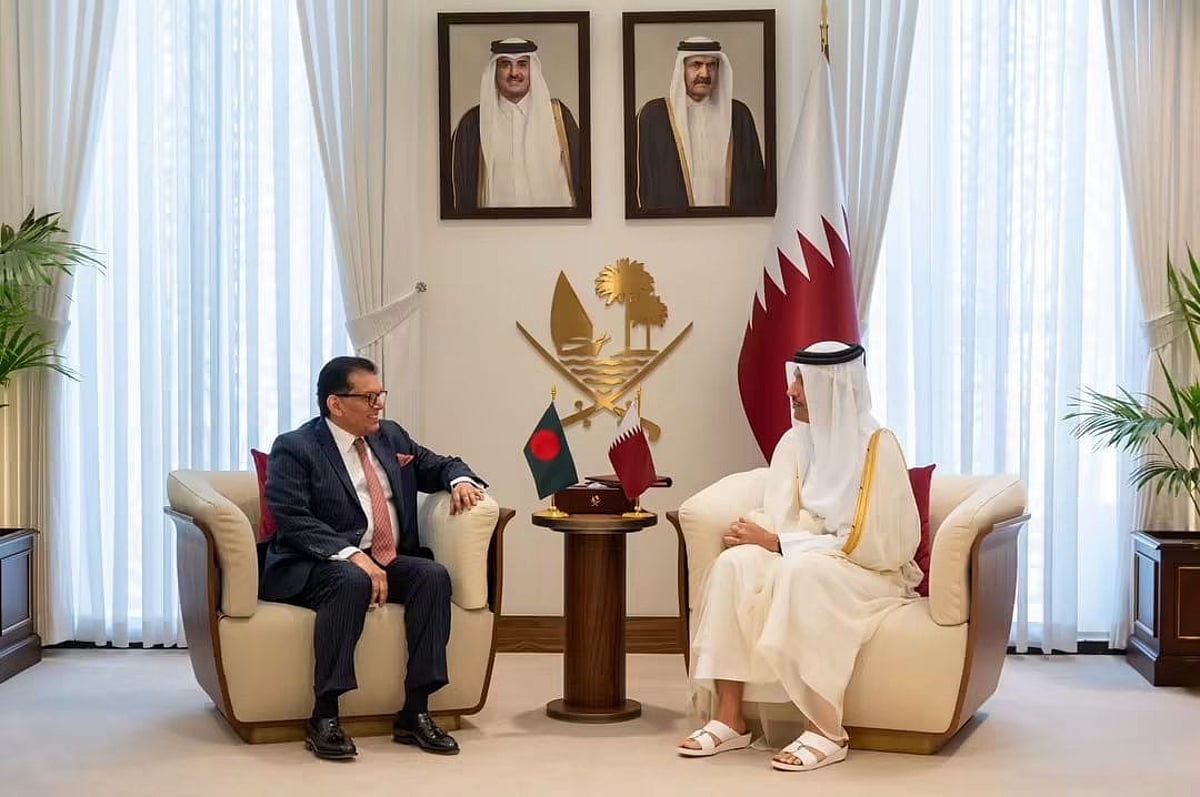
The timing is particularly challenging for Bangladesh because it comes just days after Foreign Minister Khalilur Rahman's 19 August Doha visit, where Qatar assured Bangladesh of "all possible support" in ensuring energy security. The Qatar assurance was meant to provide a foundation for Bangladesh's medium-term LNG supply strategy — but the UAE-Iran rupture introduces additional uncertainty into the regional energy picture that could complicate Bangladesh's planning.
👥 Bangladesh-UAE Bilateral Relationship
Bangladesh maintains strong bilateral relations with the UAE — including:
- 👥 Migrant workers — hundreds of thousands of Bangladeshis working in UAE across construction, hospitality, services, retail
- 💰 Remittance inflows — UAE among Bangladesh's top 5 remittance source countries
- 🤝 Bilateral trade — UAE exports refined petroleum, machinery, electronics; Bangladesh exports RMG, jute, pharmaceuticals
- 💰 UAE FDI — potential UAE sovereign fund investment in Bangladesh infrastructure
- 🤝 Diplomatic engagement — regular bilateral exchanges on labour, trade, and investment
- 🤝 Islamic finance — UAE banks and investors active in Bangladesh's sukuk market
For Bangladesh's broader economic strategy, the UAE-Iran rupture could have several indirect effects:
- 💰 Remittance stability — if UAE-Iran conflict escalates further and disrupts UAE economic activity, Bangladeshi workers could face job insecurity
- 💰 Investment climate — UAE sovereign fund may deprioritise new investments in region due to elevated geopolitical risk
- 💵 Trade flows — Bangladesh exports to UAE could be affected if UAE economy slows due to regional instability
- 🤝 Diplomatic alignment — Bangladesh may need to carefully balance its relationships with UAE, Iran, Qatar, and Saudi Arabia as regional tensions evolve
- 💰 Energy supply — potential UAE-Bangladesh energy cooperation could accelerate as UAE seeks alternative commercial partnerships
🌐 Regional Geopolitical Dynamics
The UAE-Iran rupture is the latest in a series of regional realignments triggered by the Middle East war that began in February 2026. The broader regional context includes:
- 🇺🇸 US-led military campaign — against Iran, in coordination with Israel
- 🇮🇱 Israel's role — direct military engagement with Iranian targets
- 🇦🇪 UAE alignment — with US-Israel coalition despite historic Iran ties
- 🇶🇦 Qatar positioning — mediator role, maintaining dialogue with all parties
- 🇸🇦 Saudi Arabia stance — cautious engagement, balancing Iran and US relations
- 🇧🇭 Bahrain alignment — with UAE and Saudi Arabia
- 🇰🇷 Kuwait position — maintaining diplomatic relations with all parties
- 🇴🇲 Oman role — traditional mediator, maintaining Iran dialogue
For Bangladesh — which maintains diplomatic relations with all Gulf states and Iran — the regional realignment creates a delicate diplomatic balancing act. Bangladesh's engagement with Qatar (through Khalilur Rahman's recent Doha visit) provides one channel for dialogue, while Bangladesh's relationships with UAE, Saudi Arabia, and Iran require careful management to avoid being drawn into regional conflicts.
🌐 The Bigger Picture: Geopolitical Energy Risk
The UAE-Iran commercial rupture reinforces a fundamental reality of the post-February 2026 Middle East: the region is undergoing a structural realignment that will affect global energy markets, trade flows, and diplomatic relationships for years to come. For Bangladesh — an energy-import-dependent economy with significant migrant worker presence in the Gulf — the implications are particularly direct:
- ⛽ Energy supply security — sustained risk of disruption to LNG and oil supplies through Hormuz
- 💰 Energy price stability — sustained geopolitical risk premium in oil and LNG prices
- 💵 Fiscal pressure — continued subsidy burden for energy imports
- 👥 Migrant worker welfare — potential impact on Bangladeshi workers in UAE if conflict escalates
- 💰 Remittance stability — potential disruption to remittance inflows from Gulf
- 🤝 Diplomatic balancing — need to maintain relations with all regional actors
- 🌐 Trade flow disruption — potential changes in Gulf trade patterns affecting Bangladesh
For the BNP government under Prime Minister Tarique Rahman, the UAE-Iran rupture reinforces the urgency of the energy diversification strategy that has been articulated across multiple recent policy moves: the Qatar energy security assurance, the Bangladesh Bank reserve rebuild, the rooftop solar potential assessment, the agrivoltaics pilot launch, and the broader renewable energy scale-up agenda. The crisis also underscores the importance of Bangladesh's diplomatic engagement — through Khalilur Rahman's UNGA presidency role and bilateral channels with Gulf states — in advocating for regional de-escalation and protection of commercial shipping through Hormuz. For the millions of Bangladeshis who depend directly or indirectly on Gulf economic stability — as migrant workers, as recipients of remittances, as consumers of imported energy, or as participants in export industries that depend on reliable energy supply — the UAE-Iran rupture is a reminder that the country's economic fate is deeply intertwined with regional geopolitical developments that it cannot directly control but must carefully navigate. The next 30–60 days will reveal whether the rupture becomes a temporary diplomatic measure or a long-term restructuring of Gulf commercial relationships — with very different implications for Bangladesh's energy and economic strategy in either scenario.
This news was originally published by The Daily Star. For the full original report, please visit: https://www.thedailystar.net/business/news/uae-halts-all-trade-financial-dealings-iran-4251676
📬 Get Bangladesh Trade News in your inbox
Weekly digest of export industry news, policy updates, and market analysis.
📰 Related Stories