Bangladesh Seeks Closer Tourism Ties With Malaysia: Visa, Flights, Hospitality Workers
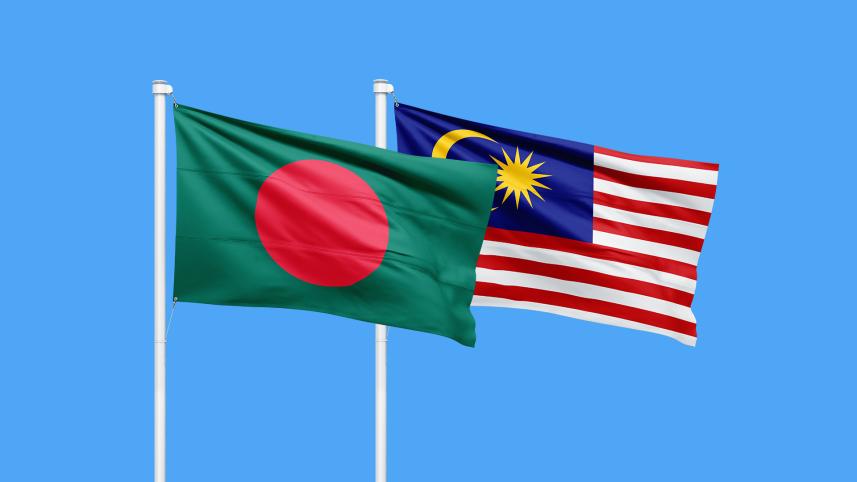
Putrajaya, August 20, 2026 — Bangladesh and Malaysia have discussed ways to strengthen bilateral tourism ties by easing visa procedures, increasing direct flights, and creating more opportunities for skilled Bangladeshi workers in Malaysia's hospitality sector — in a meeting between Bangladesh State Minister for Civil Aviation and Tourism M Rashiduzzaman Millat and Malaysia's Deputy Minister for Tourism, Arts and Culture Chiew Choon Man in Putrajaya yesterday (19 August 2026). The bilateral engagement is part of a broader Bangladesh-Malaysia cooperation push that also includes the AirAsia ground handling discussions announced on 20 August 2026.
📊 The Bilateral Engagement at a Glance
- 📍 Putrajaya, Malaysia — meeting location
- 📅 19 August 2026 — meeting date
- 🤝 M Rashiduzzaman Millat — Bangladesh State Minister for Civil Aviation and Tourism
- 🤝 Chiew Choon Man — Malaysia Deputy Minister for Tourism, Arts and Culture
- 🤝 Manjurul Karim Khan Chowdhury — Bangladesh High Commissioner to Malaysia
- 🤝 Chua Choon Hwa — Malaysia Deputy Secretary-General for Tourism
- 🌐 Focus areas — visa, flights, hospitality workers, cultural exchange
📜 Key Discussion Areas
The bilateral meeting covered a wide range of cooperation areas — reflecting both the tourism-specific agenda and the broader bilateral relationship:
- 📜 Visa facilitation and pre-verification — easing visa procedures for Bangladeshi travellers to Malaysia and vice versa
- 📜 Cultural exchanges — strengthening people-to-people ties through cultural programmes
- 💼 Capacity building — sharing expertise and best practices in tourism development
- 💼 Sharing expertise and best practices — in tourism development
- ✈ Increased flight frequency — more flights between the two countries to improve connectivity
- 💼 Training and skills development in hospitality — creating skilled Bangladeshi workers for Malaysia's hospitality sector
- 👥 Skilled worker recruitment — more recruitment opportunities for qualified Bangladeshis in Malaysia
- 🤝 People-to-people ties — strengthening through cultural and educational exchanges
- 🤝 Bilateral relations strengthening — both sides expressed hope that closer cooperation would further strengthen bilateral relations
🛣 Bangladesh-Malaysia Tourism Context
Bangladesh and Malaysia have long-standing tourism and labour migration ties — with Malaysia being one of the most popular international destinations for Bangladeshi tourists (particularly to Kuala Lumpur, Penang, Langkawi, and Genting Highlands), and Bangladesh being a source of skilled and semi-skilled workers for Malaysia's hospitality, construction, manufacturing, and plantation sectors. The bilateral tourism and labour flows include:
- 🧗 Bangladesh outbound tourism to Malaysia — growing middle class, business travel, family visits
- 🧗 Malaysia inbound tourism to Bangladesh — smaller but growing; particularly business travel
- 👥 Bangladeshi workers in Malaysia — hundreds of thousands across construction, manufacturing, plantations, services
- 💰 Remittance inflows — Malaysia is among Bangladesh's top 10 remittance source countries
- 🤝 Bilateral trade — Malaysia exports palm oil, machinery, electronics to Bangladesh; Bangladesh exports RMG, jute, pharmaceuticals to Malaysia
- 💼 Student flow — Bangladeshi students pursuing higher education in Malaysia
📜 Visa Facilitation: Removing a Critical Bottleneck
Visa procedures have historically been a major bottleneck for Bangladesh-Malaysia tourism — with Bangladeshi travellers facing long processing times, documentation requirements, and rejection rates that limit the practical accessibility of Malaysia as a tourist destination. The visa facilitation and pre-verification discussions could address several specific improvements:
- ⏳ Faster visa processing — reduced turnaround times for Bangladeshi visa applicants
- 💰 Lower visa fees — or fee waivers for certain categories
- 📜 Multiple-entry visas — longer-validity multiple-entry visas for frequent travellers
- 💻 E-visa expansion — simplified online visa application process
- 🤝 Pre-verification arrangements — bilateral cooperation on document verification to reduce fraud
- 💼 Visa-on-arrival — for certain categories of Bangladeshi travellers
- 💼 Business visa facilitation — faster processing for business travellers with verified invitations
For Bangladesh's growing middle class — estimated at 40–50 million people with disposable income for international travel — visa facilitation would directly expand the addressable market for Malaysia as a tourism destination. This carries both consumer welfare benefits (more accessible international tourism options) and balance-of-payments implications (higher outbound tourism increases dollar outflows, but increased Bangladesh-Malaysia trade and investment flows can offset this).
✈ Direct Flight Connectivity
The discussion on increasing direct flights between Bangladesh and Malaysia is directly relevant to the AirAsia cooperation discussions also announced on 20 August 2026 — with AirAsia being Malaysia's flagship low-cost carrier and a major operator on the Kuala Lumpur-Dhaka route. Currently, the direct flight options between Dhaka and Kuala Lumpur include:
- 🛢 Biman Bangladesh Airlines — operates direct Dhaka-Kuala Lumpur flights
- 🛢 US-Bangla Airlines — operates direct Dhaka-Kuala Lumpur flights
- 🛢 Malaysia Airlines — operates direct Dhaka-Kuala Lumpur flights
- 🛢 AirAsia — operates direct Dhaka-Kuala Lumpur flights
- 🛢 Malindo Air — operates direct Dhaka-Kuala Lumpur flights
Despite this apparent competition, flight frequencies remain constrained relative to demand — particularly during peak tourism seasons (school holidays, Eid periods, year-end holidays). Increasing the number and frequency of direct flights would:
- ⏳ Reduce travel time — direct flights save 4–6 hours vs connections
- 💰 Lower fares — increased competition typically reduces ticket prices
- 💼 Improve reliability — more flight options create backup capacity for travellers
- 💼 Support tourism growth — direct connectivity is a precondition for tourism expansion
- 💼 Support business travel — improved business engagement and trade
- 💼 Support labour mobility — easier travel for Bangladeshi workers in Malaysia
🧗 Hospitality Sector Workers: A Major Opportunity
The discussion on training and skills development in hospitality — with a focus on meeting Malaysia's demand for skilled workers and creating more recruitment opportunities for qualified Bangladeshis — is one of the most economically significant elements of the bilateral engagement. Malaysia's hospitality sector (hotels, restaurants, cruise ships, theme parks, event venues) is a major employer and faces ongoing shortages of skilled workers, particularly in:
- 🏨 Hotel operations — front office, housekeeping, food and beverage, guest relations
- 🍴 Culinary arts — chefs, cooks, kitchen staff
- 🍽 Restaurant service — servers, bartenders, restaurant managers
- 🎭 Event management — event coordinators, audio-visual technicians, hospitality managers
- 🧹 Facility management — building maintenance, cleaning services, security
- 🛵 Tour operations — tour guides, travel consultants, transport coordinators
For Bangladesh, sending skilled hospitality workers to Malaysia offers several benefits:
- 💰 Remittance inflows — skilled hospitality workers earn higher wages than unskilled labour, increasing remittance per worker
- 💼 Skills development — workers gain international experience in Malaysian hospitality standards
- 💼 Capacity building — on return, workers contribute to Bangladesh's own tourism sector development
- 👥 Employment creation — reduces domestic unemployment pressure
- 💰 Diaspora consolidation — strengthens Bangladesh-Malaysia people-to-people ties
The Bangladesh government's role is to ensure that hospitality training programmes in Bangladesh meet Malaysian employer standards — potentially through certification partnerships with Malaysian hospitality institutions. This requires investment in Bangladesh's hospitality training infrastructure (tourism and hotel management institutes, vocational training centres, culinary schools) and bilateral accreditation arrangements with Malaysian counterparts.
🤝 Cultural Exchanges and People-to-People Ties
The meeting's emphasis on cultural exchanges and people-to-people ties reflects a recognition that strong bilateral relationships are built on personal connections — not just government-to-government engagement. Specific cultural exchange initiatives could include:
- 🎭 Cultural festivals — Bangladesh cultural events in Malaysia and vice versa
- 🎨 Art and music exchanges — artists, musicians, performers touring both countries
- 📚 Literary exchanges — author tours, book translations, literary festivals
- 🎓 Academic exchanges — university partnerships, faculty exchange, joint research
- 🌏 Tourism promotion — joint marketing campaigns showcasing both destinations
- 🎏 Sports exchanges — cricket, football, and other sporting engagements
- 💼 Youth exchange programmes — building the next generation of bilateral connections
🌐 Strategic Significance for Bangladesh's Economy
For Bangladesh's broader economy, the Malaysia tourism cooperation initiative carries several strategic implications:
- 💰 Remittance growth — skilled worker recruitment supports Bangladesh's $25+ billion annual remittance inflows
- 💼 Employment creation — reduced domestic unemployment pressure through outbound labour mobility
- 🧗 Tourism sector development — bilateral exchanges support Bangladesh's own tourism ambitions
- 🤝 Bilateral trade expansion — stronger people-to-people ties support broader commercial engagement
- 🌐 ASEAN connectivity — Malaysia as a gateway for Bangladesh-ASEAN economic engagement
- 💼 Capacity building — Malaysian hospitality expertise transferred to Bangladeshi workers
- 🌏 Diplomatic alignment — stronger bilateral relationship supports Bangladesh's broader foreign policy objectives
For the BNP government under Prime Minister Tarique Rahman, the Malaysia tourism cooperation initiative is part of a broader strategy of diversifying Bangladesh's international partnerships — moving beyond the country's traditional dependence on India, China, and Western partners to build stronger engagement with ASEAN, Gulf, and other emerging economies. The Malaysia engagement complements:
- 🇰🇵 South Korea CEPA — signed, awaiting ratification
- 🇶🇦 Qatar energy security engagement — FM Khalilur Rahman's 19 August visit to Doha
- 🇦🇪 UAE bilateral engagement — including recent UAE halts to trade with Iran, signaling UAE alignment
- 🇮🇳 India B2B task forces — FBCCI-CII cooperation announced on 18 August
- 🇨🇳 China engagement — including recent strengthening of trade ties
- 🌐 Australia and New Zealand support — for RCEP accession and FTAs
🌐 The Bigger Picture: Bangladesh's Tourism Sector Ambitions
The Malaysia engagement also reflects Bangladesh's own ambitions to develop its tourism sector — which has been historically underdeveloped despite the country's significant tourism potential (Cox's Bazar beach, Sundarbans mangrove forest, Sylhet tea gardens, Chittagong Hill Tracts, archaeological sites including Paharpur and Mahasthangarh, religious tourism including Buddhist circuits). The State Minister's engagement with Malaysian counterparts creates opportunities for Bangladesh to learn from Malaysia's tourism development experience — particularly Malaysia's success in developing tourism infrastructure, marketing its destinations, and integrating tourism with broader economic development strategies.
For State Minister M Rashiduzzaman Millat, the Malaysia visit has produced both concrete cooperation outcomes (visa facilitation, flight increases, hospitality worker opportunities) and strategic relationship-building that supports the broader aviation and tourism modernisation agenda (including the AirAsia ground handling cooperation discussions). The next steps will be to convert these bilateral discussions into operational agreements: visa procedure improvements, flight frequency increases, hospitality training partnerships, and joint tourism promotion initiatives — ideally announced during a follow-up bilateral engagement or Malaysia ministerial visit to Dhaka in the coming months. For the thousands of Bangladeshi workers who could find skilled hospitality employment in Malaysia, and for the millions of Bangladeshis who could benefit from more accessible Malaysia tourism, the stakes of this bilateral engagement extend well beyond diplomatic ceremony — into the daily economic reality of improved livelihoods, expanded opportunities, and stronger people-to-people connections between two Muslim-majority Asian democracies.
This news was originally published by The Daily Star. For the full original report, please visit: https://www.thedailystar.net/business/economy/news/bangladesh-seeks-closer-tourism-ties-malaysia-4251826
📬 Get Bangladesh Trade News in your inbox
Weekly digest of export industry news, policy updates, and market analysis.
📰 Related Stories