Bangladesh India Businesses to Form B2B Task Forces on Infrastructure and Emerging Tech
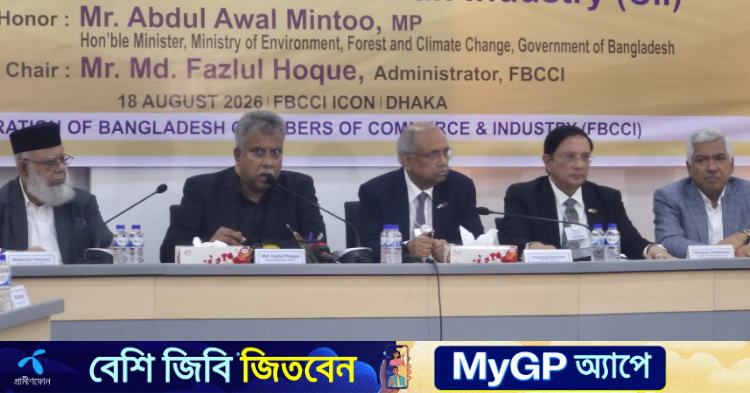
Dhaka, August 18, 2026 — The Federation of Bangladesh Chambers of Commerce and Industry (FBCCI) and the Confederation of Indian Industry (CII) have agreed to form business-to-business (B2B) task forces to address trade and investment barriers and expand bilateral commercial cooperation between Bangladesh and India — with a specific focus on infrastructure investment and emerging technologies, including semiconductors, hydrogen, green energy, battery storage, high-speed rail, data centres, artificial intelligence, and solar manufacturing. The announcement was made at a briefing on 18 August 2026 at the FBCCI office in Dhaka, following a meeting between the two apex business organisations.
📊 The Bilateral Trade Context
- 🤝 FBCCI — Federation of Bangladesh Chambers of Commerce and Industry (apex body for Bangladeshi businesses)
- 🤝 CII — Confederation of Indian Industry (apex body for Indian businesses)
- 🏢 Two task forces — (1) Infrastructure Investment, (2) Emerging Technologies
- 🚢 Non-tariff barriers — testing, certification, customs, port restrictions, licensing, logistics
- 👕 India 2025 restrictions — limited RMG, processed food, plastics, furniture through specified land ports
- 🌐 Emerging tech scope — semiconductors, hydrogen, green energy, battery storage, high-speed rail, data centres, AI, solar manufacturing
🚧 Non-Tariff Barriers: The Persistent Drag
At present, Bangladeshi exporters face a wide range of non-tariff barriers (NTBs) in the Indian market — despite the two countries having preferential tariff arrangements under SAFTA and additional bilateral duty-free access for many Bangladeshi products. The specific NTBs identified in the briefing include:
- 🔍 Testing and certification requirements — Bangladeshi products often require additional testing by Indian laboratories, even when they carry international certifications
- 📜 Customs procedures — documentation requirements that differ from international best practice and create clearance delays
- 🚢 Port restrictions — many Bangladeshi products can only enter India through specified land ports, limiting routing flexibility
- 📜 Licensing rules — import licensing requirements that restrict certain product categories
- 💰 High logistics costs — both at the border and inland, adding cost to landed prices in India
- 👕 2025 product restrictions — India restricted entry of ready-made garments, processed food, plastics, furniture and other goods through specified land ports in 2025
These NTBs have prevented Bangladesh from realising the full potential of the duty-free access India provides under the SAFTA framework — a frustrating reality for Bangladeshi exporters who often find that tariff-free access does not translate into actual market entry when non-tariff barriers block the path. The B2B task forces' focus on addressing these NTBs is therefore one of the most consequential elements of the new bilateral initiative.
🏢 Task Force 1: Infrastructure Investment
The infrastructure investment task force will explore opportunities for Indian private and foreign investment in Bangladesh's infrastructure sector — with a particular focus on areas where India has accumulated significant expertise that is relevant to Bangladesh's development needs:
- 🛣 Roads and highways — including expressway construction, toll operations, and highway maintenance contracts
- 🚆 Rail infrastructure — including high-speed rail, freight corridor development, and rolling stock supply
- ⛽ Energy infrastructure — including power generation, transmission, distribution, and LNG import/regasification facilities
- 💧 Water and sanitation — urban water supply, wastewater treatment, and industrial water infrastructure
- 🏗 Industrial parks and SEZs — including BEZA economic zones, BEPZA expansion, and integrated industrial corridor development
- 🚢 Port and logistics — including Chittagong port expansion, Matarbari deep sea port, and inland container depot operations
- 🏢 Urban infrastructure — including metro rail, smart cities, and affordable housing
FBCCI Administrator Md Fazlul Hoque said Bangladesh could learn from India's experience in attracting private and foreign investment in infrastructure — an important acknowledgment given India's success in mobilising private capital through PPP models, infrastructure debt funds, and the National Infrastructure Pipeline. The fact that FBCCI is seeking Indian investment beyond the energy sector reflects recognition that Bangladesh's gas and electricity challenges have created a need for infrastructure investment in other segments — including transport, logistics, and urban infrastructure — that can support export competitiveness even as the energy crisis is being addressed.
🧵 Task Force 2: Emerging Technologies
The technology task force will explore cooperation in a wide range of emerging technology sectors — reflecting both India's growing capabilities in deep tech and Bangladesh's interest in diversifying its export base beyond RMG:
- 🔌 Semiconductors — design, verification, packaging, and testing; potential for Bangladesh to position as a design hub leveraging its engineering workforce
- ⚖ Hydrogen — green hydrogen production, electrolyser manufacturing, and hydrogen supply chain infrastructure
- 🌞 Green energy — utility-scale solar, rooftop solar for industrial use, wind power, and energy storage
- 🔋 Battery storage — lithium-ion cell manufacturing, grid-scale battery storage, and EV battery supply chain
- 🚇 High-speed rail — technology partnerships for future Dhaka-Chittagong and other high-speed rail corridors
- 🖥 Data centres — hyperscale data centre investment, edge computing infrastructure, and cloud services
- 🤖 Artificial intelligence — AI research partnerships, talent exchange, and applied AI solutions for industry
- ☀ Solar manufacturing — solar PV cell and module manufacturing, with Bangladesh as a potential export hub to India and Southeast Asia
CII Director General Chandrajit Banerjee said Indian companies want to expand investments in Bangladesh, particularly in infrastructure, healthcare and emerging sectors — signalling that the B2B engagement is not limited to one-way Indian investment but also includes Bangladeshi companies seeking to access Indian technology, capital, and markets. The technology task force's scope, in particular, reflects a recognition that Bangladesh needs to diversify into IP-driven exports — not just RMG — and that India's tech ecosystem offers partnership opportunities that did not exist a decade ago.
🤝 Strategic Significance for Bangladesh-India Relations
The B2B task forces come at a particularly important moment in Bangladesh-India bilateral relations. Under the new BNP government led by Prime Minister Tarique Rahman, Bangladesh has been recalibrating its relationship with India — seeking a more balanced and mutually beneficial partnership than the heavily one-sided engagement of the previous administration. The B2B task forces represent a deliberate effort to anchor the bilateral relationship in commercial cooperation rather than political dependency — an approach that both Dhaka and New Delhi have signalled they favour.
For Bangladesh's export economy, the task forces carry several specific potential benefits:
- 👕 RMG market access — if NTBs on RMG through specified land ports can be eased, Bangladesh could meaningfully expand its share of India's $15 billion+ apparel import market
- 🌾 Processed food exports — easing testing and certification requirements would unlock Indian market access for Bangladeshi agro-processors
- 🧴 Plastics and furniture exports — the 2025 port restrictions have been particularly damaging for these product categories
- 💰 Indian FDI — infrastructure investment from Indian conglomerates could fill a financing gap that Chinese, Japanese and Western investors have been slow to address
- 🌐 Technology partnerships — semiconductor design, AI, and data centre cooperation could position Bangladesh as an emerging tech hub
- 🌾 Solar manufacturing — a potential new export sector that builds on Bangladesh's existing RMG manufacturing competence
⏳ Implementation Challenges
Despite the positive announcements, several implementation challenges remain:
- 📜 NTB removal requires political will — the testing, certification, and port restrictions are often the product of Indian domestic political considerations, not just trade policy
- 🌐 Trade imbalance — the bilateral trade balance remains heavily in India's favour, and any task force that focuses only on investment without addressing market access will not address the underlying concern
- 🤝 Visa and mobility — business engagement requires easier visa access for Bangladeshi business travellers to India and vice versa
- 💰 Currency settlement — the rupee-taka settlement mechanism needs to be made more functional to reduce dollar dependency
- 📜 Border infrastructure — land port modernisation is essential for the task forces' objectives to translate into actual trade flow improvements
- 🤝 Geopolitical context — broader Bangladesh-India relations, including water sharing, border management, and security cooperation, will influence the political space for B2B cooperation
🌐 The Bigger Picture: A New Phase of Engagement
Both FBCCI and CII plan regular business engagement and sector-specific delegations under the task force framework — signalling that the 18 August announcement is the beginning of a sustained bilateral engagement rather than a one-off meeting. The hope, articulated in the briefing, is that stronger commercial ties will create a more positive atmosphere for broader Bangladesh-India relations — a notable departure from the politically driven, often transactional engagement that has characterised the bilateral relationship in recent years.
For Bangladesh's export economy, the B2B task forces represent a potentially significant opportunity to access Indian capital, technology, and markets — and to ease the non-tariff barriers that have limited Bangladeshi export penetration in India for years. The challenge now is to convert the FBCCI-CII agreement into measurable outcomes: NTB easing, infrastructure investment commitments, technology partnership agreements, and concrete sectoral collaboration in semiconductors, green energy, AI, and other emerging technology areas. The next six months — with sector-specific delegations expected to begin meeting — will reveal whether this initiative becomes a meaningful structural shift in Bangladesh-India commercial relations or simply another in a long line of bilateral announcements that fail to translate into operational outcomes. For FBCCI Administrator Md Fazlul Hoque and CII Director General Chandrajit Banerjee, the task forces offer a platform to deliver results that have eluded official diplomatic channels for too long.
This news was originally published by The Daily Star. For the full original report, please visit: https://www.thedailystar.net/business/news/businesses-india-bangladesh-form-b2b-task-forces-4250791
Related on BangladeshExport
📬 Get Bangladesh Trade News in your inbox
Weekly digest of export industry news, policy updates, and market analysis.
📰 Related Stories