Bangladesh and Australia Reaffirm Stronger Cooperation in Trade, Skills, Research
Commerce Minister Muktadir meets Australian High Commissioner Susan Ryle; discussions on trade negotiation capacity, research collaboration, education, agriculture, livestock, investment
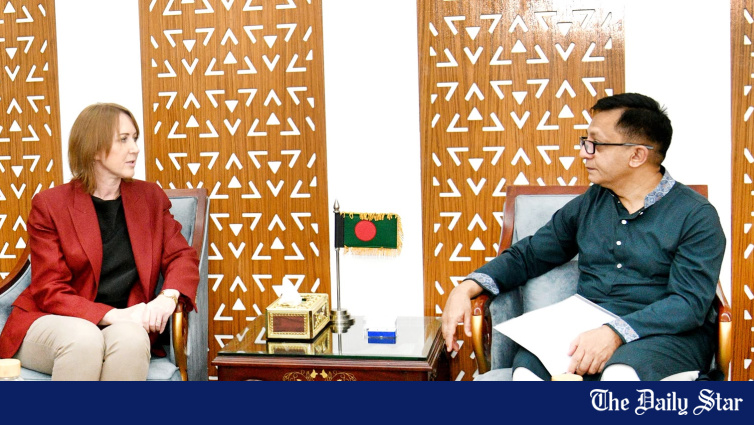
Dhaka, August 6, 2026 — Bangladesh and Australia have reaffirmed their commitment to deepening bilateral cooperation across trade, skills development, education, agriculture and investment — with both countries agreeing to elevate regular dialogue ahead of Bangladesh's LDC graduation and an upcoming Australian business delegation visit to Dhaka.
🤝 The Meeting
The commitment came during a meeting between Commerce Minister Khandakar Abdul Muktadir and Australian High Commissioner to Bangladesh Susan Ryle at the Ministry of Commerce in Dhaka on Wednesday, August 5, 2026. According to officials, discussions focused on strengthening trade negotiation capacity, promoting research collaboration, and expanding cooperation in education, agriculture, livestock and investment — reflecting the broadening scope of a relationship that has historically been anchored by Australia's development assistance programmes rather than by commercial exchange.
🏛️ Bangladesh's Capacity-Building Push
During the meeting, the commerce minister said the government is planning to introduce institutional, long-term training programmes for government officials involved in international trade, with particular emphasis on World Trade Organization (WTO) laws and trade negotiations. The move reflects a growing recognition within the Ministry of Commerce that Bangladesh's trade negotiating capacity has not kept pace with the complexity of agreements the country will need to negotiate after LDC graduation — including free trade agreements, economic partnership agreements and bilateral investment treaties.
To support the initiative, the government has undertaken plans to establish a research and study centre that would eventually serve as a regional hub for knowledge sharing, policy research and capacity building, the minister said. Such a centre would address a long-standing gap in Bangladesh's trade policy infrastructure — the absence of an independent think-tank capable of providing evidence-based analysis to negotiators in real time, comparable to India's Centre for Trade and Development or Vietnam's Institute of Strategic Studies.
The minister also highlighted the importance of improving the professional capacity of Project Directors (PDs), noting that the effective implementation of national development projects depends largely on their competence. The government is therefore considering specialised training programmes to strengthen their skills — a tacit acknowledgment that weak project implementation has been a persistent drag on Bangladesh's development outcomes.
🇦🇺 Australia's Response
Responding to the proposal, High Commissioner Susan Ryle expressed Australia's interest in supporting long-term institutional capacity development. She said previous training initiatives had been conducted on a limited scale, but discussions are now underway to develop more structured and sustained programmes covering trade negotiations, the legal aspects of international agreements and public policy formulation. She also indicated that other development partners could be involved in the initiative — leaving the door open for a multi-donor capacity-building consortium that could bring in expertise from Singapore, the EU and Japan.
🌏 LDC Graduation and Beyond
The meeting also reviewed Bangladesh's trade prospects following its graduation from the least developed country (LDC) category, including future market access strategies and the country's position within the global trading system. Bangladesh is scheduled to graduate from LDC status by November 2026, after which it will lose duty-free, quota-free access to several key markets — including the European Union's Everything But Arms (EBA) scheme. The country is therefore racing to negotiate alternative trade agreements to preserve market access, with the Bangladesh-Korea CEPA already signed and an EPA with Japan under discussion. Australia, which currently applies low MFN tariffs on most Bangladeshi exports, represents a relatively stable market — but one where negotiated preferential access could still deliver meaningful commercial advantage in apparel, leather and agro-processed goods.
📊 Sectoral Opportunities Identified
High Commissioner Ryle identified education, transnational education, renewable energy, agriculture, food processing and business investment as sectors offering significant opportunities for deeper cooperation. The inclusion of transnational education — where Australian universities deliver programmes in partnership with Bangladeshi institutions — is particularly significant, as it offers a pathway to retain Bangladeshi students who would otherwise travel abroad for higher education, retaining both foreign exchange and talent within the country.
Ryle also informed the meeting that an Australian business delegation is expected to visit Bangladesh in the near future, a move both sides believe will help boost trade and investment ties. The delegation will be the first major Australian business mission to Bangladesh since the political transition of August 2024, and is expected to include representatives from the education, agribusiness, mining services and renewable energy sectors.
🍖 Premium Beef, Halal Certification and Livestock
The discussions further explored prospects for exporting premium Australian beef to Bangladesh, alongside cooperation on halal certification, livestock traceability and modern livestock management practices to facilitate future trade in the sector. This is a strategically interesting opening: Bangladesh is one of the world's largest Muslim-majority markets, with growing demand for high-quality halal-certified meat products — both for domestic consumption and for re-export to the Middle East. Australian beef producers, with their rigorous traceability systems, are well-positioned to supply this market, and cooperation on halal certification could create a framework that benefits both Australian exporters and Bangladeshi livestock producers seeking to access premium Middle East markets.
💰 Bilateral Trade Context
Bangladesh's bilateral trade with Australia is currently modest in absolute terms but has been growing steadily. Bangladesh's exports to Australia are dominated by ready-made garments, knitwear and frozen seafood, while Australia's exports to Bangladesh include cotton, wheat, education services and mining equipment. The trade balance has historically favoured Australia, but the gap has narrowed as Bangladesh's apparel exports have grown. The meeting's emphasis on diversifying cooperation beyond apparel into education, renewable energy and food processing signals an intent to broaden the trade relationship into higher-value services and technology — sectors that align with Bangladesh's Vision 2041 economic transformation agenda.
✅ What Comes Next
Concluding the meeting, Bangladesh and Australia reiterated their commitment to elevating bilateral relations through broader economic engagement, sustainable partnerships and enhanced strategic cooperation. The immediate next steps will be the convening of the next round of bilateral trade consultations, the planning of the Australian business delegation visit, and the technical design of the proposed trade negotiation training programme. If both sides deliver on the agenda discussed on August 5, the Bangladesh-Australia relationship could evolve from a development-cooperation partnership into a more substantive commercial and strategic partnership — one that strengthens Bangladesh's negotiating position as it navigates the post-LDC transition.
This news was originally published by The Daily Star. For the full original report, please visit: https://www.thedailystar.net/business/news/bangladesh-australia-reaffirm-stronger-cooperation-trade-skills-research-4241646
Related on BangladeshExport
📬 Get Bangladesh Trade News in your inbox
Weekly digest of export industry news, policy updates, and market analysis.
📰 Related Stories