World Bank Studying Feasibility of Mortgage Refinance Company in Bangladesh
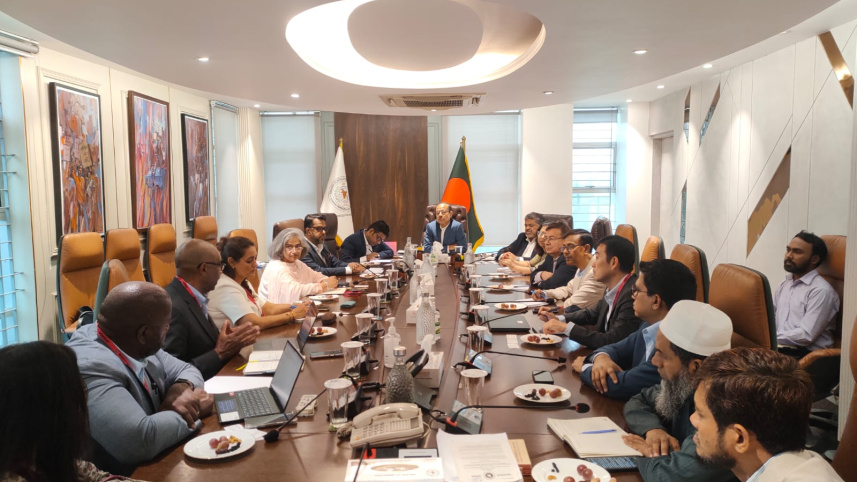
Dhaka, August 20, 2026 — The World Bank Group is conducting a feasibility study on establishing a Mortgage Refinance Company (MRC) in Bangladesh — an institution that could deepen the country's primary mortgage market and mobilise long-term capital market funding for housing finance. The feasibility study, undertaken in response to a formal request from the Financial Institutions Division of the Ministry of Finance, was the subject of a high-level meeting between the Bangladesh Securities and Exchange Commission (BSEC) and a World Bank delegation at the BSEC office on 19 August 2026.
📊 Key Elements of the Initiative
- 📅 19 August 2026 — BSEC-WB meeting at BSEC office
- 🤝 BSEC Chairman Masud Khan — chaired the meeting
- 🤝 World Bank Group — undertaking the feasibility study
- 📜 Financial Institutions Division, Ministry of Finance — formal requesting entity
- 🏢 Mortgage Refinance Company (MRC) — proposed institution
- 💼 Affordable housing finance — primary policy objective
- 💰 Long-term capital market funding — mobilisation channel
- 🏢 Primary mortgage market deepening — expected impact
🏢 What Is a Mortgage Refinance Company?
A Mortgage Refinance Company (MRC) is a specialised financial institution that provides long-term refinancing to primary mortgage lenders — typically banks, housing finance companies, and other financial institutions that originate home loans. The MRC model is widely used in both developed and developing economies to address a fundamental structural challenge in mortgage finance: the maturity mismatch between short-term bank deposits (which fund most mortgage lending in emerging markets) and long-term mortgage loans (which typically have 15–30 year tenors).
By providing long-term refinancing to primary lenders, an MRC enables them to:
- 💰 Expand mortgage lending — without being constrained by short-term deposit funding
- 💰 Offer longer-tenor mortgages — 20–30 year loans become commercially viable
- 💰 Lower mortgage interest rates — reduced funding cost translates into lower borrower rates
- 💰 Mobilise capital market funding — through issuance of mortgage-backed securities and bonds
- 💰 Develop secondary mortgage market — creating liquidity for mortgage assets
For Bangladesh — where mortgage lending is currently constrained by the absence of long-term funding sources and where most home loans carry 10–15 year tenors at relatively high interest rates — an MRC could fundamentally reshape the housing finance landscape, making affordable housing accessible to a much larger share of the population.
🏢 Bangladesh's Housing Finance Context
Bangladesh's housing finance market is currently served by several categories of lenders:
- 🏢 State-owned commercial banks — Sonali, Janata, Agrani, Rupali (limited mortgage offerings)
- 🏢 Private commercial banks — including BRAC Bank, City Bank, Eastern Bank, Mutual Trust Bank, etc. (most active mortgage lenders)
- 🏢 Specialised housing finance companies — including Bangladesh House Building Finance Corporation (BHBFC, state-owned), Delta Brac Housing Finance, Home Loan Management Limited
- 🏢 Non-bank financial institutions — IDLC, IPDC, Lankabangla Finance, United Finance (significant mortgage portfolios)
- 📜 Microfinance institutions — small-scale housing loans for low-income households
The mortgage market is constrained by several structural factors:
- 💰 High interest rates — typically 10–14 percent for home loans, well above regional averages
- ⏳ Short tenors — most loans limited to 10–15 years, vs 25–30 year norms in developed markets
- 💰 High down payments — typically 20–30 percent of property value
- 📜 Land title uncertainty — complicated property registration and titling system
- 💰 Limited long-term funding — absence of pension funds, insurance reserves, or capital market instruments for housing
- 💵 Currency risk — limited foreign currency mortgage availability for non-resident Bangladeshis
💰 Capital Market Development Angle
The involvement of BSEC in the discussions reflects the capital market dimension of the proposed MRC. A mortgage refinance company typically mobilises its long-term funding through capital market instruments — including:
- 💰 Mortgage-backed securities (MBS) — bonds backed by pools of mortgage loans
- 💰 Corporate bonds — long-tenor MRC-issued bonds subscribed by institutional investors
- 💰 Covered bonds — dual-recourse bonds backed by both MRC and underlying mortgage pool
- 💰 Sukuk — Shariah-compliant equivalent of mortgage-backed securities, relevant for Bangladesh's Islamic banking sector
- 💰 Pension fund and insurance investments — long-term liabilities that match long-tenor MRC bonds
For Bangladesh's capital market — which has been historically underdeveloped, with limited long-tenor bond issuance and minimal institutional investor base — the proposed MRC could become a critical anchor issuer. By creating a regular supply of high-quality, long-tenor bonds, the MRC would help deepen the domestic bond market, provide investment options for pension funds and insurance companies, and create a benchmark yield curve for corporate bond pricing.
🤝 BSEC's Role and the Meeting Participants
The 19 August 2026 meeting at the BSEC office brought together senior BSEC officials and World Bank Group representatives:
- 🤝 Masud Khan — BSEC Chairman (chaired the meeting)
- 🤝 Tanwir Habib Rahman — BSEC Commissioner
- 🤝 Nahid Mahtab — BSEC Commissioner
- 🤝 Md. Nafeez Al Tarik — BSEC Commissioner
- 🤝 Hossain Sadat — BSEC Commissioner
- 🤝 Md Abul Kalam — BSEC Executive Director and Spokesperson
- 👥 Officials from relevant BSEC departments
- 👥 Representatives of the World Bank Group
The full commission's presence — including all four BSEC commissioners — signals the importance that the securities regulator attaches to the MRC initiative. BSEC's role in the MRC's development is critical because the commission would be responsible for:
- 📜 Regulating MRC securities issuance — including MBS, bonds, and sukuk
- 📜 Disclosure and investor protection rules — for MRC-issued instruments
- 📜 Trading platform regulations — for secondary market trading of MRC securities
- 📜 Credit rating requirements — for MRC and its securities
- 📜 Institutional investor guidelines — on MBS/bond investment limits
🏢 Affordable Housing: The Policy Driver
BSEC Executive Director and Spokesperson Md Abul Kalam told The Daily Star that the government has a plan to launch such a company that will finance affordable housing — which is not available in the country at present. The affordable housing focus reflects a major policy gap in Bangladesh's housing sector:
- 🏢 Housing shortage — Bangladesh faces an estimated 4–5 million unit housing deficit, particularly in urban areas
- 💰 Low-income household exclusion — existing mortgage products are not accessible to households earning below Tk 50,000/month
- 🏢 Middle-income squeeze — rising urban property prices have made homeownership unaffordable for many middle-class families
- 👥 Urbanisation pressure — Bangladesh urbanising rapidly, with Dhaka's population expected to exceed 25 million by 2030
- 📜 Government housing schemes — limited scale and slow execution of affordable housing projects
- 💰 Limited subsidised mortgage finance — absence of state-backed affordable mortgage products at scale
An MRC focused on affordable housing could channel long-term capital into mortgages for low- and middle-income households — with the World Bank's involvement bringing both technical expertise and potentially concessional financing for the MRC's capitalisation. The World Bank's engagement also suggests potential International Finance Corporation (IFC) equity participation in the MRC — following the model used in other developing countries where IFC has invested in mortgage refinance companies.
🌐 International Models and Best Practice
The proposed Bangladesh MRC would join a global family of similar institutions that have successfully deepened mortgage markets in developing countries:
- 🇰🇲 KMRC (Kenya Mortgage Refinance Company) — launched 2019, with World Bank and IFC support; provides long-term refinancing to Kenyan mortgage lenders
- 🇳🇰 NMRC (Nigeria Mortgage Refinance Company) — launched 2015, World Bank-supported; aims to develop Nigerian mortgage market
- 🇵🇭 PHL (Philippine Home Lending Facility) — state-backed mortgage refinance, providing long-term funding
- 🇪🇷 EMRC (Egypt Mortgage Refinance Company) — launched 2010, providing mortgage liquidity to Egyptian banks
- 🇹🇳 SRF (Tunisia Société de Refinancement Hypothécaire) — established to deepen Tunisian mortgage market
- 🇺🇸 Fannie Mae and Freddie Mac (USA) — government-sponsored mortgage refinance giants, the model on which many developing country MRCs are based
For Bangladesh, the closest model is likely to be KMRC or NMRC — both of which were established with World Bank Group support, both of which combine private bank shareholding with state and development partner equity, and both of which focus explicitly on affordable housing market development. The feasibility study will likely draw on these models while adapting to Bangladesh's specific institutional and regulatory context.
💰 The Bigger Picture: Bangladesh's Financial Sector Deepening
The proposed MRC is one of several initiatives underway to deepen Bangladesh's financial sector and expand access to long-term capital — alongside the five-year banking sector strategic framework, the sukuk market development, the planned Invest Bangladesh Authority, and the broader capital market reform agenda. Together, these initiatives reflect a recognition that Bangladesh's financial sector must evolve beyond its current bank-centric, short-term funding model to support the country's medium-term development ambitions.
For Bangladesh's broader economy, the MRC carries significance beyond housing finance:
- 🏢 Construction sector growth — expanded housing finance supports construction industry employment and growth
- 💰 Capital market deepening — MRC bonds would add depth and tenor diversity to bond market
- 💰 Pension fund investment options — long-term bonds match pension fund liabilities
- 💰 Insurance sector investment — long-tenor bonds suitable for life insurance reserves
- 💼 Employment creation — construction-linked jobs across skilled and unskilled categories
- 💰 Financial inclusion — affordable housing finance for low- and middle-income households
- 🌐 Post-LDC transition readiness — mature financial sector critical for post-LDC economic strategy
For Finance Minister Amir Khosru Mahmud Chowdhury's broader reform agenda, the MRC initiative represents the kind of structural financial sector deepening that will be needed to support the country's transition from a loan-dependent, bank-centric economy to a self-financing, capital-market-supported middle-income country. The feasibility study — backed by the World Bank's technical expertise and the BSEC's regulatory engagement — provides a credible foundation for moving forward. The next steps will be: completion of the feasibility study, capitalisation structure design, regulatory framework development, and ultimately the formal launch of the MRC — potentially within the next 12–18 months if the political will and institutional capacity align. For the millions of Bangladeshi households currently excluded from formal mortgage finance, and for the broader capital market development agenda, the stakes of this initiative extend well beyond the immediate scope of housing finance — into the structural transformation of Bangladesh's financial sector over the coming decade.
This news was originally published by The Daily Star. For the full original report, please visit: https://www.thedailystar.net/business/news/world-bank-studying-feasibility-mortgage-refinance-company-bangladesh-4252591
Related on BangladeshExport
📬 Get Bangladesh Trade News in your inbox
Weekly digest of export industry news, policy updates, and market analysis.
📰 Related Stories