Prolonged Monsoon Worries Farmers In Pabna: 187 Hectares Submerged, Tk 3.46cr Lost
Padma flooding destroys 41.4 hectares of crops, delayed early onion cultivation threatens production targets; DAE warns achieving 9,000-hectare Kondo onion target will be challenge
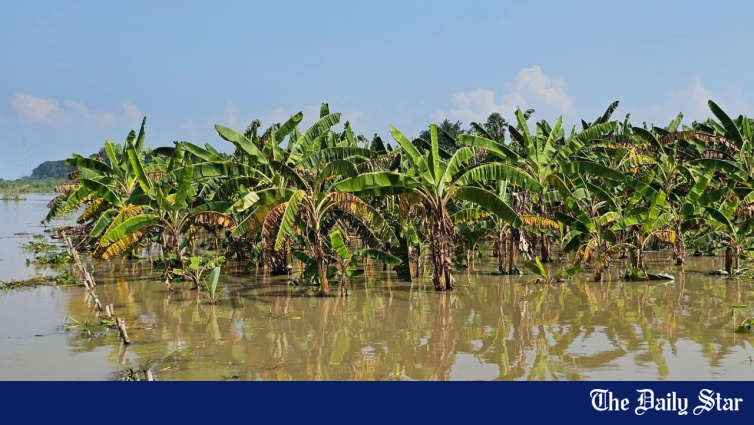
🌾 Prolonged monsoon rains and rising river waters have submerged 187 hectares of farmland in Pabna, completely destroying crops on 41.4 hectares and causing an estimated loss of Tk 3.46 crore. The persistent rain is also delaying the cultivation of Kondo (early onion) — one of the district's most important cash crops — beyond the optimal planting window, threatening this year's production targets.
📊 According to the district Department of Agricultural Extension (DAE), 187 hectares of farmland in Pabna Sadar and Ishwardi upazilas were submerged along the Padma early this month. Crops on 41.4 hectares were completely destroyed, causing an estimated loss of Tk 3.46 crore. The damaged crops include 13.75 hectares of mashkalai (black gram), 7 hectares of chilli, 13.4 hectares of vegetables, 3.25 hectares of banana and 4 hectares of paddy.
💰 Crop Damage Details
- 🌾 Total submerged: 187 hectares (Pabna Sadar + Ishwardi)
- 🌾 Completely destroyed: 41.4 hectares
- 💰 Estimated loss: Tk 3.46 crore
- 🌾 Mashkalai (black gram): 13.75 hectares destroyed
- 🌾 Chilli: 7 hectares destroyed
- 🌾 Vegetables: 13.4 hectares destroyed
- 🌾 Banana: 3.25 hectares destroyed
- 🌾 Paddy: 4 hectares destroyed
- 📊 Kondo onion target: 9,000+ hectares (no planting yet)
📜 Padma Flooding: Riverbank Shoal Areas Hit
"The Padma rose quickly, approaching the danger level and flooding banana, mashkalai and vegetable fields in the riverbank shoal areas," said Md Ashikur Rahman, a sub-assistant agriculture officer at DAE Pabna. Although water has receded from most affected areas, the damaged fields cannot be replanted immediately, he said. Md Shibbar Hossain, a Water Development Board official, said upstream runoff from the Ganges basin caused the river to swell at the beginning of the month. The water, however, remained below the danger level and has since been receding.
👕 Early Onion Delay: Kondo Cultivation Threatened
Meanwhile, continued rain is delaying the cultivation of Kondo, or early onion, across the district. Md Kamruzzaman, an onion farmer from Durgapur village in Sujanagar, usually plants 8-10 bighas of Kondo onion by mid-September. "This year, the soil is far too wet to plant anything. If I can't start planting this month, I will have to skip the early variety entirely," he said.
Md Selim Morshed, another farmer from Haatkhali village, said the ideal planting window is between September 15 and October 15, but continued rain makes planting risky as seedlings can be damaged. DAE has set a target of cultivating more than 9,000 hectares of Kondo onion this year, but no planting had begun as of the report date. "Normally, farmers have a portion of the early crop planted by mid-September. If the weather improves, planting may begin by late this month or early next month, but achieving our production target will be a challenge," Ashikur said.
🌏 Strategic Context: Climate Variability And Agricultural Risk
For Bangladesh's broader agricultural sector, the Pabna situation illustrates the increasing vulnerability of crop production to climate variability. Prolonged monsoon rains — extending beyond the typical September withdrawal pattern — reflect the kind of climate-induced weather variability that Bangladesh's agricultural system is increasingly exposed to. The combination of river flooding (from upstream runoff in the Ganges basin) and persistent rainfall (from extended monsoon conditions) creates a dual vulnerability for farmers in low-lying and riverbank areas.
The Kondo onion delay is particularly significant for Bangladesh's agricultural economy. Early onion is a high-value cash crop that commands premium prices in the October-December window before the main onion harvest arrives. If farmers miss the planting window, the early onion supply gap could drive up domestic onion prices — a politically sensitive food item in Bangladesh where onion price spikes have historically created consumer discontent. The DAE's 9,000-hectare target, if missed, could translate into a meaningful supply gap in the early onion market.
The coming weeks will reveal whether weather conditions improve enough for late-September or early-October planting — or whether the prolonged monsoon permanently disrupts this year's early onion cultivation cycle, with knock-on effects on domestic onion prices and farmer income in the Pabna region.
This news was originally published by The Daily Star. For the full original report, please visit: https://www.thedailystar.net/business/agriculture/news/prolonged-monsoon-worries-farmers-pabna-4278711
Related on BangladeshExport
📬 Get Bangladesh Trade News in your inbox
Weekly digest of export industry news, policy updates, and market analysis.
📰 Related Stories