New $4.0 Billion IMF Credit Programme For Bangladesh: Power-Energy Subsidies Emerge As Big Barrier
Finance officials foresee IMF pushing for deeper power-energy subsidy cuts and further electricity-fuel price hikes under the new $4.0-4.5 billion lending package, with negotiations expected to begin late October or early November 2026.
Dhaka, September 24, 2026 — The state-subsidy issue may stand as a big barrier in negotiating Bangladesh's next IMF lending programme, as the government is forced to spend huge sums to supply subsidised energy and power in crunch time. Finance officials foresee such probability ahead of the credit negotiations with the International Monetary Fund (IMF) next month or early November.
💰 The IMF had kept cajoling the government for cutting down subsidies for power and energy sectors under its previous US$5.5 billion credit programme for Bangladesh — which the current government scrapped a few months after coming to power. Now, with a new programme being negotiated, the same fault line is set to resurface.
📊 The Subsidy Math
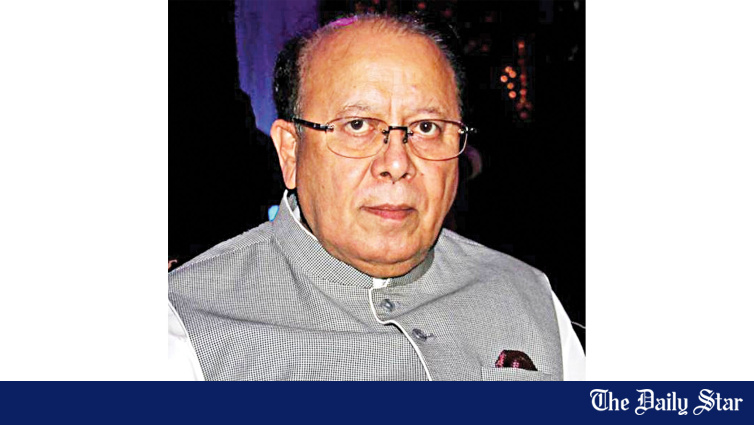
In the last fiscal year, according to Finance Minister Amir Khosru Mahmud Chowdhury, subsidy spending for the power and energy sectors surpassed Tk 400 billion due to the gap between sourcing costs and selling prices.
For the current fiscal year (FY27), the government has allocated:
- ⛽ Tk 370 billion for power subsidy (allocation)
- ⛽ Tk 110 billion as LNG subsidy (earmarked)
- ⛽ Total: Tk 480 billion (combined allocation)
However, during the last two and a half months, some Tk 238 billion had already been disbursed by the Finance Division to help continue energy imports — a pace that, if maintained, would push the actual annual subsidy well above the budgeted Tk 480 billion.
🏛 IMF's July Fact-Finding Mission Recommendation
In July, a fact-finding team of the IMF recommended that the government devise a mechanism to ensure that subsidy benefits are restricted only to poor people, while affluent individuals pay the actual or market rates for power and energy services.
💬 “The IMF wouldn't accept continuation of such a big subsidy spending under the new credit programme as rich people are also benefited from the same,” a senior finance division official said.
Rather, he adds, the IMF officials will push authorities to:
- 🔹 Stop spending energy-and power-sector subsidies at current levels.
- 🔹 Raise electricity-and fuel-oil prices further.
The official has said the requirement for huge subsidy spending will continue until the conflict in the Middle East ends, as energy prices will remain high till then. There is no sign that the Middle East situation will calm down too soon.
🏛 October IMF-World Bank Annual Meetings In Thailand
📋 According to officials concerned, the Finance Minister and his team will have several meetings with IMF top officials on the sidelines of the annual meetings of the IMF and World Bank Group (WBG) during the second week of October in Thailand. The main issue of the meetings will be the new credit programme.
If Bangladesh gives the green signal after the meetings, an IMF team will visit Dhaka in late October or early November to begin formal negotiations on the credit programme.
💰 Programme Size: $4.0-4.5 Billion Expected
The finance division officials are expecting to secure between US$4.0 billion and $4.5 billion under the new lending package to attain macroeconomic stability.
The previous credit programme of $5.5 billion has been scrapped by the current government after it found carrying forward many reform programmes negotiated by previous Awami League government not feasible. Under the previous lending package, the IMF totally released $3.595 billion.
💼 Why Bangladesh Needs The IMF Programme
Another senior finance division official has said Bangladesh needs to enter into the new credit programme with the IMF to conduct the reforms in banking and revenue sectors in particular.
💬 “Unless an IMF programme is there, the government would not feel the necessity of conducting the reforms,” he said, adding that revenue generation is not increasing as per the needs for which massive reforms are necessary.
The official also points out the necessity of banking-sector reforms.
💬 “This reform has not started at all though the IMF pushed severely under the previous programme,” the official told the FE.
📋 IMF's Likely Reform Conditions
Based on the IMF's previous programme conditions and the July fact-finding mission's recommendations, the new credit programme is likely to include conditions on:
- 🏦 Banking sector reforms — including NPL resolution, governance reforms, and bank recapitalisation.
- 💰 Revenue mobilisation — tax policy reforms, broadening the tax base, and improving NBR collections.
- ⛽ Power-energy subsidy rationalisation — targeted subsidies for poor households only, with market pricing for affluent consumers.
- 💸 Exchange rate flexibility — allowing greater market determination of the taka.
- 🏛 Monetary policy transmission — strengthening the central bank's independence and policy rate framework.
- 📊 Statistics and data quality — supporting the BBS's NDP and SEEA framework implementation.
- 🌏 LDC graduation preparation — including tariff rationalisation and trade policy reform.
📊 Subsidy Burden Trajectory
The trajectory of power-energy subsidy spending in Bangladesh has been climbing steeply:
- 📈 FY26 actual: Tk 400+ billion
- 📈 FY27 budgeted: Tk 480 billion (Tk 370 billion power + Tk 110 billion LNG)
- 📈 FY27 actual (projected): likely Tk 600+ billion if current disbursement pace continues
This trajectory is unsustainable without either:
- 🔹 Sharp tariff increases for consumers — building on the September 20 fuel price hike.
- 🔹 Significant fiscal consolidation elsewhere in the budget — cutting development spending or other current expenditure.
- 🔹 Resolution of the Middle East conflict — easing global energy prices.
🌏 Geopolitical Backdrop
The IMF negotiation will take place against a challenging global backdrop:
- 🌏 West Asia conflict — the US-Israeli attacks on Iran earlier this year have kept global energy prices elevated.
- 🌏 Red Sea shipping disruptions — affecting freight rates and supply chains.
- 🌏 Global monetary tightening cycle — with the US Federal Reserve maintaining elevated rates.
- 🌏 Declining ODA — with concessional financing shrinking globally.
For Bangladesh, the timing is particularly delicate because the September 20 fuel price hike has already raised diesel, octane, petrol and kerosene prices by Tk 20 per litre — and the IMF is likely to push for further increases as part of the subsidy rationalisation conditions.
🏛 Strategic Considerations For Bangladesh
For Bangladesh's policymakers, the IMF negotiation involves several competing considerations:
- 📋 Macro stability imperative — Bangladesh needs IMF financing to maintain macroeconomic stability, support reserves, and signal reform credibility to international investors.
- 📋 Political sensitivity of subsidy cuts — further energy price increases will be politically difficult, given the cumulative impact on household budgets and the recent kitchen market price surge.
- 📋 Banking sector reform urgency — the Islami Bank governance crisis and broader NPL problems make banking reform unavoidable.
- 📋 Revenue mobilisation gap — Bangladesh's tax-to-GDP ratio of around 7-8 per cent is among the lowest in Asia, and the IMF is likely to push hard for tax policy reforms.
- 📋 LDC graduation timeline — with Bangladesh graduating from LDC status in 2026, the country needs to demonstrate fiscal and external sector stability.
💼 Wider Implications
The IMF credit programme will also have implications for:
- 🏦 Bangladesh's planned sovereign dollar bond — the government has targeted issuing its first sovereign dollar bond by December 2026, targeting $500 million to $1 billion. IMF programme conditions will affect investor appetite.
- 💰 Bangladesh Bank's monetary policy — the IMF is likely to maintain pressure for caution on further rate cuts.
- 📊 ADP implementation — fiscal consolidation may force further cuts to the development budget, which has already seen record low implementation in the first two months of FY27.
- 🏛 State-owned enterprise reform — particularly in the energy sector, where state-owned entities like BPC, Petrobangla and BPDB carry significant quasi-fiscal liabilities.
The coming weeks will be critical in determining whether Bangladesh can secure a programme that balances reform ambition with political feasibility — or whether the IMF will impose conditions that prove difficult to implement, leading to another round of programme uncertainty.
For now, Finance Minister Amir Khosru Mahmud Chowdhury and his team are preparing for the Thailand meetings with a clear understanding that the power-energy subsidy issue will be the central battleground of the negotiation.
This news was originally published by The Financial Express. For the full original report, please visit: https://thefinancialexpress.com.bd/economy/new-40b-imf-credit-prog-mounting-power-energy-subsidies-cited-as-big-barriers
📬 Get Bangladesh Trade News in your inbox
Weekly digest of export industry news, policy updates, and market analysis.
📰 Related Stories

✍️ More from System Administrator