IMF Finds Flaws In Bangladesh NBR Revenue Reform Plan Ahead Of Next Lending Programme Worth $4 Billion
International Monetary Fund unimpressed with NBR submission focused on current fiscal year revenue; Finance Division to hold tripartite meeting to bridge gaps ahead of October 12-18 annual meetings in Bangkok.
🏛 The International Monetary Fund (IMF) has found flaws in the proposed revenue-sector reforms tagged to the next credit programme for Bangladesh, officials said. The findings represent an early stumble in Bangladesh''s efforts to secure a new multi-billion-dollar lending programme with the IMF, and underscore the challenges facing the National Board of Revenue (NBR) in putting together a credible medium-term reform agenda.
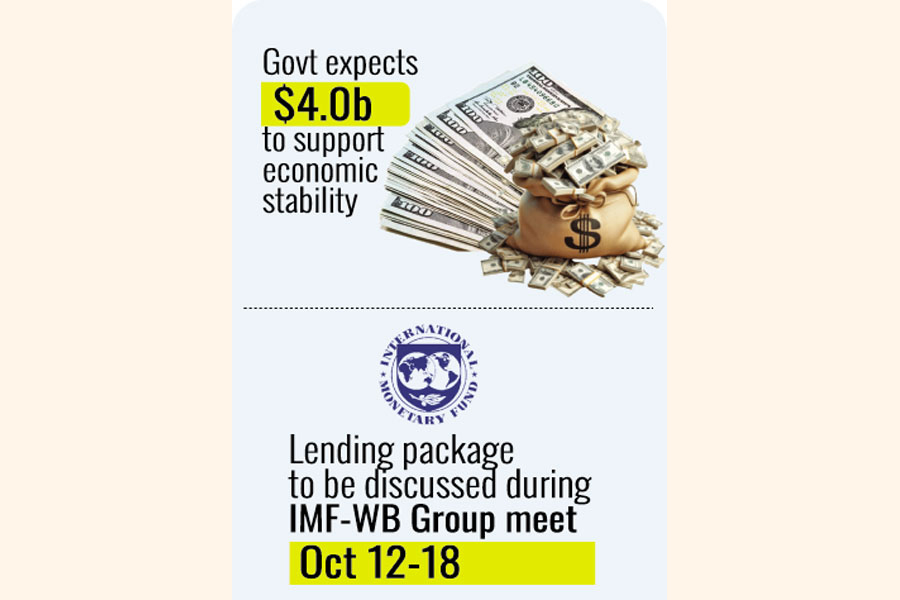
📊 Ahead of the next annual meetings of the IMF and the World Bank Group, slated for 12-18 October 2026 in Bangkok, the NBR and the central bank submitted reform plans to the Fund. A Bangladesh delegation, led by Finance Minister Amir Khosru Mahmud Chowdhury, will discuss the reform blueprint with IMF top bosses on the sidelines of the annual meetings. Officials have said revenue- and banking-sector reforms will govern the talks, so their submissions are getting particular attention.
⚠ What the IMF found lacking
After getting the NBR''s submission, the IMF officials found that the revenue board gave importance to this fiscal year''s higher revenue-generation plan. The proposal lacks required plans for the coming years as to how reforms will be carried out to boost revenue collection. The IMF officials did not find the plans, submitted by the NBR, dependable for higher revenue generation, sources said.
Now, the Finance Division has decided to hold a tripartite meeting virtually with the IMF and the NBR officials to minimise the gaps in the reform proposal, sources familiar with the developments said. The meeting will aim to address the IMF''s concerns about the medium-term credibility of the NBR''s reform agenda before the formal negotiations for the new credit programme begin.
💰 Why revenue reform is the top priority
A senior Finance Division official told The Financial Express that the submissions from the NBR and the Bangladesh Bank are very important since major reforms will be conducted under the next lending package centring these two top institutions. He said revenue-sector reform will remain as the top priority in the next programme since revenue generation remained very low in this country, which holds back required financing and development.
"The IMF will seek clear reform agenda from the revenue board and firm commitment from the government for their implementation in the next credit programme," said the official, seeking not to be quoted by name. However, the official said, the main negotiation for the new credit programme will take place after the annual meeting and the gaps will lessen then.
The finance officials are expecting to secure some $4.0 billion under the new lending package to attain macroeconomic stability. The previous credit programme of $5.5 billion was scrapped by the current government few months after coming to power as it found conducting many reforms, negotiated by the previous Awami League government, not feasible. Under the previous lending package, the IMF had released in total $3.595 billion until the termination.
👥 Bangladesh''s revenue challenge
Bangladesh''s revenue-to-GDP ratio is among the lowest in the world, hovering around 7-8% of GDP — well below the average for low- and middle-income countries and far below the levels needed to fund the country''s ambitious development agenda. The NBR, which is responsible for collecting income tax, value-added tax (VAT) and customs duties, has consistently fallen short of its annual revenue targets in recent years, forcing the government to rely on expensive bank borrowing to finance the fiscal deficit.
The structural weaknesses in Bangladesh''s revenue system are well documented. Tax administration is fragmented and inefficient, with limited use of digital tools and data analytics. Tax compliance is weak, with a large informal sector operating outside the tax net. Tax evasion is widespread, particularly among high-income individuals and large businesses. And the country''s tax-to-GDP ratio has barely improved over the past decade, despite repeated promises of reform.
For the IMF, addressing these structural weaknesses is a precondition for any sustainable macroeconomic stabilisation programme. Without higher revenue collection, the government cannot reduce its reliance on bank borrowing (which crowds out private sector credit), cannot fund the public investments needed to sustain growth, and cannot service its growing external debt obligations. Revenue reform is therefore a non-negotiable condition for IMF lending.
🌏 IMF''s typical reform demands
Based on the IMF''s engagement with other developing countries, the Fund''s typical revenue reform demands include:
- ✅ Medium-term revenue strategy: A credible multi-year plan that specifies annual revenue targets and the policy and administrative measures needed to achieve them.
- ✅ Tax policy reforms: Reduction of exemptions and special treatments, broadening of the tax base, simplification of tax rates, and improvements in tax design to reduce distortions.
- ✅ Tax administration reforms: Modernisation of tax administration through digitalisation, risk-based audits, taxpayer services, and capacity building of NBR officials.
- ✅ Customs reforms: Modernisation of customs administration, reduction of duty exemptions, and improved trade facilitation.
- ✅ Anti-evasion measures: Strengthening of audit and investigation capabilities, cross-matching of data from different sources, and tougher penalties for tax evasion.
The IMF''s disappointment with the NBR''s submission suggests that the revenue board''s reform plan did not adequately address these areas — particularly the medium-term revenue strategy and the specific policy and administrative measures needed to achieve the revenue targets.
🤝 The political economy of revenue reform
Revenue reform is politically difficult in any country, but particularly so in Bangladesh where the tax base is narrow, the informal sector is large, and powerful interest groups have historically resisted efforts to broaden the tax net or reduce exemptions. The previous Awami League government had negotiated a series of revenue reforms with the IMF under the $5.5 billion lending programme, but many of these reforms were either watered down or not implemented — a key reason why the current government scrapped the programme.
The current government''s challenge is to put together a reform agenda that is credible enough to satisfy the IMF, but also politically feasible enough to be implemented. This is a delicate balancing act. If the reforms are too ambitious, they risk being abandoned mid-way as the previous programme was. If they are too modest, the IMF may not be willing to lend the $4 billion that Bangladesh needs.
💰 What happens next
The coming weeks will be critical for Bangladesh''s engagement with the IMF. The tripartite meeting between the Finance Division, the IMF and the NBR will aim to address the gaps in the revenue reform proposal. The Bangladesh delegation''s discussions with IMF top bosses on the sidelines of the October 12-18 annual meetings in Bangkok will set the tone for the formal negotiations on the new credit programme.
If the negotiations are successful, Bangladesh could secure a new $4 billion lending programme that would provide much-needed external financing for macroeconomic stabilisation. If they fail, Bangladesh will need to find alternative sources of financing — which could be more expensive and more conditional than IMF lending.
For Bangladesh''s broader economic outlook, the IMF engagement is a critical signal. A successful programme would signal to international investors and credit rating agencies that Bangladesh is committed to serious macroeconomic reform. A failed programme would have the opposite effect — potentially leading to credit rating downgrades, higher borrowing costs, and reduced investor confidence. The stakes are high, and the NBR''s submission is at the centre of the challenge.
The good news is that the gaps identified by the IMF are not fundamental — they are about the medium-term credibility of the reform plan, not about the basic direction of reform. With some additional work on the multi-year revenue strategy and the specific policy and administrative measures, the NBR should be able to address the IMF''s concerns. Whether the current government has the political will to put together a credible reform agenda — and to implement it once agreed — remains the bigger question.
This news was originally published by The Financial Express. For the full original report, please visit: https://thefinancialexpress.com.bd/economy/imf-picks-holes-in-nbr-revenue-reform-plan
Related on BangladeshExport
📬 Get Bangladesh Trade News in your inbox
Weekly digest of export industry news, policy updates, and market analysis.
📰 Related Stories