CPD Says Lack of Political Courage Behind Bangladesh Sluggish Economic Recovery
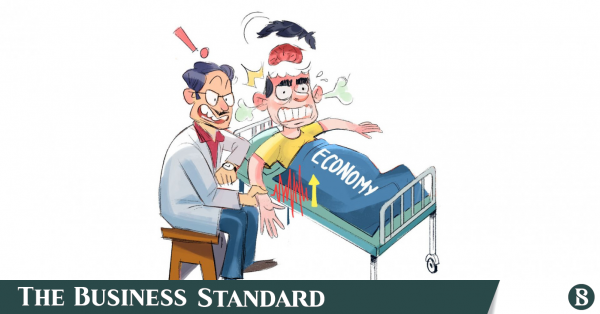
Dhaka, August 24, 2026 — Bangladesh's economic recovery will be delayed, and claims that the economy will turn around within a year are exaggerated, according to Debapriya Bhattacharya, distinguished fellow at the Centre for Policy Dialogue (CPD). He warned that the recovery process has not gained as much momentum over the past six months as it should have, largely because of a lack of political courage and capacity on the part of the government.
The remarks came at a programme organised by the CPD on 24 August 2026 to review the economic performance of the BNP government during its first six months in office. The think tank analysed 362 measures taken by the government across nine key sectors, identifying which initiatives were reassuring and which caused concern. The overall assessment: the balance has tilted more towards discomfort than relief.
📊 31 Key Indicators: 19 Deteriorated, 12 Improved
The CPD reviewed 31 key economic indicators across six major sectors. The results paint a mixed but concerning picture:
- 🔴 19 indicators deteriorated — including NBR revenue, total tax collection, bank borrowing, and net foreign assistance
- 🟢 12 indicators improved — including non-NBR tax collection, ADP implementation, and net deficit financing
- 💰 Per-capita external debt: $55,129.9 at end of March 2026 (up from $48,166 in March 2025)
- 📈 Headline inflation: fell to 8.3%
- 🌾 Food inflation: fell to 7.2%
- 👥 Wage index: increased
"I want to give them [the government] an 'A' grade, but the circumstances are dragging them towards a 'B'," Debapriya said, meaning that good initiatives are being undermined by weak capacity and a lack of coordination. He noted that the prime minister is currently more popular than the government itself, and the biggest challenge is whether he can use that popularity to demonstrate political courage, put his party on the right track, and manage the bureaucracy properly.
🏛 Good Governance, Justice, Public Administration
The CPD identified several reassuring governance initiatives:
- ✅ Scrapping duty-free cars and government plot facilities for MPs
- ✅ Austerity measures, including the PM depositing 10% of his salary into the treasury
- ✅ Reducing ministers' protocol
- ✅ Suspending government vehicle purchases
- ✅ Cutting food expenses
- ✅ Introducing AI-based traffic management system in Dhaka
However, political appointments to universities, state institutions, and courts based on political identity raised concerns about institutional neutrality. The continuation of extortion and land grabbing at the local level, mob killings, violence against women and children, and lack of effective measures to control attacks on indigenous people and minorities also caused concern. Debapriya said political appointments are "highly unacceptable."
💰 Public Financial Management
Positive initiatives included raising the tax-free income threshold, scrapping the opportunity to legalise undisclosed money (black money), providing a 5% tax rebate on payments of up to Tk 25,000, and simplifying online e-return filing. However, the CPD expressed concern over the lack of initiatives to review public-finance expenditures related to government subsidies and tax expenditures, as well as the absence of specific measures to assess sovereign debt risks.
🏭 Industry and Trade
The CPD considered the following as reassuring measures:
- 🤝 Expansion of bonded warehouse facilities beyond the RMG sector
- 🏭 Initiatives to privatise loss-making state-owned enterprises
- 🌐 Signing of 21 agreements, including CEPA studies with South Korea and FTA study with China
- 💼 Creation of a "Startup Fund" for young and women entrepreneurs
However, the closure of 95 factories in Gazipur, Savar, and Narayanganj between January and August 2026, resulting in the loss of 61,881 jobs, and the shutdown of four of the country's five fertiliser factories (only the Ghorashal-Palash plant operating) created serious concerns.
🏢 Banking and Financial Sector
The merger of five troubled Islamic banks under the "United Islamic Bank" and the appointment of administrators to weak non-bank financial institutions were identified as positive initiatives. However, Debapriya expressed concern over the sudden removal and replacement of the Bangladesh Bank governor, questions surrounding conflicts of interest and central bank independence, retaining the Financial Institutions Division under the finance ministry, and the liquidity crisis triggered by controversy surrounding the appointment of a chairman at Islami Bank Bangladesh PLC.
⛽ Energy and Agriculture
The CPD considers the introduction of a fully women-operated "Pink Bus Service," keeping electricity prices unchanged for low-income consumers, offering 25% fare discounts on metro rail and trains for elderly and disabled people, and inviting international tenders for offshore gas exploration as reassuring initiatives. However, the continuing severe gas shortage affecting the textile, steel, paper, and ceramics industries due to technical problems at the Maheshkhali LNG terminal and supply constraints remains a major concern, as does the lack of visible steps to utilise Bhola's gas reserves.
In agriculture, waiving agricultural loans and interest of up to Tk 10,000 and allowing banks to write off loans were positive. However, the shutdown of fertiliser factories due to the gas shortage, increased dependence on imports, failure to make fertiliser available at government-set prices, and allegations of hoarding and illegal sales are concerning.
👥 Social Welfare
Since taking office, the government has distributed 20,832 Farmers' Cards, 70,861 Family Cards, and 300 Sports Cards across the country. However, there have been widespread local-level complaints of political influence and a lack of transparency in selecting Family Card beneficiaries, which is concerning.
🌐 Strategic Context for Bangladesh's Export Economy
The CPD's assessment carries significant implications for Bangladesh's export economy. The deterioration of 19 of 31 economic indicators, combined with 95 factory closures and 61,881 job losses in industrial areas, directly impacts the country's export manufacturing base. The gas shortage's effect on textiles, steel, paper, and ceramics industries adds to existing pressures from the global energy crisis and Middle East geopolitical tensions that have driven LNG prices to unprecedented levels.
For the BNP government under Prime Minister Tarique Rahman, the CPD's assessment represents both a warning and a roadmap. The warning: without political courage to tackle institutional reforms, banking governance, and energy sector structural issues, the economic recovery will continue to lag. The roadmap: 362 measures have been taken across nine sectors, and the CPD has identified which are working and which are not. The challenge now is converting that diagnostic clarity into the political will needed to drive the structural reforms that will determine whether Bangladesh can navigate its LDC graduation and build a more resilient, diversified export economy in the coming years.
This news was originally published by The Business Standard. For the full original report, please visit: https://www.tbsnews.net/economy/economic-recovery-sluggish-due-lack-political-courage-capacity-cpd-1524021
Related on BangladeshExport
📬 Get Bangladesh Trade News in your inbox
Weekly digest of export industry news, policy updates, and market analysis.
📰 Related Stories