Bangladesh Must Attract $15 Billion Annual FDI by 2030 to Sustain Growth, Warns FICCI
Foreign Investors Chamber launches roadmap at PM-attended conference; current FDI-to-GDP ratio of 0.29% is lowest among 5 regional peers and a fraction of Vietnam's 4.23%
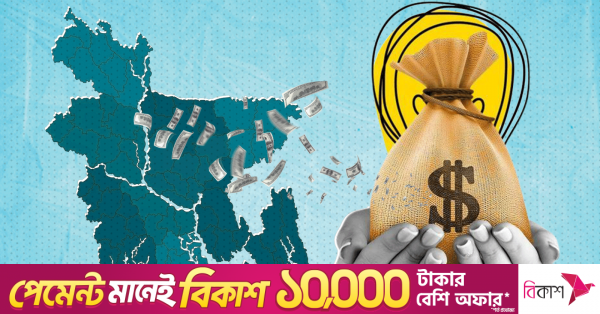
Dhaka, July 23, 2026 — The Foreign Investors' Chamber of Commerce and Industry (FICCI) has delivered a stark warning to Bangladesh: the country must increase annual foreign direct investment (FDI) nearly sevenfold to $15 billion by 2030 if it wants to sustain economic growth, finance its massive infrastructure needs, and remain competitive after graduating from the least developed country (LDC) category. 💼
📋 The warning came with the launch of FICCI's report, "FDI for a New Bangladesh: Roadmap for a $15 Billion Vision", unveiled at the "FICCI FDI Conference 2026: Driving Foreign Investment for Jobs and Prosperity in Bangladesh" held at the Bangladesh-China Friendship Conference Centre in Dhaka, attended by Prime Minister Tarique Rahman.
📊 The Stark Reality — FDI-to-GDP Ratio of 0.29%
Despite being one of South Asia's fastest-growing economies over the past decade, Bangladesh attracts among the lowest levels of foreign investment in the region. The numbers are sobering:
- 📉 Bangladesh FDI-to-GDP ratio: 0.29% to 0.36%
- 🌍 Regional comparison: Lowest among 5 regional peers
- 🇻🇳 Vietnam's ratio: 4.23% (more than 10x Bangladesh's)
- 🎯 Target by 2030: $15 billion annually (7x current levels)
- 🏗️ Annual infrastructure need: $7 billion to $10 billion
🚨 Five Reasons Why FDI Is Lagging
The FICCI report warned that while Bangladesh possesses many of the fundamentals investors seek, several chronic issues continue to deter fresh foreign investment:
- 📋 Policy uncertainty — Frequent changes in tax, customs, and trade regulations make long-term investment planning difficult
- 🏛️ Bureaucratic delays — Slow approval processes at multiple layers of government
- ⚡ Weak infrastructure — Gas, electricity, port, and transport bottlenecks raise operating costs
- 💰 Fragile financial sector — Banking sector stress and NPL concerns affect investor confidence
- 📉 Reinvested earnings vs fresh equity — Recent FDI rebound masks a worrying trend
⚠️ The Reinvested Earnings Problem
The report also cautioned that the recent rebound in FDI masks a worrying trend: much of the increase has come from reinvested earnings by existing foreign companies rather than fresh equity investment from new investors. 📉
This suggests that current investors are expanding cautiously while new entrants remain hesitant — a pattern that limits the diversity and resilience of Bangladesh's FDI base.
🎯 PM Tarique's Pledge — $1 Trillion Economy by 2034
At the conference, Prime Minister Tarique Rahman called upon global investors to become long-term partners in Bangladesh's economic transformation. 🇧🇩
💬 Key commitments from the Prime Minister:
- 🎯 $1 trillion economy by 2034 — The government's headline economic ambition
- 🏛️ Investment-friendly reforms — Committed to policy stability and ease of doing business
- 💼 Private sector-led growth — Shifting from state-led to private-sector-driven development model
- 🤝 Long-term partnerships — Inviting global investors to be partners, not just contractors
🏗️ Why $15 Billion FDI Matters
FICCI outlined why the $15 billion annual FDI target is not aspirational but essential:
- 🏗️ Infrastructure financing — Bangladesh needs $7-10 billion annually for infrastructure alone
- 📈 Productivity-driven growth — Shifting from debt-led expansion to private investment-led growth
- 🌍 Post-LDC competitiveness — After LDC graduation, Bangladesh loses duty-free market access; FDI brings technology and market links to compensate
- 💼 Job creation — 2 million young people enter the workforce annually; FDI is needed to create quality jobs
- 🔧 Technology transfer — Foreign investors bring advanced technology, management practices, and R&D
- 🌐 Export diversification — FDI can help Bangladesh move beyond RMG into electronics, pharmaceuticals, IT, and deep tech
📋 The FICCI Roadmap — Practical Recommendations
"Bangladesh has the potential to attract $15 billion in annual FDI through policy reforms and effective implementation," said Masrur Reaz, Chairman of Policy Exchange Bangladesh, while presenting the report. He described the FICCI study as a practical roadmap for unlocking that potential.
📚 The roadmap focuses on:
- 📋 Policy stability — Predictable tax, customs, and trade regulations
- 🏛️ One-stop investment services — Single window for all approvals
- ⚡ Infrastructure investment — Particularly power, gas, ports, and transport
- 💰 Financial sector reform — Resolving NPLs and strengthening banking supervision
- 🎓 Workforce development — Skills training aligned with investor needs
- 🌐 SEZ effectiveness — Making Special Economic Zones actually attractive to investors
- 🤝 Bilateral investment treaties — Modernising BITs to provide investor protection
🏭 FICCI President's Vision
FICCI President Rupali Haque Chowdhury said Bangladesh is entering a new stage of economic development in which attracting quality foreign investment will be vital for sustaining growth, creating jobs, and financing the country's massive infrastructure needs. 🎯
The report represents the collective voice of foreign investors already operating in Bangladesh — a group that has first-hand experience of both the country's potential and its friction points.
🔍 What This Means for Bangladesh's Export Economy
For a country that relies on RMG for over 80% of merchandise exports, FDI diversification is not optional — it is existential. The $15 billion target, if achieved, would:
- 🏭 Diversify the export base beyond RMG into electronics, pharma, IT, and deep tech
- 💼 Create high-skilled jobs for the 2 million young people entering the workforce annually
- 🔧 Bring technology transfer that boosts productivity across all sectors
- 💰 Reduce reliance on debt for infrastructure financing
- 🌍 Strengthen forex reserves — FDI is non-debt-creating capital
- 🤝 Build global trade links — Foreign investors bring market access and buyer networks
The clock is ticking. With LDC graduation approaching and competitors like Vietnam pulling far ahead on FDI, Bangladesh has a narrow window to implement the FICCI roadmap and unlock its $15 billion FDI potential. 🚀
This news was originally published by The Business Standard. For the full original report, please visit: https://www.tbsnews.net/economy/bangladesh-needs-15b-annual-fdi-2030-sustain-growth-ficci-1496336
Related on BangladeshExport
📬 Get Bangladesh Trade News in your inbox
Weekly digest of export industry news, policy updates, and market analysis.
📰 Related Stories