Bangladesh Government To Act Against LPG Hoarding With Ulterior Motive: PM Adviser Zahed Ur Rahman
PM's Information and Broadcasting Adviser cites NBR data showing 157,760 metric tonnes LPG imported in August and 118,000 metric tonnes in September, assuring no domestic shortage.
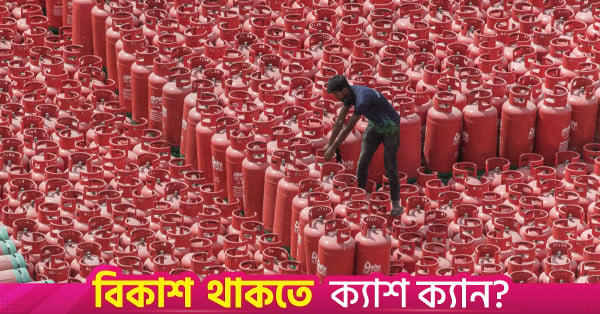
⚠ Prime Minister''s Information and Broadcasting Adviser Zahed Ur Rahman on 29 September 2026 said there is no shortage of liquefied petroleum gas (LPG) in the country and warned that the government will act against LPG hoarding with ulterior motive. He made the remarks at a press briefing on the progress of various government activities at the Secretariat — addressing growing public concern about LPG availability and prices in the domestic market.
📊 Citing data from the National Board of Revenue (NBR), Zahed said the country imported 157,760 metric tonnes of LPG in August 2026, while 118,000 metric tonnes have been imported so far in September 2026. According to the information presented at the meeting, the country''s LPG supply and stock situation remains satisfactory, he said. Zahed said LPG importers and operators have assured the Minister for Power, Energy and Mineral Resources that there is no shortage of LPG in the domestic market.
🏛 The LPG market context
LPG is a critical fuel for Bangladesh''s households, commercial establishments, and small industries — particularly in areas not served by the natural gas distribution network. Bangladesh has one of the largest LPG markets in South Asia, with millions of households relying on LPG cylinders for cooking. The country has also seen significant growth in LPG use for automotive purposes (autogas) and industrial applications in recent years.
Bangladesh''s LPG market is supplied primarily through imports — the country imports LPG from international suppliers, stores it at import terminals, and distributes it to consumers through a network of LPG marketing companies. The major LPG operators in Bangladesh include Summit LNG, Omera Petroleum, Jamuna Gas, Kleenheat Gas, Beximco LP Gas, and several others. The LPG industry has invested significantly in import terminals, storage facilities, and cylinder distribution networks over the past decade, transforming LPG from a niche fuel to a mainstream energy source for millions of Bangladeshis.
👥 Why hoarding concerns arise
Hoarding concerns arise in Bangladesh''s LPG market when there are perceptions of imminent price increases or supply shortages. LPG marketing companies and distributors may be tempted to hold back inventory in anticipation of higher prices, creating artificial shortages in the market that drive prices even higher. This creates a vicious cycle where hoarding begets higher prices, which begets more hoarding.
The hoarding concern is particularly acute during periods of international energy price volatility — such as the current period, when international LPG prices have been elevated due to the Middle East crisis and broader global energy market dislocations. When international prices rise, LPG marketing companies typically seek to pass on the higher costs to consumers through price increases. However, if consumers anticipate these price increases and rush to stock up on LPG cylinders, the resulting demand spike can create genuine shortages — even if the underlying supply is adequate.
💰 Recent LPG price dynamics
Bangladesh''s LPG prices have been volatile in recent months, reflecting both international price movements and domestic supply dynamics. The Bangladesh Energy Regulatory Commission (BERC) sets LPG prices through a formula that takes into account international LPG prices, the Saudi Aramco contract price (which is the benchmark for LPG imports into South Asia), the exchange rate, and domestic costs including transportation, marketing, and taxes.
When international prices rise, BERC typically adjusts domestic LPG prices upward — which can trigger consumer anxiety and hoarding behaviour. The government''s reassurance that there is no LPG shortage is therefore aimed at calming consumer fears and discouraging panic buying that could create self-fulfilling shortages. The warning against hoarding with ulterior motive is directed at LPG marketing companies and distributors who might be tempted to hold back inventory in anticipation of higher prices.
🌏 Government''s enforcement challenge
The government''s challenge in addressing LPG hoarding is that it is difficult to prove. LPG marketing companies can plausibly argue that they are holding inventory for legitimate business reasons — such as managing supply chain logistics, hedging against supply disruptions, or meeting seasonal demand peaks. Proving that inventory is being held back specifically to manipulate prices requires detailed investigation of company records, supply chain data, and pricing decisions.
The government''s warning is therefore more of a deterrent than an enforcement action — signalling to LPG operators that the government is monitoring the situation and will intervene if hoarding becomes a problem. The NBR data on LPG imports is being used to support the government''s position that there is no genuine supply shortage — and that any localised shortages or price spikes are the result of distribution issues or hoarding rather than inadequate supply.
🤝 Implications for Bangladesh''s energy market
The LPG hoarding warning has broader implications for Bangladesh''s energy market governance. It highlights the challenges of regulating a market that is supplied primarily through imports, distributed through private companies, and characterised by significant information asymmetry between the government, operators, and consumers. To address these challenges, the government may need to invest in better market intelligence capabilities — including real-time data on LPG imports, storage levels, distribution, and pricing.
For consumers, the government''s reassurance that there is no LPG shortage is important — it should help calm consumer anxiety and discourage panic buying. However, consumers will continue to face the broader challenge of LPG price volatility, which is driven by international market dynamics that are largely outside the government''s control. The coming months will show whether the government''s warnings are sufficient to deter hoarding behaviour — and whether Bangladesh''s LPG market can function smoothly through the current period of international energy market volatility.
This news was originally published by The Business Standard. For the full original report, please visit: https://www.tbsnews.net/economy/energy/govt-act-against-lpg-hoarding-ulterior-motive-zahed-1557331
📬 Get Bangladesh Trade News in your inbox
Weekly digest of export industry news, policy updates, and market analysis.
📰 Related Stories