Bangladesh Govt To Issue Digital Bank Licences Soon: Finance Minister
Finance Minister Amir Khosru says digital banking is coming soon as part of digital economy and financial inclusion agenda, with gradual rollout focused on cybersecurity and infrastructure

💰 The government is considering issuing licences for digital banks soon, as digital banking is expected to become part of Bangladesh's digital economy and financial inclusion agenda, Finance Minister Amir Khosru Mahmud Chowdhury said on September 19. The announcement signals the government's intent to move forward with the digital banking framework that has been under discussion since the passage of the Bank Company (Amendment) Act 2023.
📊 "Digital banking is going to happen very soon. I have no doubt about it because this is very much part of our digital economy and financial inclusion," he said while speaking at a dialogue titled "Financial Inclusion: Policy Goals, Transactions Ecology and Sustainable Roadmap", organised by the Power and Participation Research Centre (PPRC) at a hotel in the capital. The minister said digital banking should be rolled out gradually, with particular attention to cybersecurity, digital infrastructure and the integration of credit information.
📜 Digital Banking As Part Of Wider Ecosystem
He also said digital banking should not be treated as a standalone service but as part of a wider financial ecosystem covering reliable internet connectivity, digital payments, financial services and access to formal banking. He further said strong digital infrastructure was needed before expanding digital financial services.
Amir Khosru said the new system could bring people currently outside the formal financial system into banking, particularly low-income households, farmers and other underserved groups. He cited government-backed payment programmes as an example, saying regular digital transactions could encourage people without bank accounts to enter the formal financial system.
- 📜 Speaker: Finance Minister Amir Khosru Mahmud Chowdhury
- 🏛 Event: PPRC dialogue on Financial Inclusion
- 📅 Date: September 19, 2026
- 👥 Target: Low-income households, farmers, underserved groups
- 📜> Key concerns: Cybersecurity, digital infrastructure, credit info integration
- 📜> Payment programmes cited: Family Card, Farmer Card
👥 Family Card And Farmer Card: Gateway To Financial Inclusion
Many Family Card beneficiaries, particularly housewives, do not have bank accounts, he said. Regular payments through formal channels could encourage them to open accounts. A similar process was taking place among farmers receiving payments through the Farmer Card, he added. "Once people receive payments through a formal system, they have an incentive to enter the banking system," he said.
The government's Family Card and Farmer Card programmes — which channel government payments directly to beneficiaries — serve as on-ramps to formal financial inclusion. When recipients receive payments through bank accounts or mobile financial services, they gain familiarity with the formal financial system and are more likely to use additional banking services. Digital banks, with their lower operating costs and broader geographic reach, could accelerate this inclusion process.
⚠ MFS Concerns: MDR Removal And Bangla QR Diversion
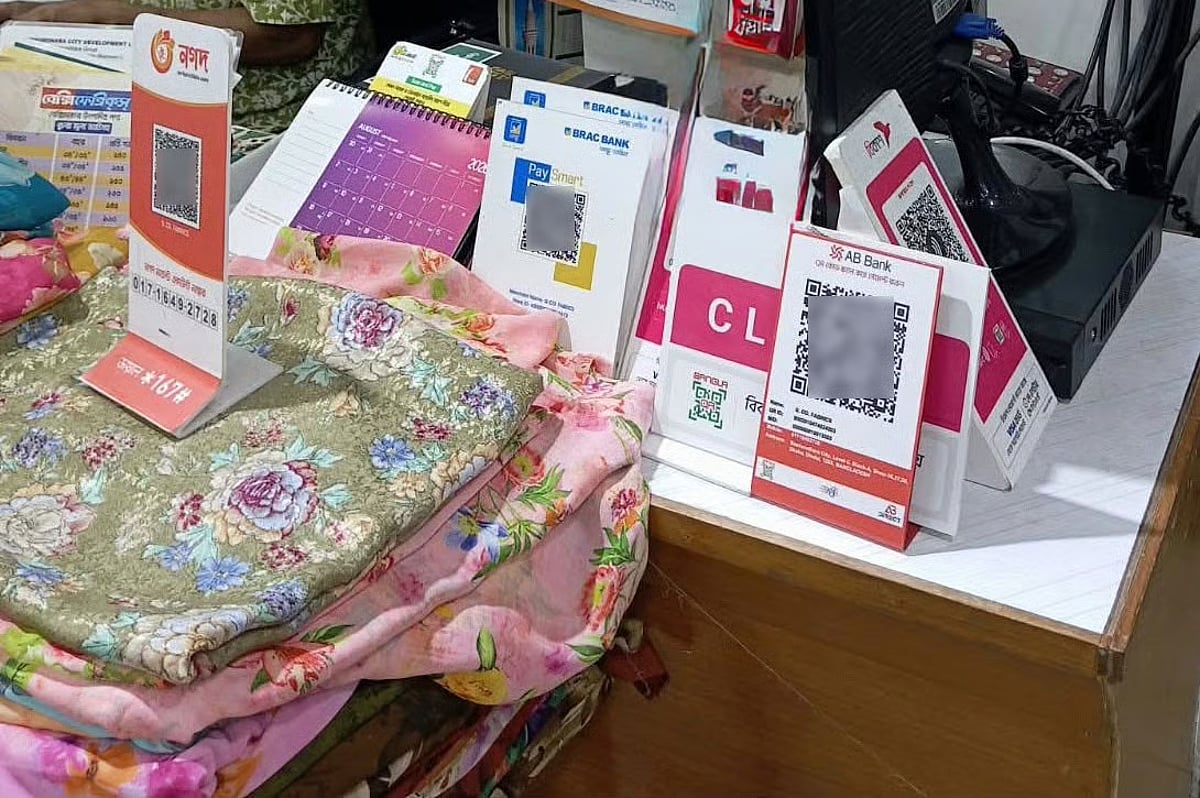
Participants at the dialogue raised concerns over the removal of the minimum merchant discount rate (MDR) and interchange reimbursement fee (IRF), saying the move had disrupted the business model of mobile financial service (MFS) providers. They called for stronger regulatory monitoring of Bangla QR, alleging that some agents were diverting MFS funds into bank accounts to take advantage of the zero-fee payment facility. MDR is a fee paid by merchants to banks and payment service providers for processing digital transactions. IRF is an interbank service charge paid by the institution providing Bangla QR to the institution whose app is used to complete a payment.
The concerns raised at the PPRC dialogue align with the Bangla QR misuse issue documented in our earlier reporting — merchants exploiting the zero-fee Bangla QR system to offer cash-out services that undermine the MFS agent network. The finance minister's announcement of digital banking licences, combined with the regulatory concerns about Bangla QR misuse, suggests that the government is simultaneously pushing forward with digital financial innovation while grappling with the regulatory challenges that rapid digitalisation creates.
🌏 Strategic Context: Digital Bangladesh Vision
For Bangladesh's broader digital economy agenda, digital bank licences represent a structural upgrade to the financial system architecture. Digital banks — which operate without physical branches, using mobile and internet platforms — can serve customers at lower cost than traditional banks, making them particularly suited to reaching rural and low-income populations that traditional banks have not served profitably. The gradual rollout approach that the finance minister advocates — prioritising cybersecurity, infrastructure and credit information integration — reflects awareness that digital banking in Bangladesh needs strong foundations to avoid the kind of governance failures that have plagued the traditional banking sector.
The coming months will reveal whether the digital bank licence framework translates from announcement to operational reality — and whether the regulatory framework can balance innovation with the prudential controls needed to prevent digital banking from replicating the governance failures of traditional banking in Bangladesh.
This news was originally published by The Business Standard. For the full original report, please visit: https://www.tbsnews.net/economy/banking/govt-issue-digital-bank-licences-soon-finance-minister-1547411
Related on BangladeshExport
📬 Get Bangladesh Trade News in your inbox
Weekly digest of export industry news, policy updates, and market analysis.
📰 Related Stories