Huawei Says AI Chip Demand Outstrips Supply As China Pushes Self-Sufficiency
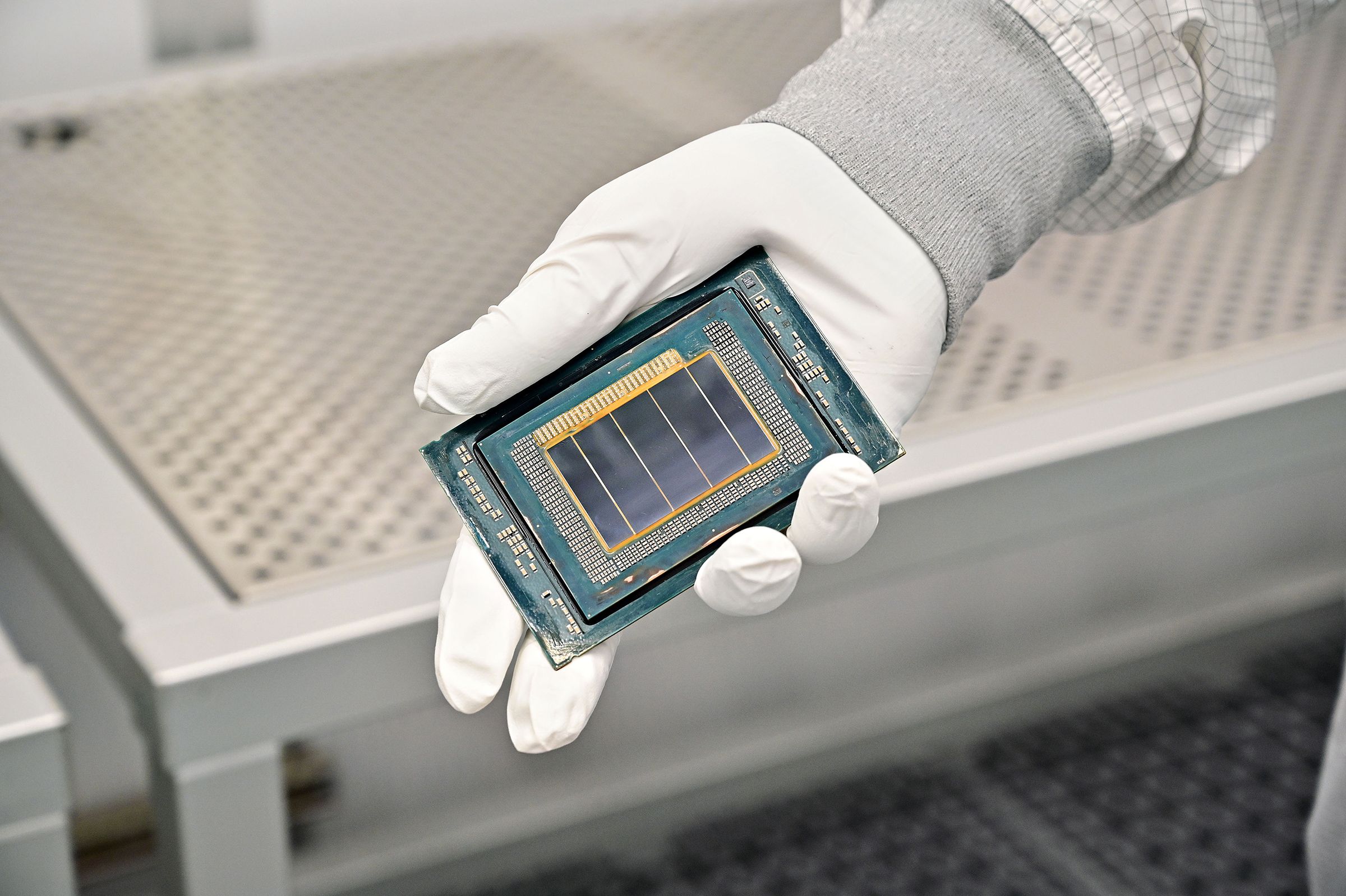
Huawei's Ascend AI chips cannot meet domestic Chinese demand, limiting overseas sales; company claims Ascend market share exceeds Nvidia's in China and plans annual chip releases through 2029
🤖 Huawei Technologies cannot produce enough artificial-intelligence computing equipment to meet demand in China and is limiting overseas sales, rotating chairman Eric Xu said on Thursday, as the Chinese telecoms giant positions itself at the centre of China's drive for semiconductor self-sufficiency. The announcement underscores the massive demand for AI computing infrastructure in China and Huawei's emerging role as the domestic alternative to Nvidia.
📊 Xu said testing of Huawei's Ascend 950DT AI chip had produced good results and the company was in extensive discussions with Chinese AI model developers. He expected many of them to begin training models on systems using the chip next year. "Since we don't have enough capacity to even satisfy the demand in China, we don't have a plan to expand into the international market in a fully-fledged way," Xu told reporters at the company's Huawei Connect conference in Shanghai.
💰 Ascend Vs Nvidia: Market Share Claims
Huawei supplies some countries where demand is particularly strong, Xu said, but volumes remain limited. Xu also said reliable data on Nvidia's share of China's AI chip market was difficult to obtain but added: "I think Ascend market share should be bigger than Nvidia's." Huawei did not provide data to support the estimate. The claim — if accurate — would represent a remarkable competitive shift, with Huawei's domestically produced Ascend chips displacing Nvidia as the dominant AI chip supplier in the world's second-largest economy.
- 🤖 Current chip: Ascend 950DT (testing positive, model training next year)
- 🤖 Next gen: Ascend 960DT (Q1 2027, 3 quarters ahead of schedule)
- 🤖 Ascend 960PR (Q3 2027, 1 quarter ahead)
- 🤖 Future: Ascend 970 (2028), 980 (2029)
- 📊 Chip cluster standard: ~100,000 chips for large model training
- 📊 Communication overhead: >40% of training time in conventional systems
- 🌏 Market position: Ascend share > Nvidia in China (claimed)
- 🌏 US restrictions on Huawei: Since May 2019
📜 US Export Controls Driving Chinese Self-Sufficiency
The comments underscore Huawei's growing role at the centre of China's drive to build a domestic AI computing industry, as US export controls restrict access to Nvidia's most advanced chips and semiconductor manufacturing equipment. Huawei has faced separate US trade restrictions since May 2019. Xu explicitly linked Huawei's chip push to China's effort to reduce its reliance on foreign technology. "We cannot accept a destiny where we cannot control our fate being determined by others in terms of willingness to sell chips to China or not," he said.
"No matter if it's for the Chinese government, industry in China, or for Huawei, it is certainly the way forward to try to push for full self-sufficiency for chips." Huawei has made AI infrastructure central to its strategy. Guo Ping, chairman of Huawei's supervisory board, told employees in remarks released this week that the company viewed AI as its "biggest opportunity" and wanted its computing and connectivity infrastructure to play a role comparable to Nvidia's.
💰 Ascend Roadmap: Annual Releases Through 2029
Huawei also detailed its next generation of AI processors and computing systems. The company plans to have its Ascend 960DT chip ready in the first quarter of 2027, three quarters earlier than previously planned, and the 960PR ready in the third quarter, one quarter ahead of schedule. Huawei has a rotating-chair system in which senior executives take turns leading the company for six-month periods. Huawei intends to release a new generation of Ascend chips every year, with the 970 and 980 to follow in 2028 and 2029.
The accelerated timeline — 960DT three quarters ahead of schedule — demonstrates the urgency of Huawei's chip development push. The annual release cadence, if sustained, would allow Huawei to narrow the generational gap with Nvidia more rapidly than the slower development cycles that characterised earlier Chinese chip efforts.
🌏 Cluster Computing: 100,000 Chips For Large Model Training
The company is increasingly trying to compensate for limits on individual Chinese chips by connecting large numbers of processors so they can work together as one larger computing system. Huawei said clusters of about 100,000 chips have become standard for training some of the largest AI models, while communication between machines can consume more than 40 percent of training time in conventional server systems. Faster links between processors can reduce that bottleneck and make better use of available computing power, the company said.
The cluster computing approach — using 100,000+ chips in coordinated arrays — is Huawei's strategy for overcoming the performance gap between individual Ascend chips and Nvidia's most advanced H100/B100 processors. By connecting massive arrays of less powerful chips with high-speed interconnects, Huawei can achieve aggregate computing capacity that approaches what individual advanced Nvidia chips deliver. This architectural approach is well-suited to China's manufacturing strengths (producing large volumes of chips at moderate performance levels) while mitigating the constraints of US export controls on advanced chip technology.
🌏 Implications For Bangladesh And Global Tech
For Bangladesh, Huawei's AI chip development carries indirect but relevant implications. Huawei is a significant technology partner for Bangladesh's telecom sector, having supplied 4G/5G infrastructure to multiple operators. If Huawei's AI computing infrastructure becomes commercially available in South Asian markets (once domestic Chinese demand is met), Bangladeshi companies and research institutions could potentially access AI computing capacity at lower cost than Nvidia-based systems — supporting the country's emerging AI ecosystem.
The broader global implication is that the US-China tech decoupling is producing a bifurcated AI computing landscape — with Nvidia dominating Western markets and Huawei emerging as the dominant supplier in China and potentially other markets that are not aligned with US export controls. This bifurcation will shape the global AI development trajectory for years to come, as companies and countries navigate between the two technology ecosystems.
This news was originally published by The Daily Star. For the full original report, please visit: https://www.thedailystar.net/business/organisation-news/news/huawei-says-ai-chip-demand-outstrips-supply-4275811
📬 Get Bangladesh Trade News in your inbox
Weekly digest of export industry news, policy updates, and market analysis.
📰 Related Stories