Bangladesh Drugmakers See Limited Gains From US Pharma Tariff Exemption Amid Capacity And Regulatory Hurdles
Industry leaders say Bangladesh does not currently manufacture many of the highly specialised medicines covered by the US tariff adjustment, dampening hopes of immediate export gains.
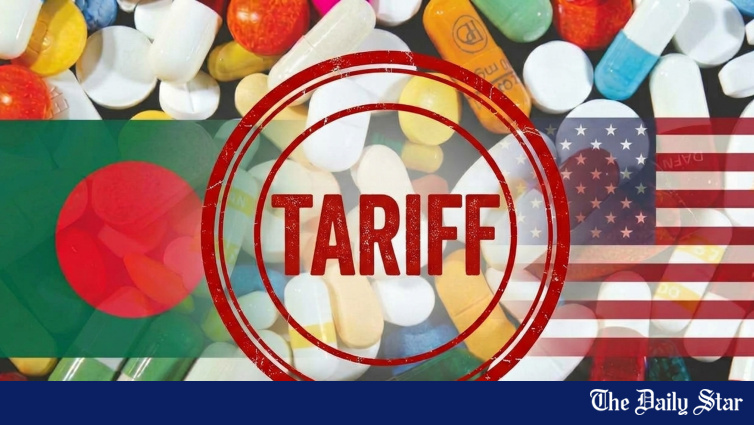
💊 Bangladesh''s pharmaceutical industry may see some opportunities from the latest US tariff adjustment that grants zero ad valorem tariff on certain pharmaceutical products from eligible jurisdictions, but industry leaders say the immediate benefits are likely to be limited because the country does not currently manufacture many of the highly specialised medicines covered by the measure. The US announced a 100 percent ad valorem tariff on certain licensed pharmaceutical products and ingredients from 29 September 2026 under Section 232 of the Trade Expansion Act, while exempting certain products from eligible jurisdictions.
📊 The US tariff came into effect on 31 July 2026 for companies listed in one annex to Donald Trump''s announcement and was scheduled to apply to other covered companies from 29 September 2026. Bangladesh is among a group of eligible jurisdictions that includes Argentina, Cambodia, Ecuador, El Salvador, the European Union, Guatemala, India, Indonesia, Japan, Jordan, Malaysia, North Macedonia, South Korea, Switzerland and Liechtenstein, Taiwan, Thailand, the United Kingdom and Vietnam. Under the tariff adjustment, certain pharmaceutical products and associated ingredients from eligible jurisdictions will face a zero ad valorem tariff.
🏛 What products are covered
The covered products include a list of highly specialised pharmaceutical categories:
- 💊 Orphan drugs: Pharmaceutical agents developed specifically to treat, prevent, or diagnose rare orphan diseases
- 💊 Nuclear medicines: Radiopharmaceuticals used in diagnostic imaging and therapy
- 💊 Plasma-derived therapies: Treatments derived from human plasma for conditions such as immune deficiencies and bleeding disorders
- 💊 Fertility drugs: Medications used in assisted reproductive technology and fertility treatments
- 💊 Cell therapy products: Advanced therapies using living cells to treat diseases
- 💊 Gene therapy products: Treatments that modify a patient''s genes to treat or cure disease
- 💊 Antibody-drug conjugates: Targeted cancer therapies that combine antibodies with cytotoxic drugs
- 💊 Medical countermeasures: Products related to chemical, biological, radiological and nuclear threats
- 💊 Other specialty pharmaceuticals: To be identified by US authorities
- 💊 Animal health pharmaceuticals: Subject to specified conditions
⚠ Why Bangladesh won''t benefit immediately
Industry leaders said the tariff provision does not necessarily translate into immediate export gains for Bangladesh because local manufacturers have limited production of such specialised products. Shawkat Haider, executive director of Beximco Pharmaceuticals Limited, said Bangladesh is unlikely to benefit from the tariff adjustment in areas where the country does not manufacture highly sophisticated drugs.
"Bangladesh will not get any significant benefit from the tariff adjustment because we do not manufacture this type of highly sophisticated medicine," Haider said. He noted that the country''s pharmaceutical industry is not yet capable of manufacturing such complex drugs at the required scale and to the necessary standards. Developing that capacity would require substantial investment in technology, research and development, manufacturing facilities and regulatory compliance.
Haider also noted that Bangladesh has a limited number of manufacturers of animal healthcare products, but the industry is not yet sufficiently advanced to meet the stringent requirements of the highly regulated US market. According to Haider, entering the US pharmaceutical market is particularly challenging because Bangladeshi manufacturers face strong competition from established producers in countries such as India, South Korea and Japan — all of which have much more developed capabilities in the specialised drug categories covered by the tariff exemption.
🤝 BAPI President''s perspective
Abdul Muktadir, chairman and managing director of Incepta Pharmaceuticals Ltd and president of the Bangladesh Association of Pharmaceutical Industries (BAPI), said Bangladesh currently does not export such drugs to the US, but the tariff adjustment could create new opportunities in the future. "In my judgment, Bangladesh does not export such drugs to the USA, but it may open new opportunities in future," he said.
However, Muktadir said the tariff adjustment could generally create some opportunities for Bangladesh''s pharmaceutical sector, but the potential benefits need to be examined carefully on a product-by-product basis. "Generally speaking, yes, there could be some opportunities. But we have to dig deeper to identify the specific items and understand where Bangladesh can actually benefit," he said. The impact will depend on Bangladesh''s production capacity, quality and ability to meet US regulatory requirements, he added. "A product-level assessment will be needed to identify where export opportunities exist."
🌏 Bangladesh''s pharmaceutical sector context
Bangladesh''s pharmaceutical industry is one of the country''s most successful export sectors, with exports reaching over $270 million in FY26 — a small but growing contribution to the country''s overall export basket. The sector has been a major beneficiary of the WTO''s Trade-Related Aspects of Intellectual Property Rights (TRIPS) exemption for LDCs, which has allowed Bangladeshi manufacturers to produce and export generic versions of patented drugs that would otherwise be subject to patent restrictions in developed markets.
However, this TRIPS exemption is set to expire when Bangladesh graduates from LDC status — currently scheduled for November 2026, though Bangladesh has been pushing for a three-year deferral. Once the exemption expires, Bangladeshi manufacturers will need to comply with international patent rules, limiting their ability to produce generic versions of patented drugs. This makes the development of new, innovative products — such as the highly specialised drugs covered by the US tariff exemption — even more strategically important for the sector''s long-term future.
👥 Investment required to capture the opportunity
Capturing the opportunity created by the US tariff exemption will require significant investment in several areas. First, Bangladeshi manufacturers will need to invest in research and development capabilities to develop the highly specialised drugs covered by the exemption. This includes investing in advanced biotechnology platforms, cell culture facilities, gene therapy research and antibody-drug conjugate development capabilities — all of which require significant capital and specialised scientific expertise.
Second, Bangladeshi manufacturers will need to invest in manufacturing facilities that meet the stringent US Food and Drug Administration (FDA) standards. The US FDA''s approval process for biologics, cell therapies and gene therapies is among the most rigorous in the world, and Bangladeshi manufacturers will need to demonstrate compliance with current Good Manufacturing Practice (cGMP) standards at every stage of the production process.
Third, Bangladeshi manufacturers will need to invest in regulatory affairs capabilities to navigate the complex US FDA approval process. This includes hiring experienced regulatory affairs professionals, building relationships with US regulatory consultants, and developing a deep understanding of the FDA''s requirements for clinical trials, product labelling and post-market surveillance.
💰 Strategic significance for Bangladesh
Despite the limited immediate benefits, the US tariff exemption is strategically significant for Bangladesh''s pharmaceutical sector for several reasons. First, it signals that the US is open to importing pharmaceutical products from Bangladesh — a positive signal that could encourage Bangladeshi manufacturers to invest in the capabilities needed to access the US market in the longer term.
Second, the exemption creates a potential future opportunity for Bangladeshi manufacturers that are already investing in advanced capabilities. Companies such as Beximco Pharmaceuticals, Incepta Pharmaceuticals, Square Pharmaceuticals and Radiant Pharmaceuticals have been investing in oncology, biologics and other specialised drug categories — and could potentially leverage the tariff exemption to scale up their US exports once they achieve FDA approval for their products.
Third, the exemption creates a strategic incentive for foreign pharmaceutical companies to invest in Bangladesh as a manufacturing base for exports to the US. Given Bangladesh''s low-cost manufacturing base, growing pharmaceutical capabilities and now preferential tariff access for certain specialised products, the country could become an attractive destination for foreign direct investment in pharmaceutical manufacturing.
For Bangladesh''s broader export strategy, the US tariff exemption underscores the importance of moving up the pharmaceutical value chain from generic drugs to specialised products. While the immediate benefits may be limited, the long-term opportunity is significant — provided that Bangladeshi manufacturers and the government invest in the capabilities and infrastructure needed to capture it.
Industry leaders are now calling for a comprehensive product-level assessment to identify where Bangladesh can realistically compete in the US market, along with a coordinated government-industry strategy to invest in the R&D, manufacturing and regulatory capabilities needed to access those opportunities. Without such a strategy, Bangladesh risks missing out on the long-term potential of the US tariff exemption — much as it has missed out on previous opportunities to scale up pharmaceutical exports to other developed markets.
This news was originally published by The Daily Star. For the full original report, please visit: https://www.thedailystar.net/business/economy/news/local-drugmakers-see-little-gain-us-tariff-exemption-4286326
Related on BangladeshExport
📬 Get Bangladesh Trade News in your inbox
Weekly digest of export industry news, policy updates, and market analysis.
📰 Related Stories