Bangladesh Corporate Lending Skew Leaves SMEs Short of Credit, Experts Warn
MCCI-PEB roundtable hears 75-80% of bank lending flows to corporates; BRAC Bank data shows unsecured SME loans (2% NPL) outperform collateral-backed (7% NPL); experts call for cash-flow-based lending and national collateral registry
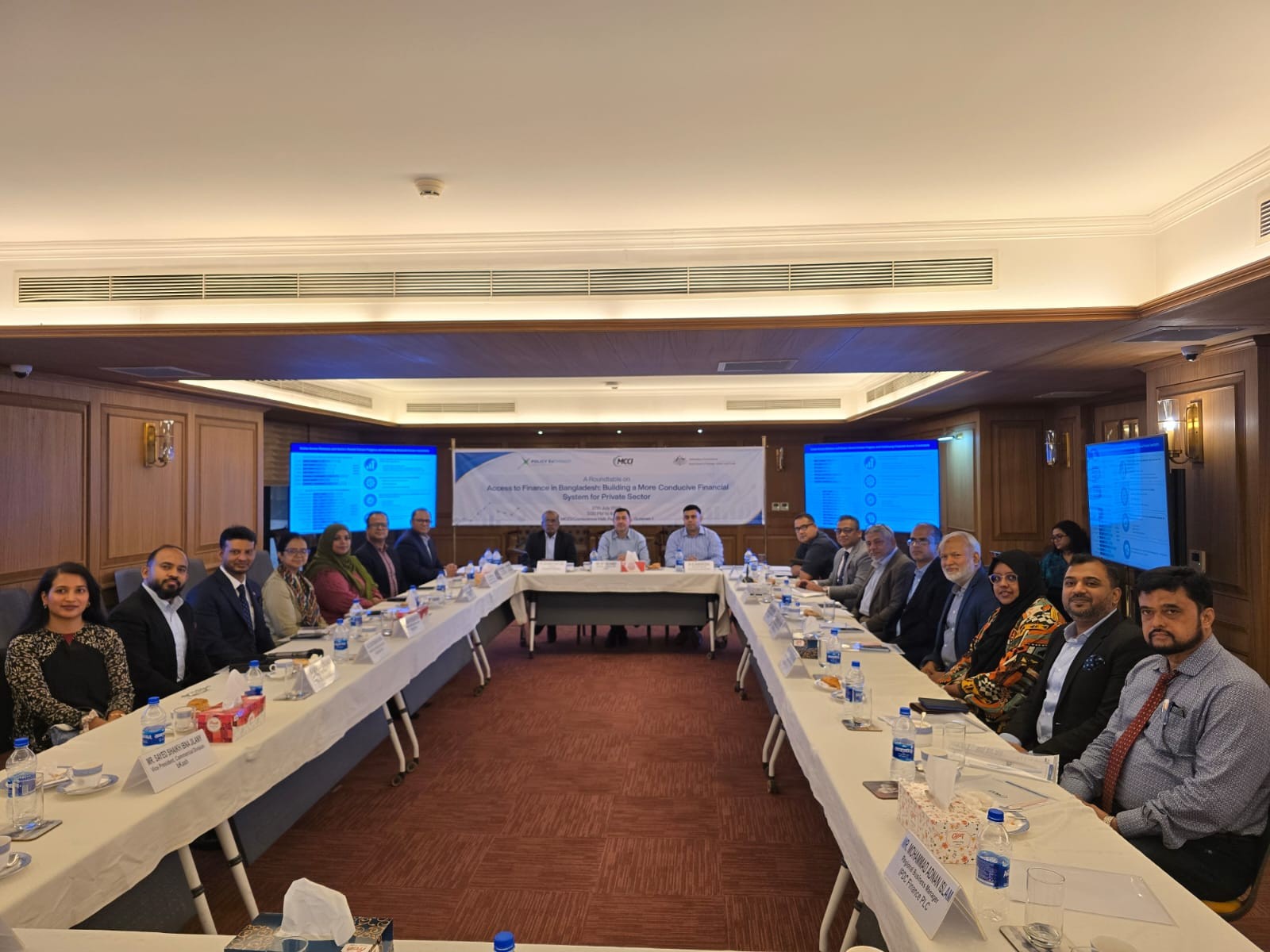
Dhaka, July 28, 2026 — More than three-quarters of bank lending in Bangladesh continues to flow to large corporate borrowers, leaving SMEs and other underserved businesses with limited access to finance, experts said at a high-level roundtable organised by Policy Exchange Bangladesh (PEB) and the Metropolitan Chamber of Commerce and Industry (MCCI) at the chamber's Gulshan office in Dhaka today. The structural imbalance in credit allocation has persisted for years and remains one of the weakest aspects of Bangladesh's business climate, according to the speakers. ⚠
📜 The event, titled "Access to Finance in Bangladesh: Building a More Conducive Financial System for the Private Sector", brought together senior bankers, economists, business leaders, and policy experts to discuss practical reforms to address one of the most persistent constraints on Bangladesh's private sector development.
📊 The 75-80% Corporate Lending Skew
🏛 Mohammed Nurul Amin, Chairman of Bangladesh Krishi Bank, set the context with stark numbers:
"Bangladesh's financial system remains heavily skewed towards large corporate borrowers, limiting access to finance for SMEs, rural entrepreneurs, and other underserved groups. 75-80 percent of bank lending continues to flow to the corporate sector, creating a structural imbalance that has persisted for years."
📊 While large businesses enjoy easier access to credit, many small entrepreneurs, traders, and informal businesses struggle to enter the formal banking system. The persistent skew towards corporate lending has multiple structural causes:
- 🏛 Collateral-focused lending culture — banks prefer assets-backed corporate lending over cash-flow-based SME lending
- 💰 Lower perceived risk — large corporates seen as safer borrowers despite evidence to the contrary
- 👥 Limited SME banking expertise — most banks lack specialised SME credit assessment capabilities
- 📱 Weak digital infrastructure — limited data sharing and credit information systems for SMEs
- 📜 Regulatory incentives — existing frameworks favour large corporate exposure
🤝 Proposed Reforms for Financial Inclusion
💼 To improve financial inclusion, Amin urged banks to expand several alternative financing mechanisms:
- 📝 Invoice financing (factoring) — allowing suppliers to obtain financing against confirmed purchase orders or invoices without relying on traditional collateral
- 🏛 National collateral registry — to help banks verify pledged assets, reducing fraud and improving lending efficiency
- 💰 Movable assets as collateral — greater use of inventory, receivables, and equipment as collateral bases
- 📋 Extended trade licence validity — reducing administrative hurdles for small businesses
👕 BRAC Bank's SME Success Story
💼 Syed Abdul Momen, Head of SME at BRAC Bank, argued that the banking sector's long-standing focus on large corporates rather than SMEs lies at the root of many of its current problems. Since independence, around 75 percent of bank financing has gone to corporates, leaving SMEs with limited access to credit, he said.
📊 Momen challenged the conventional wisdom on collateral, citing BRAC Bank's own experience:
- 💰 Total BRAC Bank assets: ~Tk 1 lakh crore
- 👕 SME loan portfolio: ~50% of total assets
- 💲 Unsecured SME loans: ~Tk 40,000 crore with NPL ratio of just 2 percent
- 💲 Collateral-backed SME loans: Tk 10,000 crore with NPL ratio of 7 percent
"Collateral gives banks a sense of comfort, but it does not necessarily reduce risk."
💼 Momen urged lenders to assess borrowers based on cash flow rather than pledged assets. He added that expanding SME finance requires a stronger digital ecosystem, wider data sharing, and a private credit bureau. He also highlighted BRAC Bank's fully digital loan product for bKash merchants, offering loans of up to Tk 50,000 with approvals in about a minute.
👕 Exporter Pressure from Rising Costs
📊 Shams Mahmud, Managing Director of Shasha Denims Ltd, said exporters are under growing pressure as production costs continue to rise while export prices remain largely stagnant because of intense global competition. He cited specific cost pressures:
- 🔥 Gas prices doubled on January 30 — sharply increasing industrial energy costs
- ⚡ Higher electricity tariffs — compounding energy cost pressure
- 💰 Wage increases — rising labour costs
- 📜 Higher taxes — increasing fiscal burden on businesses
"Our energy bill has almost doubled, and we have to bear an additional Tk 36 crore. Where will that money come from?"
⚠ Mahmud also criticised policy misalignment and difficulties in obtaining bank guarantees and offshore financing, saying regulatory uncertainty and banking delays can disrupt business operations and push otherwise viable companies towards default.
🇺🇸 AmCham Perspective
🤝 Syed Mohammad Kamal, President of the American Chamber of Commerce in Bangladesh (AmCham), said SMEs lack the institutional support available to large firms, requiring coordinated action by the central bank, the judiciary, and other stakeholders. The point about coordinated multi-stakeholder action reflects the recognition that SME financing constraints cannot be solved by any single institution acting alone.
🌏 HSBC's Multinational View
💼 Andalib Mirza, Head of Multinational Wholesale Banking at HSBC Bangladesh, said limited digital data and weak financial verification remain major obstacles, particularly for non-garment companies without export records. The point about non-garment companies is particularly significant — it highlights that Bangladesh's export diversification challenge is closely linked to its financial inclusion challenge, as companies in non-traditional export sectors struggle to access the credit needed to grow.
📜 PwC Keynote: Resolution and Long-Term Capital
💼 Delivering the keynote address, Shams Zaman, Country Managing Partner of PricewaterhouseCoopers Bangladesh Pvt Ltd (PwC), said credible resolution of distressed assets is essential to restoring confidence and reviving credit growth. He also stressed the need to develop long-term sources of capital beyond the banking sector, proposing that the Guarantee Window be transformed into an autonomous, professionally managed institution to help diversify the country's financial system.
🏛 Policy Exchange Bangladesh Moderation
🤝 Moderating the discussion, M Masrur Reaz, Chairman and CEO of Policy Exchange Bangladesh, said the Bangladesh Business Climate Index has consistently identified access to finance as the weakest aspect of the country's business environment, prompting the roundtable to focus on practical reforms to improve the situation. Farooq Ahmed, Secretary-General and CEO of MCCI, also addressed the event.
📈 Connection to Broader Reform Context
📊 The roundtable's focus on SME financing access aligns with several broader reform priorities being advanced by the Bangladesh government and its multilateral partners:
- 🤝 IMF programme — structural reform milestones include financial sector modernisation
- 💰 ADB-supported Credit Enhancement Scheme — Tk 2,800 crore in guaranteed MSME loans via PKSF
- 🏛 S&P outlook revision — cited weak banking sector as key vulnerability
- 📊 NPL crisis — Islamic banks at 58.4% NPL, fourth-gen banks at 52.2%
- 👕 Export diversification — SMEs critical for diversifying beyond RMG
📈 Implications and Way Forward
🏛 The roundtable's discussions highlighted several key reform priorities for Bangladesh's financial sector:
- 💰 Shift from collateral-based to cash-flow-based lending — BRAC Bank evidence shows this works
- 📱 Strengthen digital lending infrastructure — bKash merchant model shows the way
- 🏛 Establish national collateral registry — reducing fraud and improving lending efficiency
- 💼 Develop private credit bureau — enabling better SME borrower assessment
- 📝 Expand invoice financing — unlocking working capital for SMEs
- 📜 Transform Guarantee Window — into autonomous, professionally managed institution
- 💲 Address energy cost pressure — doubled gas prices undermining exporter competitiveness
🌏 For Bangladesh's SME sector, which employs millions of workers and supports economic diversification beyond the dominant RMG sector, the roundtable's recommendations offer a clear path forward. The challenge now is translating these expert recommendations into concrete policy actions and banking sector reforms that can meaningfully shift the credit allocation balance over the coming years.
📊 As Bangladesh navigates the macroeconomic challenges highlighted by international ratings agencies and the IMF programme, addressing the structural imbalance in credit allocation will be essential to unlocking the country's full private sector growth potential and supporting the broader agenda of economic diversification and inclusive growth.
This news was originally published by The Daily Star. For the full original report, please visit: https://www.thedailystar.net/business/news/corporate-focused-lending-leaves-smes-short-credit-experts-4233986
Related on BangladeshExport
📬 Get Bangladesh Trade News in your inbox
Weekly digest of export industry news, policy updates, and market analysis.
📰 Related Stories