Bangladesh-China Ceramics Technology Transfer: BCMA Inks Deal with Tangshan Huida to Upgrade Sector
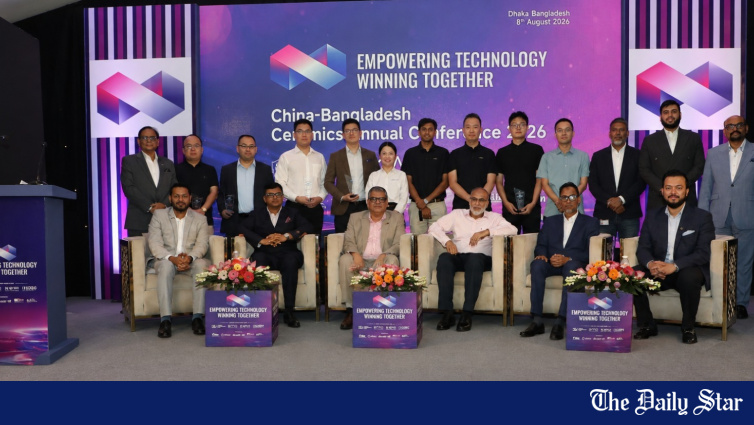
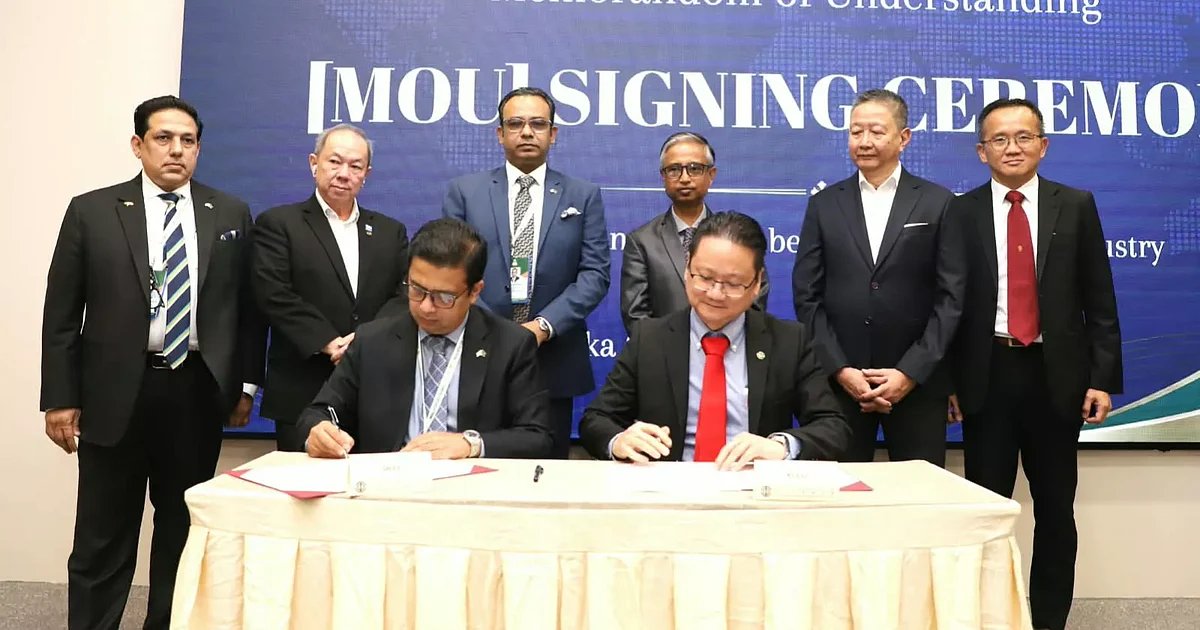
Dhaka, August 11, 2026 — The Bangladesh Ceramic Manufacturers & Exporters Association (BCMEA) on Monday signed a comprehensive technology transfer agreement with Tangshan Huida Ceramics Group of China — one of the world’s largest ceramic sanitaryware and tableware manufacturers — in a deal designed to upgrade Bangladesh’s ceramics sector from mid-market manufacturer to global top-15 exporter by 2030.
🤝 The Deal at a Glance
The agreement, signed at a ceremony at the BCMEA headquarters in Dhaka on August 10, covers four substantive areas of cooperation:
- 📜 Engineer training programme: Tangshan Huida will train 1,200 Bangladeshi ceramics engineers and technicians over three years at its facilities in Hebei Province, China. The training will cover advanced kiln operations, glaze formulation, digital printing on ceramics, and quality control using AI vision systems. The first batch of 80 engineers will travel to China in October 2026
- 📜 Joint R&D laboratory: A new Bangladesh-China Ceramics Research Centre will be established at the Bangladesh University of Science and Technology (BUST) campus, with joint funding of $4.2 million over five years. The lab will focus on locally-sourced raw material substitution, energy-efficient kiln designs, and lead-free glaze development
- 📜 Digital kiln upgrade programme: Tangshan Huida will provide technical assistance to upgrade 14 BCMEA member factories with digital kiln control systems, reducing energy consumption by an estimated 18–22 per cent and improving yield by 6–9 per cent. The upgrade programme is co-financed by BCMEA members (60 per cent) and a supplier-credit arrangement from Tangshan Huida (40 per cent)
- 📜 Joint venture opportunities: Tangshan Huida will explore establishing a joint-venture manufacturing facility in Bangladesh, targeting the South Asian and Middle East export markets. Feasibility study to be completed by Q2 2027
📊 The Bangladesh Ceramics Sector Today
Bangladesh’s ceramics sector has grown significantly over the past two decades but remains a relatively small contributor to export earnings. According to BCMEA data and EPB statistics, the sector in FY26 comprised:
- 🏭 62 manufacturing units across the country, concentrated in Gazipur, Savar, Narsingdi and Bhagalpur
- 🏭 Total investment: Tk 8,400 crore ($760 million)
- 🏭 Direct employment: 65,000 workers, of whom 38 per cent are women
- 🏭 Annual production: Tk 12,200 crore ($1.1 billion), of which Tk 1,840 crore ($167 million) is exported
- 🏭 Export markets: EU (32 per cent), USA (18 per cent), Middle East (14 per cent), India (12 per cent), others (24 per cent)
- 🏭 Product mix: Tableware (52 per cent), sanitaryware (24 per cent), tiles (16 per cent), insulators and refractories (8 per cent)
The sector meets approximately 92 per cent of domestic demand for tableware, 78 per cent of sanitaryware demand, and 65 per cent of tiles demand. Export earnings, while modest in absolute terms, grew at a compound annual rate of 11.4 per cent between FY21 and FY26 — faster than the overall export growth rate of 6.8 per cent.
🌏 Why China, Why Now?
The choice of Tangshan Huida as technology transfer partner reflects the strategic logic of the deal. Tangshan, in Hebei Province, is the centre of China’s ceramic industry and Tangshan Huida is one of its largest players, with 18,000 employees, $1.4 billion in annual revenue, and a presence in 84 export markets. The company has previously executed similar technology transfer programmes in Vietnam (2018–2022), Indonesia (2020–2024) and Egypt (2022–2025).
Bangladesh’s strategic timing reflects three converging factors:
- ⏳ LDC graduation (November 2026): Loss of EU EBA duty-free access will increase the effective tariff on Bangladeshi ceramics exports to the EU from 0 per cent to 6.5 per cent. To remain competitive, Bangladeshi manufacturers must reduce unit costs by 8–12 per cent — achievable only through technology upgrade
- ⏳ Energy cost pressure: The ceramics sector is energy-intensive (kilns consume 38–42 per cent of operating cost). With LNG prices volatile and industrial gas tariffs rising, energy efficiency has become a survival issue
- ⏳ Quality competition: Vietnamese and Indonesian ceramic tableware has moved upmarket over the past decade, with AI-controlled glazing and digital printing capabilities that Bangladesh has not yet adopted at scale. Without technology transfer, Bangladesh risks losing its mid-market position to lower-cost African producers and higher-quality Southeast Asian competitors
🏛️ The Strategic Targets
BCMEA has set ambitious sectoral targets for 2030, enabled by the technology transfer programme:
- 🎯 Export earnings: $1 billion by 2030 (from $167 million in FY26 — a 6x increase)
- 🎯 Investment mobilisation: Tk 18,000 crore in new investment over four years
- 🎯 Employment: 120,000 direct jobs by 2030 (from 65,000 today)
- 🎯 Energy efficiency: 22 per cent reduction in energy cost per unit by 2030
- 🎯 Product diversification: Move into high-value segments — bone china, technical ceramics, ceramic matrix composites for automotive and aerospace applications
- 🎯 Domestic market share: 96 per cent of tableware, 88 per cent of sanitaryware, 78 per cent of tiles (displacing imports from China and India)
💬 BCMEA President’s Statement
BCMEA President Md. Iqbal Hossain said at the signing ceremony: “This agreement marks a turning point for Bangladesh’s ceramics sector. For too long, we have been a mid-market manufacturer competing on price alone. With Tangshan Huida’s technology transfer, we will move up the value chain — into digital kilns, AI-controlled glazing, and high-value product segments. The $1 billion export target is ambitious but achievable if we execute this programme over the next four years.”
Hossain also highlighted the LDC graduation context: “With EBA preferences gone from November 2026, our EU exports face a 6.5 per cent tariff wall. We can either surrender that market or compete through quality and efficiency. This agreement is our answer: we choose to compete.”
Liu Wenjie, Vice President of Tangshan Huida, said: “Bangladesh has the raw material base, the workforce and the strategic location to become a major ceramics exporter. What has been missing is the latest-generation production technology. We are committed to transferring that technology — not just selling equipment, but training the engineers, building the R&D capability, and supporting the sector’s long-term growth. We see Bangladesh as a strategic partner for the next decade.”
🤝 Government Support
The Ministry of Commerce and the Ministry of Industries have both expressed support for the agreement. Commerce Minister Khandaker Abdul Muktadir, attending the signing ceremony, said: “Bangladesh’s diversification beyond RMG is no longer aspirational — it is operational. The ceramics sector is one of the most promising non-RMG export pillars, and this technology transfer agreement will accelerate its growth. The government will provide policy support, including a review of duty structures on imported ceramic raw materials and machinery, and accelerated VAT refunds for exporters.”
BIDA has indicated it will facilitate the proposed joint venture through its One-Stop Service portal, with a target approval timeline of 60 days. Bangladesh Bank has confirmed that the supplier-credit arrangement from Tangshan Huida qualifies for the central bank’s foreign currency borrowing regulations.
🌏 The China-Bangladesh Investment Context
The ceramics technology transfer is part of a broader pattern of growing Chinese investment in Bangladesh’s manufacturing sector. According to BIDA data:
- 🇨🇳 Cumulative Chinese FDI in Bangladesh: $1.4 billion as of June 2026, across 287 manufacturing and service ventures
- 🇨🇳 Major sectors: Textile and apparel machinery ($420 million), ceramics and construction materials ($310 million), telecommunications equipment ($280 million), pharmaceuticals ($180 million), power generation ($210 million)
- 🇨🇳 Employment: Approximately 78,000 Bangladeshis work in Chinese-invested manufacturing ventures
- 🇨🇳 Belt and Road Initiative alignment: Bangladesh is a BRI partner country; the ceramics deal aligns with the BRI’s industrial capacity cooperation pillar
The Tangshan Huida deal also fits a broader pattern of Chinese manufacturers seeking to relocate production capacity to Bangladesh as part of China’s “Going Out” strategy and in response to rising domestic costs and US-China trade tensions. Other recent Chinese investments in Bangladesh include a textile machinery plant in Chattogram (2025, $180 million), a pharmaceutical API facility in BSCIC Industrial Area (2025, $94 million) and a lithium battery assembly plant in Bangabandhu Hi-Tech Park (2026, $220 million).
📋 The Implementation Roadmap
The technology transfer programme will be implemented in three phases:
- 🎯 Phase 1 (Q4 2026 – Q4 2027): First 240 engineers trained in China; first 6 factories upgraded with digital kilns; R&D lab established at BUST; joint venture feasibility study completed
- 🎯 Phase 2 (Q1 2028 – Q4 2028): Next 480 engineers trained; next 5 factories upgraded; first commercial products from upgraded factories launched in EU and Middle East markets; joint venture construction begins
- 🎯 Phase 3 (Q1 2029 – Q4 2030): Final 480 engineers trained; final 3 factories upgraded; joint venture facility operational; $1 billion export target achieved
BCMEA will publish quarterly progress reports, and an annual independent review will be conducted by the Bangladesh University of Engineering and Technology (BUET’s Industrial Engineering department). The agreement includes a 5-year non-compete clause for Tangshan Huida, preventing the company from establishing competing facilities in Vietnam, Indonesia or Egypt during the programme period.
🌏 The Strategic Stakes for Bangladesh
For Bangladesh, the ceramics technology transfer is a small but important piece of a larger strategic puzzle: the country’s desperate need to diversify its export basket beyond RMG, which still accounts for 84 per cent of merchandise exports. The ceramics sector — with its $1 billion export target, 120,000 direct jobs and demonstrated growth trajectory — represents exactly the kind of non-RMG pillar that Bangladesh must build to weather LDC graduation, EBA loss and global trade volatility.
If the programme succeeds, Bangladesh will have moved from being a mid-market ceramics manufacturer competing on price to a top-15 global ceramics exporter competing on quality. If it fails — if the engineers trained in China leave for other industries, if the upgraded factories cannot maintain quality, if the joint venture never materialises — the sector will continue to grow at 11 per cent per year but will fall further behind Vietnam and Indonesia in the global value chain.
✅ What Comes Next
The first batch of 80 engineers will travel to Tangshan, China in October 2026 for a 90-day intensive training programme. The R&D lab at BUST will be operational by January 2027. The first digital kiln upgrade will commence at a Gazipur-based BCMEA member factory in November 2026. The joint venture feasibility study will be completed by June 2027, with construction targeted to begin by Q4 2027 if findings are positive. For Bangladesh’s 65,000 ceramics workers, the agreement offers a path to better-paid, more skilled employment. For the country’s export diversification agenda, it offers a template that other non-RMG sectors — leather, jute, pharmaceuticals, agro-processing — may follow.
This news was originally published by The Daily Star. For the full original report, please visit: https://www.thedailystar.net/business/news/bangladesh-china-push-technology-transfer-boost-ceramics-industry-4244086
Related on BangladeshExport
📬 Get Bangladesh Trade News in your inbox
Weekly digest of export industry news, policy updates, and market analysis.
📰 Related Stories
✍️ More from System Administrator