Bangladesh Retains 2nd Position as US Apparel Supplier as Vietnam Extends Lead
Bangladesh exported $3.25B in garments to US in Jan-May 2026 (down 8.1%); Vietnam tops with $6.39B (up 1.5%); China drops 42.75% as buyers shift away; Indonesia and Cambodia gain
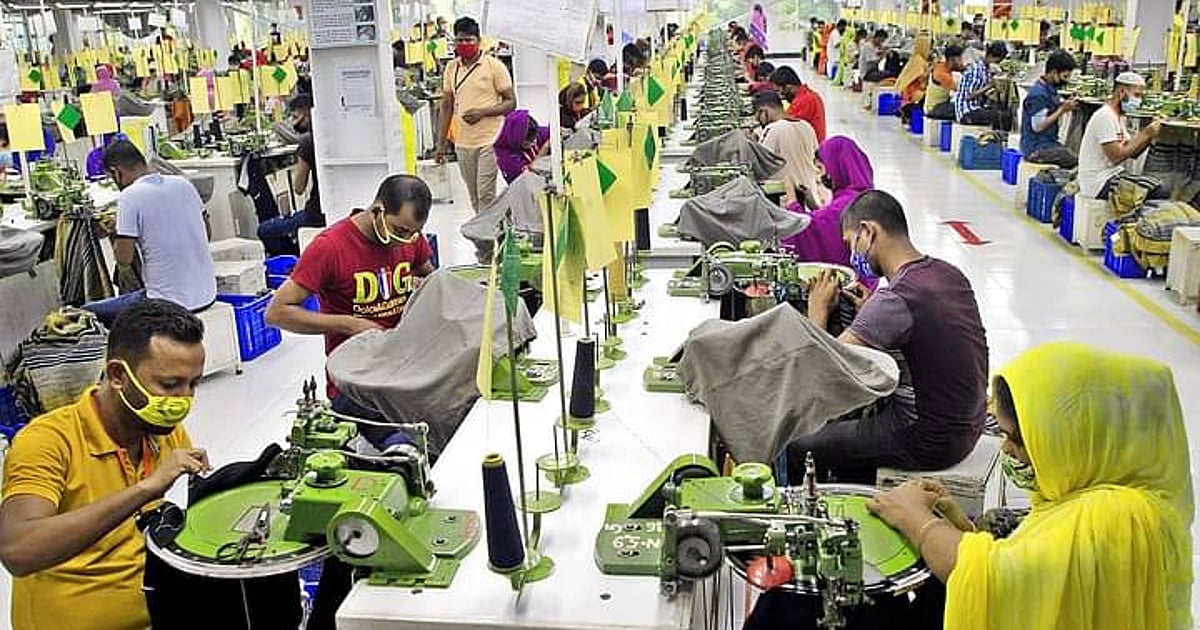
Dhaka, July 12, 2026 — Bangladesh has maintained its position as the second-largest exporter of readymade garments (RMG) to the United States in the first five months of 2026 (January-May), despite a decline in its export volume. Meanwhile, Vietnam, which holds the top position, increased its export volume over the same period. 👕
📊 The data, released by the US Office of Textiles and Apparel (OTEXA), provides a detailed picture of how the US apparel import market is shifting among suppliers.
📊 The Numbers — US Apparel Imports Jan-May 2026
According to OTEXA data, here's how the top apparel exporters to the US performed in the first five months of 2026:
- 🥇 Vietnam: $6.39 billion (up 1.5% YoY) — Top supplier
- 🥈 Bangladesh: $3.25 billion (down 8.1% YoY) — Second-largest supplier
- 🥉 China: $2.80 billion (down 42.75% YoY) — Now third, was second last year
- 4️⃣ Indonesia: $1.97 billion (up 5.49% YoY) — Gaining share
- 5️⃣ Cambodia: $1.74 billion (up 14.9% YoY) — Strongest growth rate
💰 Total US apparel imports (Jan-May 2026): $28.77 billion (down 9.25% from $31.71 billion same period last year)
📉 Bangladesh's Decline in Context
Bangladesh's 8.1% decline in US apparel exports needs to be understood in the context of the overall US market contraction:
- 📉 Total US apparel imports fell 9.25% — Demand contraction across the board
- 📊 Bangladesh's decline (8.1%) is less than the market average (9.25%) — Slight market share gain
- 📈 Main reason for decline: Reduced US demand, not competitive loss
💬 BKMEA President Mohammad Hatem told Prothom Alo: "Even though demand in the US market has increased slightly, it has not returned to its previous level. Therefore, there is no significant potential for a sharp increase in exports soon."
🇻🇳 Vietnam Extends Its Lead
Vietnam solidified its position as the top US apparel supplier:
- 💰 $6.39 billion in exports — Nearly 2x Bangladesh's $3.25B
- 📈 1.5% growth — Gained even as the overall market contracted
- 📊 Market share gain — Capturing share from China and others
- 🏭 Competitive advantages — Better infrastructure, FTAs, integrated supply chain
🇨🇳 China's Dramatic Decline — 42.75% Drop
The most striking data point is China's 42.75% decline in US apparel exports:
- 📉 $2.80 billion in exports (Jan-May 2026) — Down from $4.89B same period last year
- 📦 Quantity also dropped ~30% — Not just value, but volume too
- 🥉 Now third place — Was second last year, behind Vietnam
- 📍 Reason: US buyer companies shifting business from China due to "countermeasures and geopolitical reasons"
🌍 China's loss is being captured by:
- 🇻🇳 Vietnam — Top beneficiary, +1.5% growth
- 🇮🇩 Indonesia — +5.49% growth, $1.97B exports
- 🇰🇭 Cambodia — +14.9% growth, $1.74B exports
- 🇧🇩 Bangladesh — Maintained share despite decline
⚠️ Concerns About Future Tariffs
BKMEA President Mohammad Hatem highlighted concerns about the future:
💬 "The US is investigating two allegations against Bangladesh and other countries. There is also concern over the potential imposition of new tariffs after these investigations, which has made buyer companies somewhat cautious about placing orders."
📋 He suggested that effective measures should be taken by the Bangladesh government regarding these two investigations.
🔮 This concern proved prescient — on July 24, 2026, the US imposed a 10% tariff on Bangladesh imports under Section 301, citing forced labour concerns. (See our separate article on this development.)
📈 What's Driving the Shift Away from China?
US apparel buyers are shifting away from China due to several factors:
- 💸 US tariffs on Chinese goods — Section 301 tariffs and additional duties
- 🚫 Forced labour concerns — Uyghur Forced Labor Prevention Act enforcement
- 🌐 Geopolitical tensions — US-China trade war and strategic competition
- 🏭 Supply chain diversification — China+1 strategy by US brands
- 📊 Rising Chinese costs — Labour costs in China have increased significantly
- 🎯 Risk mitigation — Buyers want to avoid over-reliance on one country
🎯 What Bangladesh Needs to Do to Capitalise
With China's share declining, Bangladesh has an opportunity to capture more US market share. However, this requires strategic action:
- ⚡ Resolve energy shortages — Gas and electricity are capping factory output
- 💰 Competitive pricing — Maintain cost advantage despite tariff pressures
- 🌍 Invest in compliance — Verifiable labour and environmental standards
- 📅 Reduce lead times — Faster delivery than competitors
- 🔧 Product diversification — Move beyond basic garments to higher-value items
- 🤝 Build buyer relationships — Direct engagement with US brands and retailers
- 📊 FTAs and PTAs — Pursue trade agreements with the US
- 🚢 Port and logistics improvements — Reduce shipping costs and times
🔍 Why This Matters for Bangladesh's Export Economy
The US is Bangladesh's largest single-country export market, and apparel accounts for the vast majority of those exports. The OTEXA data reveals both opportunities and risks:
✅ Opportunities
- 📈 China's decline creates space — Bangladesh can capture displaced orders
- 📊 Bangladesh's market share is holding — Despite decline, share is stable
- 🌍 US diversification trend favours Bangladesh — Already a major supplier
⚠️ Risks
- 💸 10% Section 301 tariff (July 24, 2026) — Raises total tariff to 25.62%
- 📈 Vietnam pulling ahead — Now nearly 2x Bangladesh's US exports
- 🏭 Indonesia and Cambodia gaining — Growing faster than Bangladesh
- 📋 Compliance burden — Forced labour investigations could escalate
📊 Outlook — Cautious Optimism with Risks
Bangladesh's position as the second-largest US apparel supplier is a testament to the strength of its RMG industry. However, the data also shows that:
- 📈 Vietnam is extending its lead — Bangladesh is not catching up
- 🏭 Indonesia and Cambodia are growing faster — From a smaller base
- 💸 New US tariffs add cost pressure — 25.62% total tariff is significant
- 📅 US demand remains soft — Recovery is not imminent
🎯 For Bangladesh to maintain and grow its US market position, the government and industry need to work together on:
- ⚡ Energy security — Reliable gas and electricity for factories
- 💰 Competitive exchange rate — Support export pricing
- 📋 Compliance investment — Avoid tariff escalation
- 🔧 Productivity improvements — Reduce per-unit costs
- 🌍 Market diversification within the US — Beyond basic garments
- 🤝 Strategic buyer relationships — Long-term partnerships
The OTEXA data is a reminder that the global apparel trade is highly competitive and constantly shifting. Bangladesh's position is secure for now, but without continuous improvement, it could erode quickly. 🇧🇩
This news was originally published by Prothom Alo. For the full original report, please visit: https://en.prothomalo.com/business/local/p8acng8dqp
Related on BangladeshExport
📬 Get Bangladesh Trade News in your inbox
Weekly digest of export industry news, policy updates, and market analysis.
📰 Related Stories