ADB Lowers Bangladesh Growth Forecast To 4.0 Percent In FY2027: Asian Development Outlook September 2026
Asian Development Bank trims Bangladesh growth forecast from 4.5% to 4.0% for FY2027, citing Middle East conflict supply-chain disruptions, energy shortages and elevated inflation projected at 9.0%.
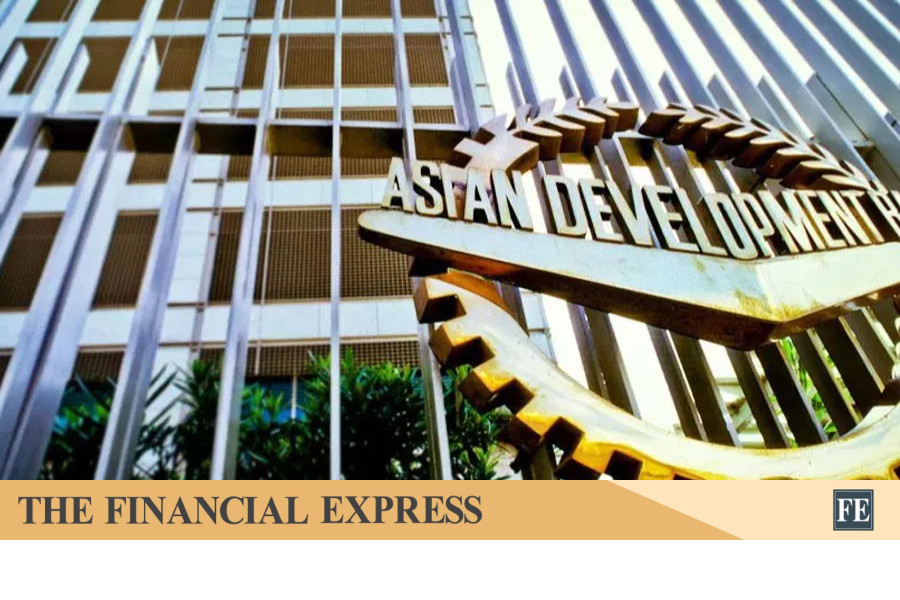
Dhaka, September 23, 2026 — The Asian Development Bank (ADB) has lowered its economic growth forecast for Bangladesh to 4.0 per cent for fiscal year 2027, down from the 4.5 per cent projected in its July outlook, while forecasting 3.7 per cent growth for FY2026. The downward revision reflects the impact of supply-chain disruptions linked to the conflict in the Middle East, energy shortages, and elevated inflation.
📊 The ADB released its latest Asian Development Outlook (ADO) September 2026 report on Wednesday, providing a fresh assessment of Bangladesh's macroeconomic trajectory amid a challenging external environment.
📈 Key Forecast Changes
- 💰 FY2026 growth: 3.7 per cent (revised down from earlier projections)
- 💰 FY2027 growth: 4.0 per cent (down from 4.5 per cent in July 2026 ADO)
- 💰 FY2026 inflation: 8.7 per cent (down from 10.0 per cent in FY2025)
- 💰 FY2027 inflation: 9.0 per cent (forecast, up from FY2026)
- 💰 Current account deficit FY2027: 0.6 per cent of GDP (widened from 0.3 per cent in FY2026)
🌏 Why Growth Is Slowing
According to the ADB report, economic activity slowed in the final quarter of FY2026 due to supply-chain disruptions linked to the conflict in the Middle East, although the impact is expected to be limited. The improved growth outlook for FY2027 reflects stronger consumption and investment as political uncertainty eases following the general election in early 2026.
Inflation eased to an estimated 8.7 per cent in FY2026 from 10.0 per cent in FY2025, but is forecast to rise to 9.0 per cent in FY2027. The September 20 fuel price hike — which raised diesel, octane, petrol and kerosene prices by Tk 20 per litre — was not yet factored into the ADB's forecasts but is expected to add further upward pressure on inflation in the coming months.
📋 Why Inflation Will Remain Elevated
ADB expects inflation to remain elevated in FY2027 due to several converging factors:
- ⚠ Energy shortages — gas supply disruptions have forced production halts in factories across the country.
- ⚠ High production and transport costs — the September 20 fuel price hike will add direct cost pressure.
- ⚠ Potential shipping disruptions — the West Asia conflict has affected freight rates and routing through the Red Sea and Suez Canal.
- ⚠ Delayed effects of El Niño on food prices — agricultural production may be affected by the El Niño weather pattern.
- ⚠ Gradually easing monetary conditions — Bangladesh Bank's recent monetary policy easing could fuel demand-pull inflation.
💰 Current Account And External Stability
The current account deficit is projected to widen to 0.6 per cent of GDP in FY2027 from an estimated 0.3 per cent in FY2026, as import growth outpaces exports. This is a key concern for Bangladesh's external stability, given the country's declining foreign exchange reserves.
However, ADB noted that remittance inflows are expected to remain resilient despite ongoing tensions in the Middle East. Bangladesh received US$7.888 billion in remittances in the first 83 days of FY27 — a 13.8 per cent year-on-year increase — supporting this view.
Strong remittances and higher foreign exchange reserves will help support external stability, although maintaining stability will depend on:
- 💶 Adequate financial inflows
- 💶 Exchange rate flexibility
- 💶 Prudent macroeconomic management
🏭 Sectoral Growth Drivers
The ADB report notes that the services and agriculture sectors are expected to support growth in FY2027. However, industry and investment are likely to remain constrained by:
- ⚠ High borrowing costs
- ⚠ Limited access to credit
- ⚠ Energy shortages
- ⚠ Weak external demand
- ⚠ Other structural challenges
Private consumption, supported by remittances, is expected to remain the main driver of growth, although high inflation will continue to reduce household purchasing power. This is a particular concern for Bangladesh, where remittances are largely spent on household consumption rather than investment, meaning the remittance boost has limited multiplier effects.
📜 ADB Country Director's Recommendations
💬 Qingfeng Zhang, ADB Country Director for Bangladesh, said Bangladesh's economy is beginning to recover, but the recovery remains vulnerable to external shocks and domestic constraints.
💬 “This is an important moment to accelerate reforms in macroeconomic management, the financial sector, energy security, and the business environment. These reforms will be essential to unlock private investment, create quality jobs, and place Bangladesh on a stronger, more inclusive, and resilient growth path,” he said.
Zhang mentioned that ADB stands ready to support Bangladesh in translating these reforms into tangible results for its people. ADB has been one of Bangladesh's largest multilateral development partners, with cumulative lending exceeding US$30 billion across infrastructure, energy, education and public sector reform projects.
📋 Downside Risks To The Forecast
The ADB report projects significant downside risks to its baseline forecast. The risks that could weaken growth and keep inflation elevated include:
- 📋 A prolonged conflict in the Middle East — affecting oil prices, shipping routes and remittance flows.
- 📋 Higher oil prices — directly impacting Bangladesh's import bill.
- 📋 Further disruptions to global shipping — affecting export orders and import supply.
- 📋 Tighter trade restrictions — particularly from the United States and European Union.
- 📋 Weaker growth in major export markets — particularly the US and EU, which together absorb over 60 per cent of Bangladesh's RMG exports.
- 📋 Continued exchange rate pressures — with potential for further taka depreciation.
- 📋 Additional stress in the banking sector — particularly around non-performing loans.
- 📋 Delays in fiscal reforms — including tax policy and revenue mobilisation.
- 📋 Lower-than-expected development spending — ADP implementation has already fallen to a record low of 1.85 per cent in the first two months of FY27.
- 📋 Climate-related shocks — cyclones, floods and riverbank erosion.
💼 Comparison With Other Forecasts
The ADB forecast places Bangladesh's FY27 growth in a similar range to other recent assessments:
- 📊 ADB September 2026: 4.0% growth, 9.0% inflation
- 📊 ADB July 2026: 4.5% growth (revised downward)
- 📊 IMF (April 2026 Article IV): 4.0-4.5% range
- 📊 World Bank (June 2026): 3.9% growth forecast
- 📊 Bangladesh Government target: 6.5% growth (FY27 budget)
The gap between the government's 6.5 per cent growth target and the multilateral forecast of 4.0 per cent is significant — and reflects long-standing tension between Bangladesh's official growth ambitions and the assessments of independent multilateral institutions.
🏛 Policy Implications
For Bangladesh's policymakers, the ADB report underscores the urgency of structural reform in four areas identified by ADB Country Director Zhang:
- 🏛 Macroeconomic management — particularly fiscal consolidation, revenue mobilisation, and monetary policy transmission.
- 🏦 Financial sector — banking sector recapitalisation, NPL resolution, and governance reforms.
- ⛽ Energy security — LNG supply diversification, renewable energy expansion, and gas sector reform.
- 🏢 Business environment — regulatory simplification, trade facilitation, and tariff rationalisation.
Without these reforms, Bangladesh risks seeing its growth stuck in the 3.5-4.5 per cent range for the foreseeable future — well below the 7-8 per cent needed to reach the government's trillion-dollar economy target by 2034.
The full ADO September 2026 report is available on the ADB website.
This news was originally published by The Financial Express. For the full original report, please visit: https://thefinancialexpress.com.bd/economy/adb-lowers-bangladeshs-growth-forecast-to-40-per-cent-in-fy2027
📬 Get Bangladesh Trade News in your inbox
Weekly digest of export industry news, policy updates, and market analysis.
📰 Related Stories



✍️ More from System Administrator