Rosogolla of Gopalganj: Bangladesh Heritage GI Sweet — Buyer's Guide (2026)
Rosogolla of Gopalganj — Bangladesh's 2024 GI sweet, soft chhana balls in light sugar syrup. Distinctive softer texture and lighter syrup than commercial versions. HS 21069090, 7-point authenticity, 435 food suppliers.
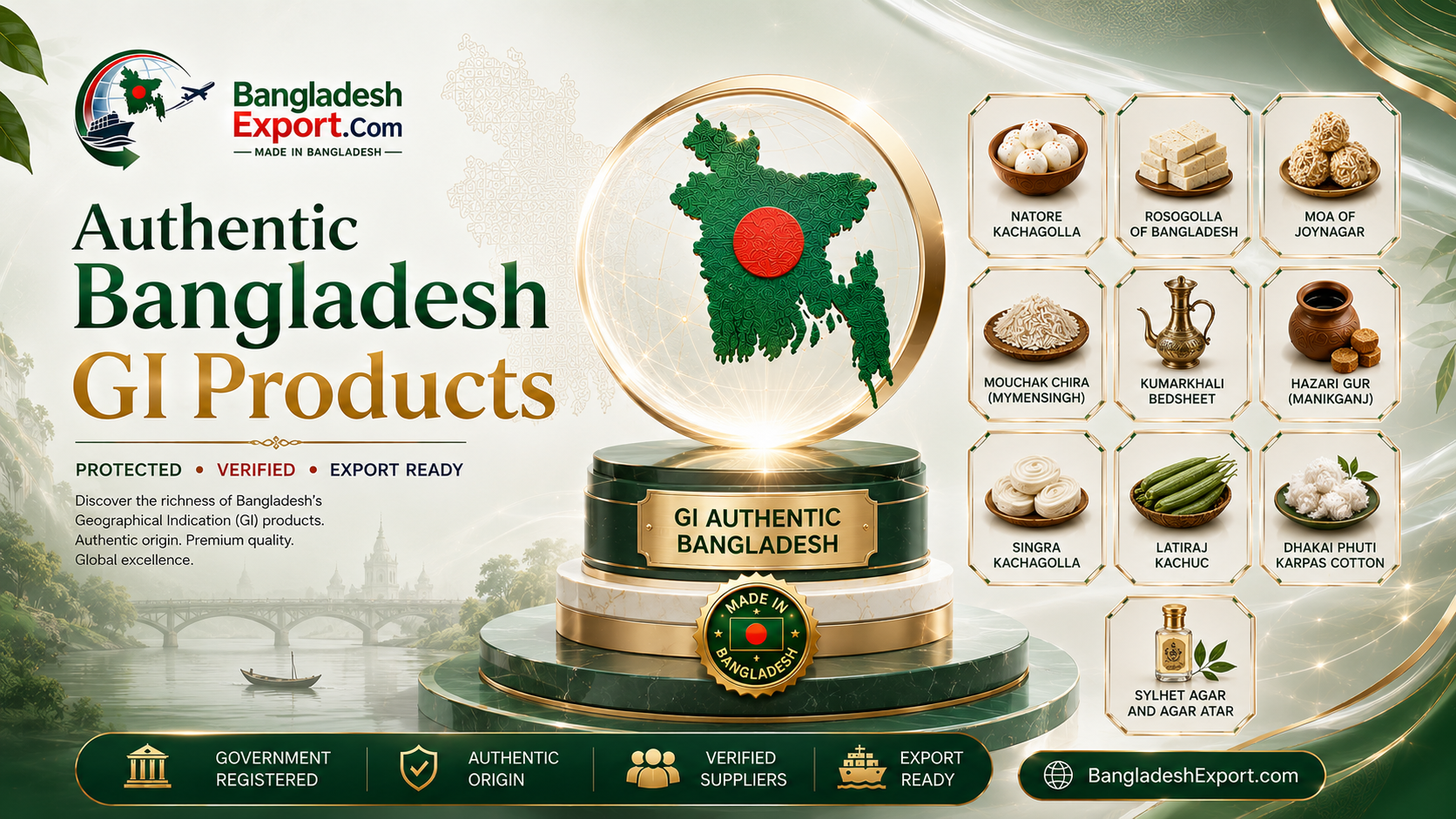
Rosogolla of Gopalganj — registered as a Bangladesh GI product in 2024 — is a premium version of the iconic Bengali sweet: soft chhana (milk curd) balls cooked in sugar syrup until they become spongy and syrup-soaked. The Rosogolla (also spelled Rasgulla) has been at the center of a cross-border GI dispute between Bangladesh and India, with both countries claiming the sweet's origin. The Gopalganj region developed its own distinctive Rosogolla variant with a softer texture, lighter syrup, and more delicate flavor than mass-produced commercial versions — characteristics that the 2024 GI registration now legally protects. For diaspora grocers and ethnic-food distributors, authentic Gopalganj Rosogolla is a high-margin heritage sweet with consistent demand peaks during Ramadan, Eid, and Durga Puja.
This guide is for international diaspora grocers, ethnic-food distributors, premium sweet retailers, and Bangladeshi food exporters sourcing authentic Rosogolla of Gopalganj. We'll cover the sweet's history and the cross-border GI landscape, the 2024 GI registration, the production technique, quality grading, export markets, HS codes, packaging and cold-chain logistics, authenticity verification, and direct sourcing from verified food suppliers on BangladeshExport.com.
📜 History & the Cross-Border GI Landscape
Buyers can verify the official list of Bangladesh's registered Geographical Indication (GI) products through the Bangladesh Trade Portal: bangladeshtradeportal.gov.bd — GI Products Page
The Rosogolla has been a subject of cultural pride and origin debates between Bengali communities on both sides of the India-Bangladesh border. India's West Bengal state registered "Banglar Rasogolla" as an Indian GI product in 2017. Bangladesh's Gopalganj variant was registered separately in 2024 — recognizing that the Gopalganj region's specific confectioner families developed a distinctively softer, lighter-syrup version that is measurably different from both the Indian West Bengal Rosogolla and from mass-produced commercial Rosogolla. The two GI registrations (Indian and Bangladeshi) are legally distinct under TRIPS — each protects the name for product grown/produced in the registered territory. See our complete 60-product GI list and our guides to other GI Bengali sweets: Kachagolla, Muktagacha Monda, Porabari Chomchom, Rasmalai, Chanar Payesh, Sandesh of Jamurki, Balish Misti, and Tiler Khaja.
🏛️ GI Registration & Production Region
Rosogolla, Gopalganj was registered by DPDT in 2024. The production region is Gopalganj district in southwestern Bangladesh. Verification follows our GI verification guide.
🥛 Production Technique — The Gopalganj Difference
Gopalganj Rosogolla is made by: (1) Preparing fresh chhana from whole cow milk (the chhana must be very fresh and smooth — no graininess). (2) Kneading the chhana with a tiny amount of semolina (sooji) into a smooth, pliable dough — the kneading is more extensive than for standard Rosogolla, producing a softer texture. (3) Rolling into small smooth balls (15–20g each). (4) Cooking the balls in sugar syrup (boiling for 15–20 minutes until they puff up and become spongy). (5) Soaking in the syrup until fully permeated. The Gopalganj technique uses lighter syrup (lower sugar concentration) than commercial Rosogolla — producing a less cloying, more balanced sweetness that lets the milky chhana flavor come through.
📊 Quality Grading
| Grade | Texture | Syrup | Color | Retail Range (USD/kg) |
|---|---|---|---|---|
| A Premium | Ultra-soft, spongy, melt-in-mouth | Light, balanced sweetness | White to pale cream | 8–15 |
| A Standard | Soft, spongy | Standard syrup | White | 5–8 |
| B Grade | Firmer texture | Heavier syrup | Off-white | 3–5 |
🌍 Export Markets
- Middle East: Diaspora demand (Ramadan, Eid peaks). Retail USD 8–15/kg.
- UK: British-Bangladeshi community. Retail GBP 7–13/kg.
- USA & Canada: Diaspora (canned/pasteurized variants). Retail USD 10–18/kg.
- EU: Niche diaspora market. Retail EUR 8–14/kg.
🏷️ HS Codes
| HS Code | Description |
|---|---|
| 21069090 | Other food preparations not elsewhere specified (traditional Bengali sweet) |
📦 Packaging, Cold Chain & Shipping
Food-grade plastic containers with syrup (500g–1kg). Export-grade EPS insulated boxes with gel ice packs (2–4°C). Air freight mandatory for fresh (5–7 day shelf life). Canned/pasteurized variants have 6–12 month shelf life and can use sea freight. Documentation: Health Certificate (Department of Livestock), Certificate of Origin (Gopalganj Chamber), DPDT GI registration, BSTI certification. See our export documentation guide.
✅ Authenticity Verification
Seven-point checklist: (1) ultra-soft spongy texture (the defining Gopalganj characteristic — softer than commercial Rosogolla); (2) light syrup with balanced sweetness (not cloying — the milky chhana flavor should come through); (3) uniformly round smooth balls (no cracks or rough surfaces); (4) clean fresh-dairy aroma (no sourness or staleness); (5) white-to-pale-cream color; (6) DPDT GI registration; (7) Gopalganj production documentation.
🤝 Sourcing Verified Rosogolla Manufacturers
- Browse verified food suppliers: View 435 verified Food & Beverage suppliers.
- Post a free RFQ: Submit a Request for Quotation specifying "Rosogolla of Gopalganj" with grade, packaging (fresh/canned), quantity, and destination.
- Check credentials: Verify BSTI certification, Department of Livestock licence, DPDT GI registration.
- Order a trial shipment: 10–50 kg trial for fresh; 50–200 cans for canned.
- Finalize directly: L/C for orders over USD 5,000. No commission.
For Gopalganj Rosogolla manufacturers: register as a supplier on BangladeshExport.com (free). Relevant industry support: Gopalganj Chamber of Commerce & Industry and the broader Bangladesh exporters' association directory.
🚀 Source Authentic Gopalganj Rosogolla — Free RFQ
Post a free RFQ for authentic Rosogolla of Gopalganj. Specify grade, packaging (fresh/canned), quantity, and destination. Plan orders 4–6 weeks before Ramadan/Eid peaks.
🚀 Post a Free RFQ → 🔍 Browse 435 Verified Food & Beverage Suppliers🎯 Conclusion
Rosogolla of Gopalganj is one of the most iconic Bengali sweets with GI protection — the softer texture, lighter syrup, and balanced sweetness of the Gopalganj variant distinguish it from both mass-produced commercial Rosogolla and Indian West Bengal Rosogolla. For diaspora grocers and ethnic-food distributors, authentic Gopalganj Rosogolla is a high-margin product with consistent demand peaks. BangladeshExport.com makes sourcing free and transparent — start with a free RFQ today.
For the complete catalog of 60+ Bangladesh GI products, see our complete GI products list. For other GI Bengali sweets, see our Kachagolla guide, Porabari Chomchom guide, and Rasmalai guide. For broader context, see our 2026 global demand analysis.
❓ Frequently Asked Questions
What makes Rosogolla of Gopalganj a GI product?
Rosogolla, Gopalganj was registered as a Bangladesh GI product by DPDT in 2024. The registration protects the name for the traditional chhana-balls-in-sugar-syrup sweet produced in Gopalganj district — distinguished by softer texture and lighter syrup than commercial Rosogolla. This is a separate GI registration from India's "Banglar Rasogolla" (registered 2017) — both are legally protected under TRIPS for their respective territories.
How is Gopalganj Rosogolla different from commercial Rosogolla?
The Gopalganj variant uses lighter syrup (lower sugar concentration), producing a less cloying, more balanced sweetness. The chhana is kneaded more extensively, producing softer, more delicate balls. Commercial Rosogolla is typically firmer and sweeter. The Gopalganj variant is positioned as a premium artisanal product.
What is the HS code for Rosogolla exports?
Rosogolla uses HS code 21069090 — other food preparations not elsewhere specified.
How do I verify that Rosogolla is authentic?
Seven-point checklist: (1) ultra-soft spongy texture; (2) light syrup with balanced sweetness; (3) uniformly round smooth balls; (4) clean fresh-dairy aroma; (5) white-to-pale-cream color; (6) DPDT GI registration; (7) Gopalganj production documentation.
What is the MOQ for Rosogolla?
Typical MOQ is 50–500 kg for fresh; 50–200 cans for canned. Trial shipments of 10–50 kg available for fresh. Air freight mandatory for fresh (5–7 day shelf life). Canned/pasteurized variants have 6–12 month shelf life.
Where can I find verified Rosogolla suppliers?
BangladeshExport.com hosts 435 verified Food & Beverage suppliers. Post a free RFQ specifying "Rosogolla of Gopalganj" and verified manufacturers will respond within 24–72 hours.