US Core Inflation Posts Largest Gain In Four Months, Fed Rate Hike Bets Strengthen
US Consumer Price Index rose 0.4% in August, with petrol prices jumping 3.9%, reinforcing expectations of a Federal Reserve rate hike next week and implications for Bangladesh trade
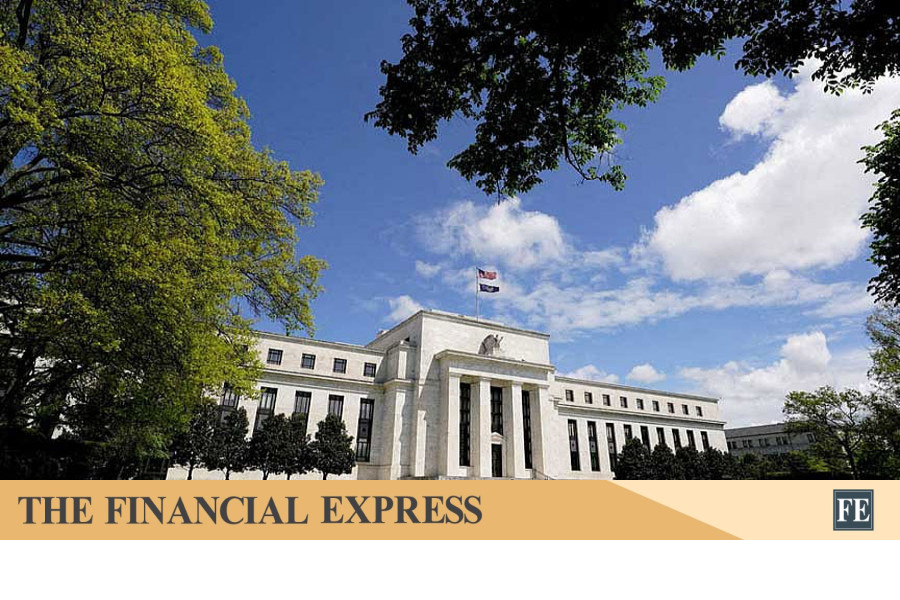
📊 US consumer prices accelerated in August, while a key measure of underlying inflation posted its largest increase in four months, reinforcing expectations that the Federal Reserve will raise interest rates next week. The Labor Department's Consumer Price Index report has significant implications for global capital flows, including Bangladesh's exchange rate management and dollar availability for trade financing.
🏛 The Labor Department's Consumer Price Index report on Friday followed strong readings in several components of the Producer Price Index released on Thursday that feed into the Personal Consumption Expenditures price indexes, the inflation measures the US central bank tracks for its 2 percent target. The two reports led economists to think that PCE inflation excluding the volatile food and energy categories picked up in August.
💰 Financial Markets Price In 87% Chance Of Rate Hike
Financial markets initially priced in a 91 percent chance of a quarter-point rate hike at the Fed's meeting on Tuesday and Wednesday, before settling back to 87 percent, CME's FedWatch tool showed. That was up from 72 percent on Thursday. The Fed's benchmark overnight interest rate is currently in a 3.50-3.75 percent range.
Most economists said the firmer inflation readings, combined with signs of the labour market regaining its footing in August, would compel Fed officials to raise borrowing costs not only next Wednesday, but possibly again in October or December. The prospect of sustained Fed tightening has direct implications for Bangladesh — stronger US rates typically strengthen the dollar against the taka, increasing the cost of imports and debt servicing on dollar-denominated obligations.
- 📈 CPI month-on-month: +0.4% (vs +0.1% in July)
- 📈 CPI year-on-year: +3.4% (same as July)
- 📈 Core CPI month-on-month: +0.3% (largest gain since April)
- 📈 Core CPI year-on-year: +2.4% (vs +2.5% in July)
- ⛽ Petrol prices: +3.9% (after two monthly declines)
- ⛽ Other motor fuels (incl. diesel): +9.6% month-on-month, +44% YoY
- 💰 Fed funds rate: 3.50-3.75%
- 💵 Market probability of Fed hike next week: 87% (up from 72%)
- 📉 US consumer sentiment index: 47.8 (down from 51.7 in August)
⛽ Energy Prices Drive Inflation Surge
They argued that with the Iran war continuing, the energy shock would spread through the economy. They also expected an AI buildout to drive inflation. Crude oil prices climbed back above $100 a barrel this week, while the US national average diesel price surpassed $6 a gallon for the first time.
"Energy inflation does not stay at the gas station. It travels by truck, aeroplane and cargo ship into nearly every store in America," said Sung Won Sohn, a finance and economics professor at Loyola Marymount University. "The Fed is now more likely than not to raise its policy rate ... it cannot afford to let an energy shock become an everything shock."
A 3.9 percent jump in petrol prices after two straight monthly declines accounted for more than a third of the increase in the CPI over the month. Other motor fuels, which include diesel, surged 9.6 percent. They surged 44 percent year-on-year in August. The diesel price surge is particularly significant for the US economy — diesel powers the trucking industry that moves the majority of US freight, and the 44% YoY increase feeds directly into goods inflation across the economy.
🌾 Food Prices Offer Limited Respite
There was, however, some respite for consumers at the supermarket. Food prices edged up 0.1 percent for a second straight month. Grocery prices were unchanged amid muted increases in the costs of meat and fish. Fruit and vegetable prices fell 0.4 percent over the month, weighed down by a 6.2 percent drop in the cost of lettuce because of a Cyclospora outbreak.
But egg prices increased 2.9 percent, while non-alcoholic beverages cost more, as did dairy and related products. Food prices advanced 2.7 percent year-on-year in August and the annual increase in consumer inflation is outpacing wage growth. Inflation-adjusted average hourly earnings fell 0.3 percent over the year in August.
"Inflation-adjusted wage growth contracted for a fifth consecutive month in August," said Gregory Daco, chief economist at EY-Parthenon. "This is the longest income squeeze since 2012, excluding the post-pandemic period when public assistance kept income growing despite historical job losses."
📜 Political Fallout And Consumer Sentiment
Frustration over the higher cost of living has led to a sharp erosion in President Donald Trump's approval ratings and could cost his Republican Party control of the US Congress in the November midterm elections, according to analysts. The growing disenchantment was also evident in the University of Michigan's Surveys of Consumers, which showed its Consumer Sentiment Index tumbled to 47.8 in early September from 51.7 in August.
The deterioration in sentiment was among both Democrats and Republicans. Consumers also anticipated higher inflation over the next 12 months and five years. Wall Street stocks rose as oil prices retreated, though crude remained on course for a weekly gain of more than 8 percent. The dollar was steady against a basket of currencies. US Treasury yields initially rose, with the benchmark US 10-year note yield rising to 4.9915 percent before easing back to 4.92 percent.
💵 Core CPI Components: Mobile Phone Costs Spike
Excluding food and energy, the CPI rose 0.3 percent last month, the largest increase since April. That was above economists' expectations for a second straight month of a 0.2 percent gain. Core CPI increased 2.4 percent year-on-year in August after rising 2.5 percent in July. Core CPI inflation was lifted by a 5.9 percent jump in mobile phone costs, likely related to service changes at AT&T.
Airline fares increased 2.7 percent, reflecting higher jet fuel costs. The cost of education and communication services rose solidly, while rents rose 0.2 percent and prices for hotel and motel rooms rebounded 2.4 percent. But healthcare costs eased and motor vehicle insurance fell 0.8 percent.
Core goods inflation was benign, suggesting the pass-through from import tariffs was fading, though an escalation in trade tensions between the United States and Canada posed an upside risk. There were rises in the prices of new motor vehicles as well as used cars and trucks. Prices for prescription medication were unchanged.
🌏 Implications For Bangladesh And Global Trade
For Bangladesh, the US inflation data and the expected Fed rate hike carry multiple transmission channels. First, a stronger dollar increases the taka cost of imports — including the LNG, crude oil, edible oils and industrial raw materials that Bangladesh depends on. This feeds directly into domestic inflation that the Bangladesh Bank has been struggling to bring below its 7.5% FY27 target.
Second, higher US Treasury yields could trigger capital outflows from emerging markets as investors chase higher-yielding safe-haven assets. While Bangladesh's capital account is relatively insulated due to capital controls, the secondary effects on regional emerging markets — particularly India and Pakistan — could spill over into regional currency markets.
Third, the inflation data suggests US consumer demand is holding up despite higher prices, which is positive for Bangladeshi exporters — particularly the ready-made garment (RMG) sector that ships over $9.5 billion annually to the US market. However, if the Fed's rate hikes push the US economy into recession, demand for discretionary imports including apparel would soften, creating a downside risk for Bangladesh's export trajectory in late 2026 and 2027.
With the CPI and PPI data in hand, most economists expected core PCE inflation to increase 0.3 percent after gaining 0.2 percent in July. Estimates for the year-on-year increase in core PCE inflation converged around 3.4 percent. Core PCE inflation advanced 3.3 percent in the 12 months through July. The August PCE inflation report will include changes to the methodology.
Fed Chairman Kevin Warsh said last month the central bank will "have work to do" if policymakers don't get the confidence they need that inflation is heading down to 2 percent. But Trump is pressuring the Fed to cut rates, posting on social media last week, "Lower the rate or I'll stop trading with countries with which we have a deficit". Economists have blamed what they called political intimidation for the surge in yields on long-term US government bonds.
This news was originally published by The Financial Express. For the full original report, please visit: https://thefinancialexpress.com.bd/economy/core-inflation-posts-largest-gain-in-four-months-reinforcing-bets-on-a-rate-rise
Related on BangladeshExport
📬 Get Bangladesh Trade News in your inbox
Weekly digest of export industry news, policy updates, and market analysis.
📰 Related Stories