South Korea CEPA to Boost Bangladesh Exports and Cut Trade Gap: FBCCI
FBCCI Administrator Md Fazlul Hoque: 97% of Bangladeshi products get duty-free access; bilateral trade $1.39B; Bangladesh exports $492M, imports $903M; Korea apparel market $12B
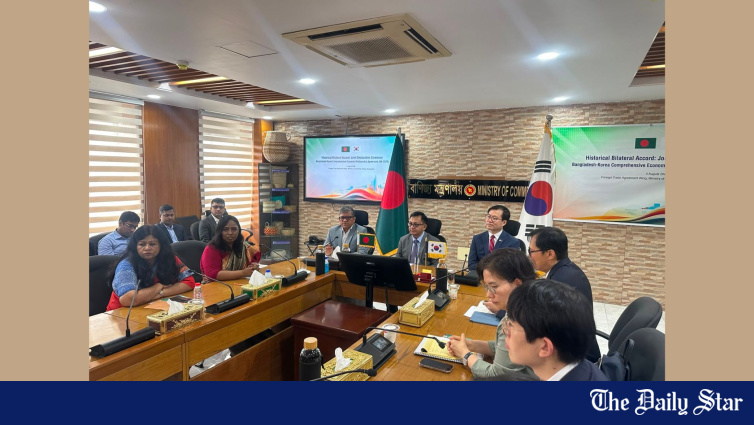
Dhaka, August 6, 2026 — The Bangladesh-Korea Comprehensive Economic Partnership Agreement (CEPA), signed earlier this month, will give 97 percent of Bangladeshi products duty-free access to the South Korean market — a landmark trade agreement that the Federation of Bangladesh Chambers of Commerce and Industry (FBCCI) says will boost Bangladesh's exports and meaningfully cut the bilateral trade gap that has long favoured Seoul.
🇰🇵 The Deal at a Glance
The CEPA — negotiated over several rounds between Dhaka and Seoul — represents South Korea's first comprehensive trade agreement with a South Asian country and Bangladesh's second major trade pact after the Bangladesh-Korea CEPA signed in 2024 with expanded scope. Under the agreement, 97 percent of Bangladeshi products will receive preferential market access to Korea, including the ready-made garments, knitwear, leather goods and agricultural products that constitute the bulk of Bangladesh's export basket. The agreement is particularly significant because it locks in preferential access that will survive Bangladesh's graduation from least developed country (LDC) status in November 2026, when Bangladesh will lose duty-free access to several other major markets under the EU's Everything But Arms (EBA) scheme.
📊 Bilateral Trade Numbers
According to FBCCI's analysis, bilateral trade between Bangladesh and Korea currently stands at $1.39 billion annually, with Bangladesh exporting approximately $492 million worth of goods to Korea and importing $903 million in the reverse direction — leaving a trade gap of around $411 million in Korea's favour. The FBCCI projects that the CEPA could help Bangladesh double its exports to Korea within three to five years, particularly if Korean buyers diversify their apparel sourcing away from China and Vietnam in response to geopolitical and supply-chain risk concerns.
- 📊 Total bilateral trade: $1.39 billion annually
- 📈 Bangladesh exports to Korea: $492 million
- 📉 Bangladesh imports from Korea: $903 million
- 📉 Trade deficit: ~$411 million (Korea's favour)
- 📈 Duty-free product coverage: 97% of Bangladeshi goods
- 📈 Export growth target: 2× in 3–5 years (FBCCI estimate)
👕 RMG and Apparel: The Big Winner
The ready-made garment (RMG) sector is expected to be the biggest beneficiary of the CEPA. South Korea is currently the world's fourth-largest apparel import market, with annual imports of over $15 billion — a market where Bangladesh currently holds a relatively small share despite its global position as the world's second-largest apparel exporter. The 97 percent duty-free coverage means that Bangladeshi garment exports to Korea will no longer face the 13 percent MFN tariff that currently applies to most apparel categories — an immediate price advantage of roughly 10–13 percent that should translate into meaningful market share gains.
Beyond RMG, the CEPA also opens opportunities for Bangladeshi leather goods, footwear, jute products, pharmaceuticals and agro-processed goods — sectors where Korea has been working to diversify its import base away from China. Korean consumers' growing preference for halal-certified food and personal care products also creates a niche for Bangladeshi agro-processors and halal cosmetics manufacturers.
🤝 FBCCI's Strategic Push
The FBCCI, Bangladesh's apex business body, has been one of the most vocal advocates of the CEPA, arguing that the agreement is essential for export diversification beyond the country's heavy dependence on the EU and US markets. Md Fazlul Hoque, the recently appointed FBCCI administrator and a former BGMEA president, has repeatedly highlighted that Bangladesh needs to develop a more diversified portfolio of preferential trade agreements to navigate the post-LDC transition. His dual role at FBCCI and his deep RMG sector experience give him particular credibility on trade policy matters.
The FBCCI's argument is supported by recent export data showing weakness in traditional markets: Bangladesh's RMG exports to the US fell 5.75 percent year-on-year in the first half of 2026, while exports to the EU declined 18.89 percent in the January-May period. With both major markets softening simultaneously, the need to cultivate alternative destinations like Korea, Japan, Australia and the Middle East has become strategically urgent rather than merely desirable.
🌏 Korea's Strategic Interest
For South Korea, the CEPA serves multiple strategic objectives. First, it diversifies Korea's apparel sourcing away from China and Vietnam, reducing exposure to geopolitical risk (US-China tensions) and supply-chain concentration risk. Second, it positions Korean companies to participate more easily in Bangladesh's growing infrastructure and energy sectors — with Korean firms already active in the Bangabandhu Sheikh Mujibur Rahman Industrial Park and various power sector projects. Third, it strengthens Korea's economic diplomacy in South Asia at a time when China's Belt and Road Initiative and India's Act East policy are both expanding their regional footprints.
Korean conglomerates including Samsung, LG and Hyundai have also expressed interest in establishing manufacturing presence in Bangladesh — particularly in the electronics and automotive components sectors — and the CEPA's investment facilitation provisions should accelerate these plans. Bangladesh's young demographic profile, low labour costs and strategic location between India and Southeast Asia make it an attractive manufacturing base for Korean companies seeking to serve both South Asian and ASEAN markets.
🏛️ LDC Graduation and Post-LDC Strategy
The CEPA takes on added significance against the backdrop of Bangladesh's scheduled LDC graduation in November 2026. After graduation, Bangladesh will lose duty-free, quota-free access to the EU's Everything But Arms scheme, the UK's Developing Countries Trading Scheme, and several other preferential arrangements — exposing roughly $5–7 billion of annual exports to higher tariff barriers. The CEPA with Korea, along with the Economic Partnership Agreement (EPA) signed with Japan, represents Bangladesh's strategy of locking in preferential access through bilateral agreements to compensate for the loss of LDC-based preferences.
However, the CEPA alone will not be sufficient to offset the LDC graduation impact. Bangladesh will need to negotiate similar agreements with the EU, the UK, the US, Australia, Canada and the Gulf Cooperation Council (GCC) countries to fully protect its export base. The Korea CEPA is therefore best understood as the first major test case — a proof of concept that Bangladesh can negotiate and implement a comprehensive trade agreement with a developed economy partner.
⚠️ Implementation Challenges
Despite its promise, the CEPA's actual impact will depend on implementation. Three challenges stand out:
- 📜 Rules of origin compliance: Bangladeshi exporters will need to meet Korean rules of origin requirements, which often mandate minimum local value addition. For RMG, this means ensuring that fabric sourcing and processing meet the agreement's cumulation provisions.
- 🛢️ Sanitary and phytosanitary (SPS) standards: Agricultural and food exports will need to meet Korea's notoriously strict SPS standards, which have historically been a barrier for South Asian exporters.
- 💸 Working capital and trade finance: Bangladeshi exporters entering the Korean market will need access to trade finance instruments (letters of credit, export credit insurance) that are still developing in Bangladesh's banking sector, particularly given the current 36 percent NPL overhang.
✅ What Comes Next
The CEPA's implementation phase will begin in late 2026, with the first round of tariff cuts expected to take effect within 90 days of formal ratification by both countries. The FBCCI, BGMEA, BKMEA and the Export Promotion Bureau (EPB) are expected to organise a series of buyer-seller meets and trade delegations to Korea in the September-December 2026 window to help Bangladeshi exporters capitalise on the new market access. If the CEPA delivers even half of the FBCCI's projected doubling of exports within five years, it would represent a meaningful step toward Bangladesh's broader export diversification goal of increasing non-traditional market share from the current 12 percent to over 25 percent by 2030 — a target that has become more urgent than ever as the country navigates the simultaneous challenges of LDC graduation, gas crisis, banking sector stress and softening Western demand.
This news was originally published by The Daily Star. For the full original report, please visit: https://www.thedailystar.net/business/economy/news/south-korea-deal-boost-exports-cut-trade-gap-4241786
Related on BangladeshExport
📬 Get Bangladesh Trade News in your inbox
Weekly digest of export industry news, policy updates, and market analysis.
📰 Related Stories