Bangladesh Restores Payment Guarantee to Lure Renewable Power Investment
Government restores payment guarantee mechanism for renewable energy projects to attract investment; aimed at addressing concerns over delayed payments that deterred investors
Dhaka, August 7, 2026 — The Bangladesh government has restored the Payment Guarantee provision for renewable energy projects — nearly two years after it was scrapped by the interim government — in a move stakeholders describe as a critical step toward unblocking the stalled pipeline of utility-scale solar and wind projects that foreign investors and multilateral lenders had repeatedly refused to finance without such a guarantee.
💰 Why the Guarantee Was Scrapped — and Why It Matters
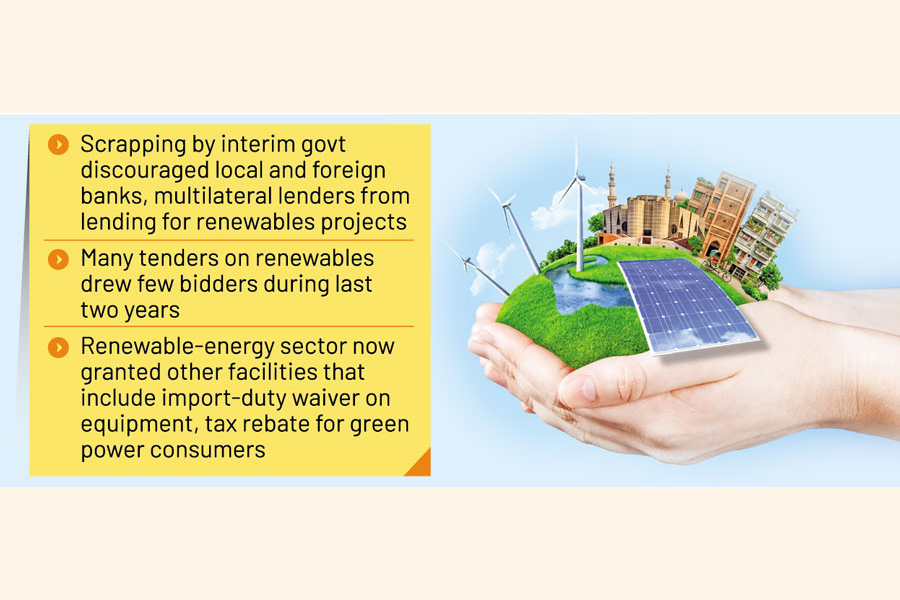
A provision of "Payment Guarantee" for the renewable-energy sector is now restored, nearly two years after it was scrapped by the interim government — a decision that ended up dissuading both local and foreign investors from making fresh investment, sources said. In the absence of payment guarantee, local and foreign banks as well as multilateral lenders shied away from providing loans for renewable energy projects, leading to significantly lower response in the tenders. Many tenders on renewable-energy projects received only a few bidders during the last two years, forcing the government to extend bid document-submission deadlines repeatedly — an outcome that wasted procurement cycles and delayed capacity addition.
✅ What Has Changed Now
Now investors say as the government agreed to include the provision of payment guarantee in the bid documents, they have no risks in making investment, and getting bank loans to set up renewable-energy-based power plants will be easier for them. Officials said the investors had long been pressing the government to restore the provision of payment guarantee so that they can secure loans to set up green power plants — and the gas crisis that has gripped the country since July has accelerated the rethink.
🏛️ Power Division Directive to BPDB
In the face of their repeated demands, the Power Division in a recent letter to the Bangladesh Power Development Board (BPDB) has asked for incorporating the provision of payment guarantee while inviting tenders in the future, sources said. Contacted by The Financial Express, Golam Mortuza, Director IPP Cell-1 of BPDB, acknowledged government directives to incorporate the provision of payment guarantee again into bid documents, now that government thrust on energy search grows amid a crunch.
"We are working on it. It was a long demand from the private sector," he told The Financial Express. Mr Mortuza said the government guarantee would help attract both local and foreign investments in the renewable-energy sector — an acknowledgment that the country's energy security strategy now explicitly relies on private capital that the public sector alone cannot mobilise.
🌏 Multilateral Pressure from ADB and JICA
As the interim government had written off the guarantee and was not issuing guarantee letters, a number of solar-power projects faced setbacks in getting loans disbursed from local and foreign financiers, including the Asian Development Bank (ADB) and the Japan International Cooperation Agency (JICA). Amid the stalemate, the ADB-JICA duo in a letter to the then energy adviser reminded about upholding contractual obligations, including the issuance of payment-guarantee letters in favour of the independent power producers (IPPs) — a rare public display of multilateral impatience with Bangladeshi energy policy.
💬 Investor Response
Imran Chowdhury, Deputy Director of Sonagazi Solar Power Ltd, said the Power Division's decision to include the payment guarantee in the contractual framework is a significant step towards improving the bankability of Bangladesh's utility-scale renewable-energy projects. "Payment security is one of the key considerations for international lenders, and this measure is expected to strengthen lender confidence and facilitate access to long-term project financing," he told The Financial Express.
He suggested incorporating the provision of payment guarantee into the tender documents of BPDB's ongoing IPP-based solar projects before the bid-submission deadline to maximise the benefits of the decision. "This would provide greater certainty to prospective bidders, encourage wider participation from experienced international project developers and IPPs, and strengthen competition," said Mr Chowdhury, who is also a director of the Bangladesh Sustainable and Renewable Energy Association.
📊 The 10 GW by 2030 Target
Stakeholders say as Bangladesh moves towards its target of 10-gigawatt renewable-energy capacity by 2030, improving project bankability will be essential to mobilise international financing and accelerate the implementation of utility-scale solar projects. The target represents a more than fivefold expansion from the current installed base — an ambition that cannot be met through public financing alone and that will require billions of dollars in private and multilateral capital over the next four years.
- ☀️ Target (2030): 10,000 MW renewable capacity
- 📈 Current installed: 1,822 MW
- 📉 Gap to close: ~8,178 MW in 4 years
- 💰 Estimated capital needed: Several billion USD
- 🏛️ Source: Sustainable and Renewable Energy Development Authority (BSREA)
🔥 Why the Government Changed Course
Amid the significant fall of electricity generation due to the shortage of gas and fuel oils and rising power subsidy, the new government in recent months has given utmost importance to producing clean power. The gas crisis — triggered by the July 21 Excelerate Energy FSRU fire and the broader structural shortfall in domestic gas production — has forced load-shedding of 3,000–3,500 MW at peak, crippling industrial production and forcing the government to look at renewable energy as a strategic alternative rather than a nice-to-have green agenda.
To this end, the renewable-energy sector has been granted various facilities, including waiving import duty on equipment for clean power plants and offering tax rebate for green power consumers. Bangladesh currently has the installed capacity to generate 1,822 megawatts of electricity from renewable sources, according to the Sustainable and Renewable Energy Development Authority (BSREA) — dominated by rooftop solar, utility-scale solar parks at Mymensingh and Cox's Bazar, and a small number of wind projects.
🌏 Macro and Trade Implications
The restoration of the payment guarantee has implications beyond the energy sector. Bangladesh's export economy — particularly the ready-made garment sector — is under growing pressure from Western buyers to demonstrate progress on carbon intensity reduction, with the EU's Carbon Border Adjustment Mechanism (CBAM) and brand-side science-based targets driving demand for green factory certificates. Renewable energy supply to industrial parks and export processing zones is therefore not just an environmental policy but a trade competitiveness issue. The Payment Guarantee restoration, combined with the existing rooftop solar milestone of nearly 1,000 MW and the duty waivers on clean power equipment, should help accelerate the deployment of utility-scale solar projects that can supply the industrial sector with the green electricity it increasingly needs to remain competitive in the global apparel market.
✅ What Comes Next
The BPDB is expected to issue revised tender documents incorporating the payment guarantee clause within the next 30 days. Several stalled IPP solar projects — including projects in Teknaf, Mymensingh and Sundarganj — are likely to be retendered with the new clause, with bid submissions expected to attract stronger international participation. If the guarantee clause is paired with complementary reforms on land acquisition, grid evacuation infrastructure and PPAs denominated partially in foreign currency, Bangladesh's renewable energy pipeline could finally begin to close the gap between the 1,822 MW installed today and the 10,000 MW target for 2030.
This news was originally published by The Financial Express. For the full original report, please visit: https://thefinancialexpress.com.bd/economy/payment-guarantee-restored-to-lure-investment-in-renewable-power
📬 Get Bangladesh Trade News in your inbox
Weekly digest of export industry news, policy updates, and market analysis.
📰 Related Stories