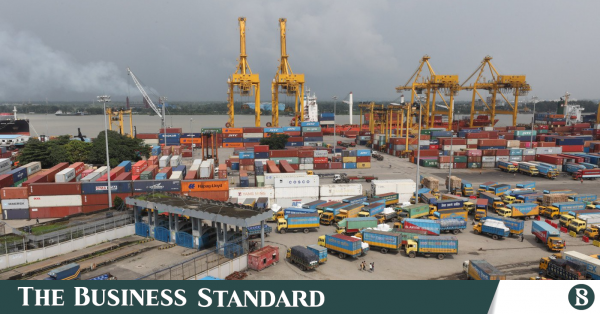
Bangladesh-Korea CEPA Signed: 97% Goods Get Preferential Market Access
Commerce Minister Muktadir and Korean Trade Minister Han-Koo Yeo sign pact in Dhaka; second major Bangladesh trade deal of 2026 after Japan EPA
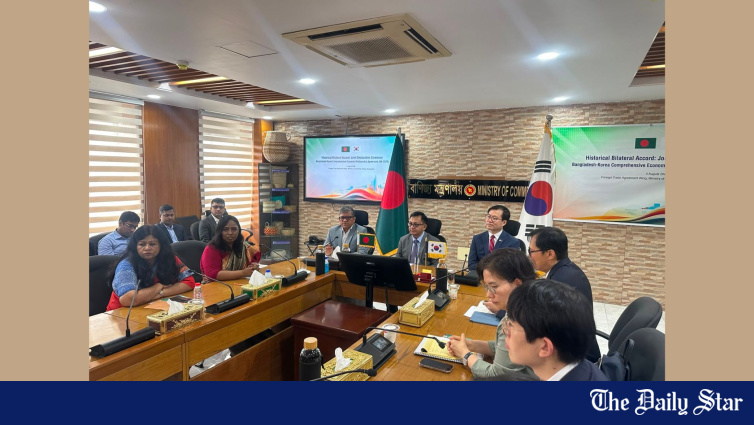
Dhaka, August 4, 2026 — Bangladesh and South Korea formally signed the Comprehensive Economic Partnership Agreement (CEPA) in Dhaka on Tuesday, opening preferential market access for the overwhelming majority of bilateral goods trade and marking Dhaka's second major trade pact of the year as it prepares to graduate from the Least Developed Country (LDC) category.
The agreement was signed at the Commerce Ministry in Dhaka by Commerce Minister Khandakar Abdul Muktadir and visiting South Korean Trade Minister Han-Koo Yeo, with both ministers telling a press conference that the deal would significantly deepen trade and investment flows between the two countries.
🤝 Key Terms of the Bangladesh-Korea CEPA
- 🌏 97 percent of Bangladesh's goods will receive preferential market access to South Korea
- 💰 87 percent of South Korean goods will receive reciprocal preferential access to Bangladesh
- 🏛️ Signed at the Commerce Ministry in Dhaka on August 4, 2026
- 👥 Signatories: Commerce Minister Khandakar Abdul Muktadir and Korean Trade Minister Han-Koo Yeo
- 📈 Second major Bangladesh trade pact of 2026, following the Japan EPA signed in Tokyo in February
📊 Current Bangladesh-Korea Trade Picture
Bilateral trade between Bangladesh and South Korea has been modest but strategically important, with Korea emerging as a critical source of investment capital, technology, and industrial know-how for Bangladesh's apparel and light engineering sectors. The CEPA is designed to formalise and expand this relationship at a moment when Bangladesh faces growing competitive pressure in its core export markets.
According to the Export Promotion Bureau (EPB), Bangladesh exported goods worth $421 million to South Korea in fiscal year 2025-26, a decline of 9 percent year-on-year. The drop underscores the urgency of securing preferential access before Bangladesh loses duty-free benefits following LDC graduation.
On the import side, Bangladesh purchased goods worth $614 million from South Korea during the July-December period of the last fiscal year. Full-year imports reached $1.2 billion in FY2024-25, up 33 percent from $903 million in FY2023-24, according to Bangladesh Bank data — reflecting Korea's growing role as a supplier of textile machinery, electronics, and intermediate goods to Bangladeshi manufacturers.
🌏 Strategic Context: LDC Graduation and Trade Pact Push
The CEPA forms part of a broader Bangladeshi strategy to lock in preferential market access before the country graduates from the LDC category, a transition that will trigger the loss of duty-free and quota-free access to major markets including the European Union. By signing bilateral and plurilateral trade agreements now, Dhaka aims to preserve export competitiveness and signal to global investors that Bangladesh remains open for business regardless of its LDC status.
The deal closely follows the Economic Partnership Agreement (EPA) signed with Japan in Tokyo in February 2026, which was the first standalone trade agreement Bangladesh had signed with a developed country. Together, the Japan EPA and the Korea CEPA create a foundation for deeper economic engagement with two of Asia's largest economies and provide a template for ongoing negotiations with other partners.
👕 Implications for the Apparel Sector
For Bangladesh's ready-made garment (RMG) sector — which accounts for the bulk of the country's exports — the Korea CEPA offers a meaningful opportunity to expand into a market that has traditionally been dominated by Chinese and Vietnamese suppliers. Korean buyers have historically maintained a strong presence in Bangladesh for sourcing knitwear and woven garments, and preferential access is expected to make Bangladeshi products more price-competitive at the Korean retail level.
Industry leaders have previously noted that Bangladesh's exports to Korea have remained well below their potential, given that Korea is one of Asia's largest consumer markets and operates sophisticated retail chains that are well-suited to Bangladeshi product categories. The 9 percent year-on-year decline in FY26 exports highlights the competitive pressure from regional rivals, particularly Vietnam, which already enjoys preferential access to Korea under the ASEAN-Korea Free Trade Agreement.
💳 Investment and Technology Transfer Potential
Beyond goods trade, the CEPA is expected to facilitate greater Korean investment in Bangladesh, particularly in the apparel, textile, electronics, and light engineering sectors. Korean firms have already established a significant footprint in Bangladeshi export processing zones, and the agreement is likely to encourage additional joint ventures, technology transfer arrangements, and supply chain integrations.
Korean conglomerates and mid-sized manufacturers have expressed growing interest in Bangladesh as a "China Plus One" manufacturing base, and the CEPA provides the legal and tariff framework needed to operationalise that interest at scale. The agreement also creates a platform for cooperation in emerging sectors such as semiconductors, electric vehicle components, and renewable energy equipment — areas where Korean firms hold global leadership positions.
📋 What Comes Next
Following the signing, both governments will move to ratify the agreement through their respective legislative processes. Bangladeshi officials have indicated that parliament is expected to take up the CEPA for ratification in its next session, alongside the previously signed Japan EPA. Once ratified, the agreement will enter into force after a brief implementation period during which customs authorities on both sides will adjust tariff schedules and compliance procedures.
For Bangladesh, the immediate priority will be ensuring that exporters — particularly small and medium-sized enterprises — are aware of the new preferential terms and equipped to take advantage of them. The Export Promotion Bureau and the Bangladesh Mission in Seoul are expected to launch outreach programmes in the coming months to educate exporters on rules of origin requirements, documentation procedures, and certification protocols under the CEPA.
The Korea CEPA represents a significant milestone in Bangladesh's trade diplomacy, demonstrating that even amid domestic economic challenges and global geopolitical uncertainty, the country can deliver on its commitment to expand market access for its exporters. As the LDC graduation deadline approaches, the agreement provides a template for future negotiations and a tangible reminder that Bangladesh's export future will be defined not by the loss of preferences, but by the new partnerships it builds to replace them.
This news was originally published by The Daily Star. For the full original report, please visit: https://www.thedailystar.net/business/news/bangladesh-south-korea-sign-cepa-boost-trade-4239796
Related on BangladeshExport
📬 Get Bangladesh Trade News in your inbox
Weekly digest of export industry news, policy updates, and market analysis.
📰 Related Stories