Rampal Power Plant Unit Shuts Down: Bangladesh Generation Halved Amid Adani Recovery
Second unit of 1,320MW Rampal coal plant shut down on September 13 due to technical fault, cutting generation from 1,100MW to below 600MW; recovery expected in 4 days
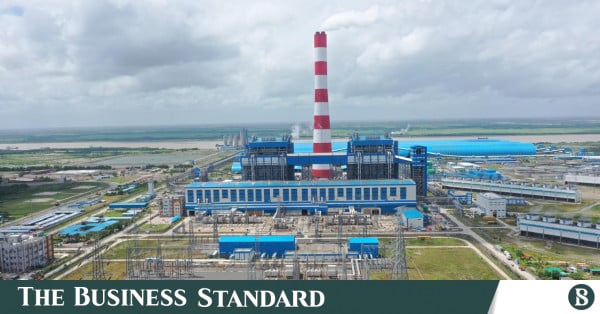
⚠ A unit of the Rampal coal-fired power plant in Bagerhat shut down due to a technical fault today (13 September), cutting the plant's power generation by roughly half, even as Adani Power's Godda plant resumed supply from its previously offline unit. The shutdown highlights the fragility of Bangladesh's power generation infrastructure at a time when the country is already grappling with chronic energy supply shortages and load-shedding.
📊 The second unit of the 1,320MW Rampal power plant stopped operating around 11am. Confirming the matter to The Business Standard, the power plant's General Manager (Human Resources) Anwarul Azim said, "The second unit had been completely shut down due to a technical fault. It will take at least four days to resume operations."
"The work was underway to restore the unit, while the first unit remained operational and continued supplying electricity to the national grid," he added. The official, however, could not specify the nature of the technical fault. According to Bangladesh Power Development Board (BPDB) and Power Grid Company of Bangladesh (PGCB) sources, before the shutdown, the plant was generating more than 1,100MW. Its output subsequently fell to below 600MW.
💰 Rampal Plant Profile
The 1,320MW Rampal power plant, jointly built by Bangladesh and India, had previously faced production cuts due to coal shortages. Its generation had recently increased to more than 1,100MW after coal supplies improved. The project was initiated as a joint venture between Bangladesh and India in 2010. On 29 January 2012, the BPDB and India's NTPC Ltd signed an agreement, leading to the formation of Bangladesh-India Friendship Power Company (Pvt) Ltd (BIFPCL).
Under BIFPCL, construction of the 1,320MW Maitree Super Thermal Power Project, commonly known as the Rampal power plant, began after 1,034 acres of land were acquired in Sapmari-Kai-Gordashkathi mouzas under Rajnagar and Gourambha unions of Rampal upazila. The project was built at a cost of around Tk 16,000 crore. The plant's first unit began generation on 23 December 2022, while the second unit started trial generation on 24 October 2023. Commercial operations officially began on 12 March 2024.
- 🏛 Plant: Rampal Maitree Super Thermal Power Project
- 📊 Total capacity: 1,320MW (2 units of 660MW each)
- 📊 Pre-shutdown generation: 1,100+ MW
- 📊 Post-shutdown generation: below 600 MW
- ⏳ Recovery time: at least 4 days
- 📅 Commercial operation start: 12 March 2024
- 📜 Joint venture: BPDB (Bangladesh) + NTPC Ltd (India) via BIFPCL
- 💰 Project cost: Tk 16,000 crore
- 📊 Disruptions since commercial operation: 30+ times
📜 Adani Recovery: Mixed Blessing
Meanwhile, Adani Power's second unit resumed electricity supply to Bangladesh's national grid at around noon after being shut down due to a technical problem late Thursday night (10 September). The combined supply from Adani's two units crossed 1,046MW around 2pm, compared with a maximum of around 758MW earlier in the day. The supply could rise further in the afternoon, according to BPDB and PGCB sources.
Adani Power's Godda plant in Jharkhand, India, has an installed capacity of 1,600MW across two 800MW units. The BPDB signed a power purchase agreement with Adani in 2017. The plant has previously supplied more than 1,500MW to Bangladesh, depending on demand. The Adani recovery partially offsets the Rampal shutdown — but the simultaneous disruption at two of Bangladesh's major power plants illustrates the structural fragility of the country's generation fleet.
🚧 Rampal Plant History Of Disruptions
The plant had been operating at reduced capacity for about a month due to coal shortages caused by disruptions to coal transportation following a storm. Its generation increased towards the end of last month, with the plant supplying around 900MW during the day and up to 1,200MW from the evening until midnight. Its output crossed 1,430MW around 1am on 9 September before one of its units shut down, bringing generation below 750MW. After the second unit resumed operation today, Adani's supply to the national grid began increasing.
However, the plant's generation has been disrupted more than 30 times since it began commercial operations due to technical faults and other reasons, according to reports. The frequency of disruptions — averaging more than once a month since commercial operation began in March 2024 — raises serious questions about the plant's reliability and the quality of its technical commissioning. For a major thermal power plant to experience 30+ outages in 18 months of operation suggests systemic issues with equipment quality, maintenance practices or operational training.
🌏 Implications For Bangladesh's Power Sector
The simultaneous disruption of Rampal unit 2 and the recent shutdown of Adani unit 2 illustrate the structural vulnerability of Bangladesh's power supply system, which depends on a small number of large generation units. When any single 660MW or 800MW unit trips, the system loses meaningful capacity that cannot be quickly replaced — particularly at a time when the country's gas-fired plants are already operating at reduced output due to gas supply shortages.
For Bangladesh's export economy, the power supply fragility carries direct operational consequences. Ready-made garment factories, textile mills, agro-processors and pharmaceutical manufacturers all depend on reliable grid electricity to maintain production schedules. Each major outage forces factories to either switch to expensive diesel generator backup (costing 3-4 times as much per kWh) or accept production stoppages that delay export shipments and strain relationships with international buyers.
The 4-day recovery timeline for Rampal unit 2 means the plant will operate at half capacity through at least September 17. During this period, BPDB will need to increase generation from oil-fired plants to bridge the supply gap — accepting higher operating costs that will further strain the utility's already weakened financial position. The recurring pattern of thermal plant outages, gas supply shortages and oil-fired generation reliance underscores the urgency of structural reforms in Bangladesh's power sector — including diversification of generation sources, accelerated renewable energy deployment and modernisation of aging thermal plant infrastructure.
🤝 What Comes Next
The coming days will reveal whether Rampal unit 2 can be restored within the announced 4-day timeline, or whether the technical fault proves more complex than initially assessed. Plant operator BIFPCL will need to conduct a thorough root cause analysis of the fault and implement preventive measures — both at Rampal and at the joint venture's other facilities. Without systemic improvements in maintenance practices and equipment reliability, the recurring outages at Rampal will continue to undermine the plant's economic rationale and contribute to Bangladesh's power supply fragility.
For Bangladesh's broader power sector strategy, the Rampal episode reinforces the case for diversifying away from coal-fired generation — which is exposed to both technical reliability risks and fuel supply disruptions — toward renewable energy, particularly solar and wind, which have inherently different failure modes and reduce dependence on imported fuel. The interim government's push toward 10,000 MW of renewable capacity within five years takes on added urgency in light of the Rampal disruptions.
This news was originally published by The Business Standard. For the full original report, please visit: https://www.tbsnews.net/economy/energy/rampal-power-plant-unit-shuts-down-generation-falls-half-1541296
📬 Get Bangladesh Trade News in your inbox
Weekly digest of export industry news, policy updates, and market analysis.
📰 Related Stories