Policy Uncertainty Hurting Investment Confidence in Bangladesh: BIDA Chief
BIDA Executive Chairman: investors cite lack of policy continuity and political stability; FY27 budget opportunity to signal commitment; ICT and renewable energy priority sectors
Dhaka, August 6, 2026 — The lack of policy continuity and political stability remains one of the biggest concerns for both local and foreign investors in Bangladesh, according to the executive chairman of the Bangladesh Investment Development Authority (BIDA) — who said that investors have repeatedly pointed to these factors as the primary barriers to investment confidence over the past one and a half years.
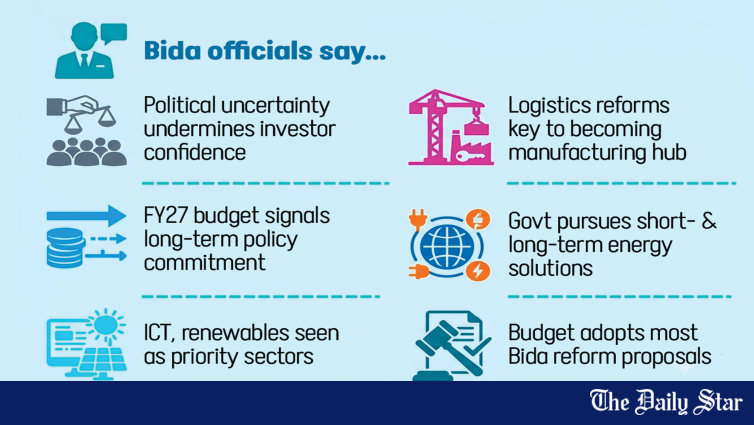
Speaking at a BIDA briefing organised at its office in Dhaka on the investment-related outcomes of the national budget, the chairman said: "The first question we are always asked is why investors lack confidence in Bangladesh. Throughout the past one and a half years, investors have repeatedly pointed to the absence of policy continuity and political stability."
📋 Key Concerns Raised
- ⚠️ Policy continuity: Investors cite lack of predictable policy environment
- ⚠️ Political stability: Concerns about political uncertainty deterring investment
- 💰 FY27 budget: Opportunity to signal commitment to investment-friendly policies
- 💡 Priority sectors: ICT and renewable energy identified as key
- 🚢 Logistics reform: Needed for regional manufacturing hub ambition
- ⛽ Gas/power shortages: Acknowledged; short and long-term solutions pursued
The FY27 budget offers the government an opportunity to send a strong signal that it remains committed to predictable, investment-friendly policies, he said, adding that while such assurances would not immediately attract large foreign investment, they would begin the gradual process of rebuilding investor confidence. "We cannot expect millions of dollars to flow into Bangladesh the day after such a signal is sent. Investor confidence is built gradually. If we continue to demonstrate that we are serious about policy continuity, investors will eventually believe us," he added.
💡 Priority Sectors and Reform Needs
The BIDA chairman underscored the need for the government to look beyond sector-specific incentives and identify priority sectors in the budget, highlighting ICT and renewable energy. He said Bangladesh's ambition to become a regional manufacturing hub would depend not only on fiscal incentives but also on reforms in logistics, supply chains, and trade facilitation, alongside improving the ease of doing business.
Acknowledging persistent gas and power shortages, he said the government was pursuing both short- and long-term solutions while remaining engaged with industries to minimise disruptions. He also stressed the need to improve awareness of government support schemes, particularly among entrepreneurs outside Dhaka — highlighting a gap between the availability of investment support and the awareness of that support among potential beneficiaries.
📋 Strategic Context
The BIDA chairman's candour about the investment confidence deficit is significant — coming from the head of the agency responsible for attracting foreign direct investment (FDI) to Bangladesh. With FICCI having previously called for $15 billion in annual FDI by 2030, and the LDC graduation roadmap targeting increased non-RMG exports, the investment climate is a critical determinant of whether Bangladesh can achieve its economic targets. The chairman's emphasis on policy continuity reflects a genuine structural problem: Bangladesh has experienced multiple changes in government, tax policy, and regulatory frameworks over the past two years that have made it difficult for investors to plan long-term commitments. The FY27 budget represents an opportunity to break this pattern by providing a stable, predictable policy framework that investors can rely on — but whether the government will seize that opportunity remains to be seen. The combination of the gas crisis, the banking sector's 36 percent NPL ratio, and the 33-year low in private sector credit growth creates an environment that is inherently unattractive to new investment, regardless of the policy signals sent in the budget. The BIDA chairman's acknowledgement of these challenges, while sobering, is a necessary first step toward developing an investment promotion strategy that is grounded in reality rather than aspiration.
The BIDA chairman's candour about the investment confidence deficit is significant — coming from the head of the agency responsible for attracting FDI. With FICCI calling for $15 billion in annual FDI by 2030, and the LDC graduation roadmap targeting increased non-RMG exports, the investment climate is a critical determinant. The chairman's emphasis on policy continuity reflects a genuine structural problem: Bangladesh has experienced multiple changes in government, tax policy, and regulatory frameworks over the past two years that have made it difficult for investors to plan long-term commitments. The FY27 budget represents an opportunity to break this pattern by providing a stable, predictable policy framework. The combination of the gas crisis, the banking sector's 36 percent NPL ratio, and the 33-year low in private sector credit growth creates an environment inherently unattractive to new investment. The BIDA chairman's acknowledgement of these challenges, while sobering, is a necessary first step toward developing an investment promotion strategy grounded in reality rather than aspiration.
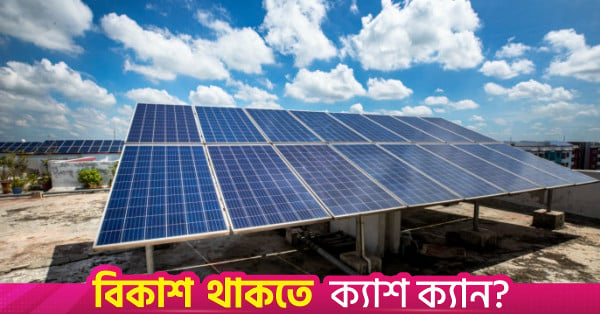
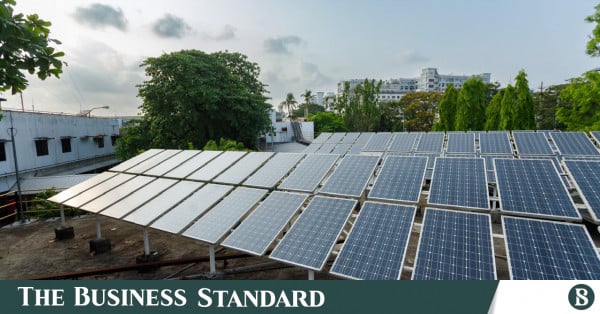
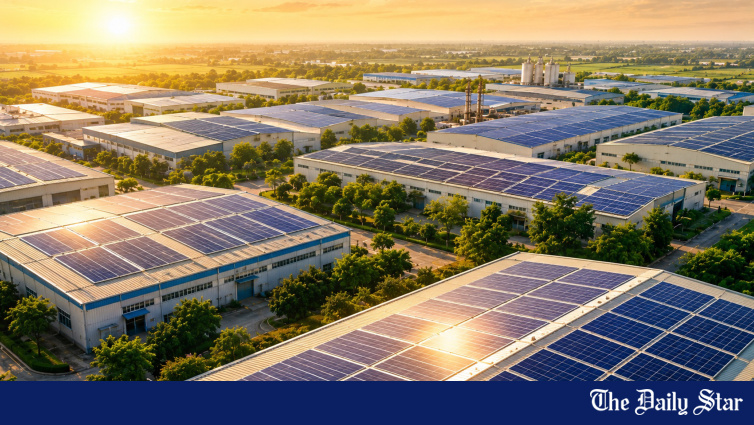
The BIDA chairman's emphasis on ICT and renewable energy as priority sectors aligns with the broader policy direction outlined in the LDC graduation roadmap, which targets increasing the share of non-RMG exports to at least 25 percent of total exports by 2029. The ICT sector, with companies like 4Beats Limited, TechForing, and Musemind operating from BASIS member offices, represents a potential growth engine that could absorb some of the manufacturing sector's displaced workers. The renewable energy sector, with rooftop solar nearing 1,000 MW and the government targeting 10,450 MW of renewable capacity by 2030, offers both energy security and investment opportunities. However, the 17 percent tax on rooftop solar equipment (raised from 1 percent) creates a direct contradiction with the investment promotion agenda — making it harder for BIDA to attract investment into a sector that the government simultaneously claims to prioritise. The BIDA chairman's call for the government to identify priority sectors in the budget, rather than offering sector-specific incentives, reflects a sophisticated understanding of investment promotion: broad-based policy stability is more valuable to investors than targeted tax breaks that can be reversed at any time. The FY27 budget will be a test of whether the government has internalised this message.
This news was originally published by The Daily Star. For the full original report, please visit: https://www.thedailystar.net/business/economy/news/policy-uncertainty-hurting-investment-confidence-bida-4241791
📬 Get Bangladesh Trade News in your inbox
Weekly digest of export industry news, policy updates, and market analysis.
📰 Related Stories