Bangladesh Private Sector To Add 918MW Solar Power To National Grid By 2028
BPDB signs agreements with 12 IPPs at Tk 9.12/unit — 2.5 cents below previous contracts — with 200MW Fatikchhari project among largest; rooftop solar with battery storage incentivised at Tk 10.50/unit
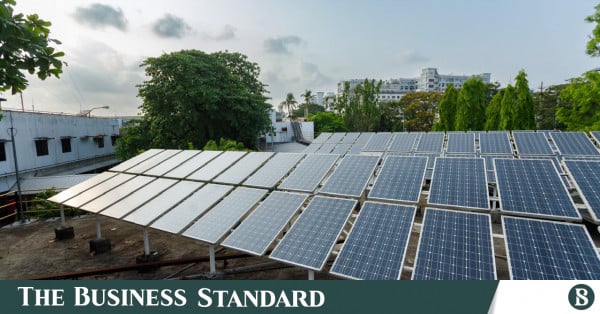
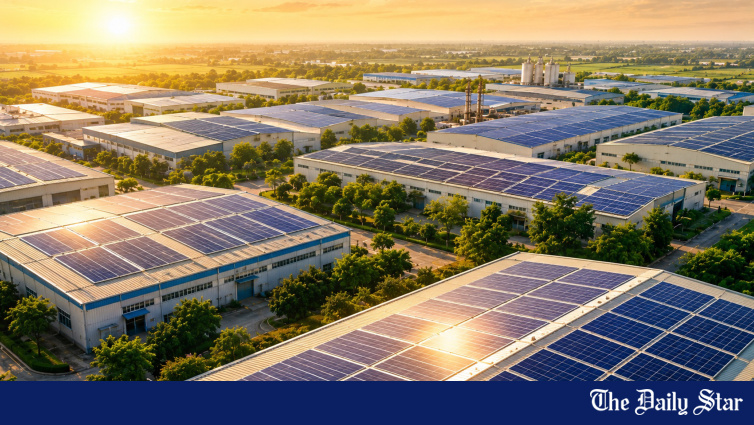
☀ Around 918 megawatts (MW) of grid-connected solar power from the private sector is expected to be added to the national grid by 2028 as the government steps up efforts to expand renewable energy generation and reduce dependence on imported fossil fuels. The Bangladesh Power Development Board (BPDB) has signed agreements with 12 independent power producers (IPPs) to generate 918MW of solar electricity at Tk 9.12 per kilowatt-hour, according to officials.
📊 An official said the agreed tariff was around 2.5 cents lower than the cost of similar projects contracted previously. The tariff reduction reflects the global decline in solar PV costs — driven by manufacturing scale efficiencies in China and improved panel efficiency — that has made utility-scale solar increasingly competitive with fossil fuel-based generation. The Tk 9.12/unit tariff, equivalent to approximately 7.4 US cents/unit, is approaching the cost-competitive threshold where solar generation becomes cheaper than imported LNG-based power generation.
💰 Project Portfolio: 12 IPPs Across Bangladesh
According to the BPDB, the largest of the 12 contracted projects, with a capacity of 200MW, will be built at Fatikchhari in Chattogram. A 150MW plant will be installed at Ishwardi in Pabna. Two 100MW plants will be set up in Cox's Bazar, while another 100MW solar plant will be constructed at Mongla in Bagerhat. A 70MW plant will also be installed at Ishwardi. The remaining projects will be located in Bibiana of Moulvibazar, Joldhaka of Nilphamari, Fatikchhari of Chattogram, Moulvibazar Sadar, Hathazari of Chattogram and Sudharam of Noakhali, with capacities ranging from 10MW to 50MW.
- 📊 Total IPP solar capacity: 918MW
- 💰 Tariff: Tk 9.12/unit (~7.4 US cents)
- 💰 Tariff reduction: 2.5 cents below previous contracts
- 🏛 IPPs contracted: 12
- 📊 Largest project: 200MW (Fatikchhari, Chattogram)
- 📅 Target completion: 2028
- 📊 Current solar capacity: 1,852.06MW (1,473.5MW grid + 378.56MW off-grid)
- 💰 Rooftop solar + battery: Tk 10.50/unit (Tk 8 generation + 20% profit + 11.25% premium)
- 📊 BPDB own projects: 689MW (target 2030)
💰 Rooftop Solar With Battery Storage Incentive
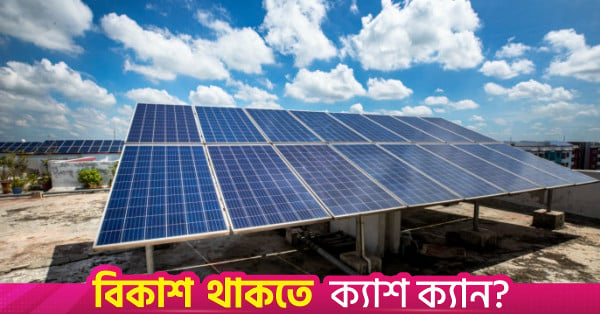
The government has also announced a special incentive package to encourage the installation of rooftop solar systems with battery storage as part of its renewable energy expansion drive. Under the incentive scheme, the maximum generation cost for electricity from rooftop solar systems with batteries has been set at Tk 8 per unit. A 20% profit margin and an 11.25% premium have been added to the generation cost, fixing the electricity price at Tk 10.50 per unit. The battery storage integration is strategically significant — it addresses the intermittency challenge of solar power by enabling excess daytime generation to be stored for evening peak demand periods, improving grid stability as solar penetration increases.
📊 Current Solar Capacity And BPDB's Own Projects
According to the Sustainable and Renewable Energy Development Authority (SREDA), Bangladesh currently has 1,852.06MW of solar generation capacity, of which 1,473.5MW is connected to the national grid and 378.56MW remains off-grid. The BPDB has also undertaken projects totalling 689MW of grid-connected solar capacity using its own financing, expected to come into operation by 2030. BPDB Chairman Engineer Rezaul Karim said the agreements with the IPPs were part of a broader energy-mix strategy aimed at increasing renewable energy generation and reducing dependence on conventional, particularly imported, fossil fuels.
Confidence Power Rangpur Vice Chairman Imran Karim said his company was working to install three solar power projects with a combined generation capacity of 400MW. "All three solar power projects would come into operation by 2028," he said. The 400MW commitment from a single private developer — representing over 43% of the total 918MW IPP portfolio — demonstrates meaningful private sector appetite for utility-scale solar investment in Bangladesh.
🌏 Strategic Context: Renewable Energy Scale-Up
For Bangladesh's broader energy strategy, the 918MW private sector solar pipeline represents a meaningful step toward the country's renewable energy targets. Combined with the BPDB's own 689MW projects (target 2030) and the 4,000MW rooftop solar target, Bangladesh's renewable energy pipeline is approaching 5,600MW — a substantial increase from the current 1,852MW installed capacity. If successfully delivered, this pipeline would bring Bangladesh's total solar capacity to approximately 7,400MW by 2030, representing roughly 25-30% of projected peak demand.
The tariff reduction — 2.5 cents below previous contracts — demonstrates that Bangladesh's solar procurement is achieving meaningful cost efficiency through competitive IPP bidding. The declining tariff trajectory, combined with the battery storage incentive and the rooftop solar fund (Tk 1,500 crore at 6% interest), creates a multi-layered financing and policy framework that could support sustained renewable energy deployment through the late 2020s — reducing Bangladesh's dependence on imported fossil fuels and supporting the country's NDC 3.0 commitments.
The coming months will reveal whether the 12 IPP projects progress on schedule — or whether implementation challenges including land acquisition, grid connection capacity and financing arrangements delay the 2028 target. For Bangladesh's energy security and climate commitments, the successful delivery of this 918MW solar pipeline is a strategically important milestone.
This news was originally published by The Business Standard. For the full original report, please visit: https://www.tbsnews.net/economy/energy/private-sector-add-918mw-solar-power-national-grid-2028-1545701
Related on BangladeshExport
📬 Get Bangladesh Trade News in your inbox
Weekly digest of export industry news, policy updates, and market analysis.
📰 Related Stories