PM Tarique Rahman Urges Faster Global Action As Sea Level Rise Threatens 10 Million Bangladeshis By 2050
At UN High-level Meeting on Sea-Level Rise, Prime Minister Tarique Rahman proposed four urgent actions including deeper emissions cuts, predictable climate finance, technology access, and dignified pathways for climate-displaced communities.
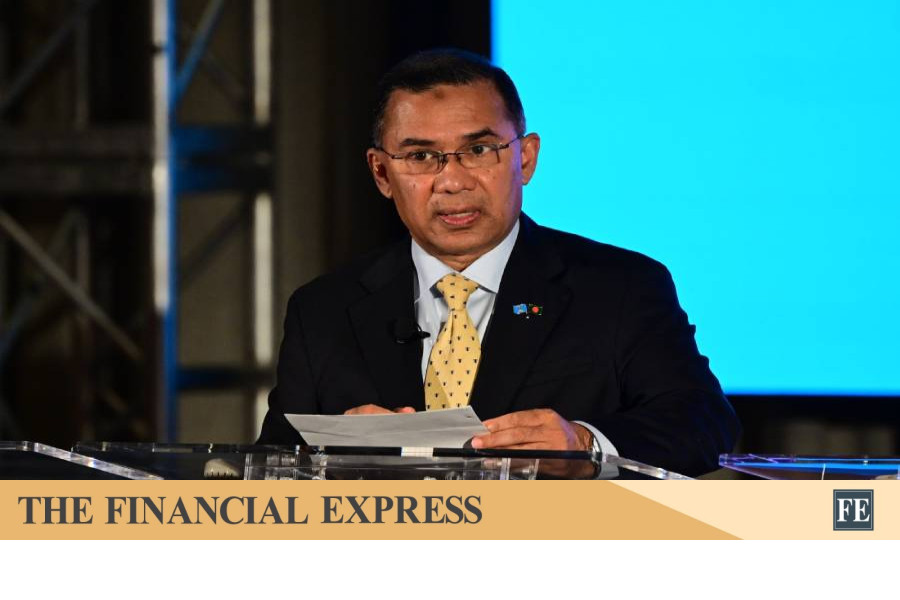
New York, September 24, 2026 — Prime Minister Tarique Rahman on Thursday called for faster and deeper cuts in global emissions and greater international support for climate-vulnerable countries, warning that a 25-centimetre rise in sea level could submerge around 4 per cent of Bangladesh's land and affect about 10 million people by 2050. The warning came at a critical moment for global climate diplomacy, with the international community struggling to meet the 1.5-degree Celsius warming target.
🌏 While addressing an event titled “High-level Meeting to Address the Existential Threats Posed by Sea-Level Rise” at the UN Headquarters, the Prime Minister proposed four urgent actions to address the impacts of sea-level rise. The meeting was held on the sidelines of the 81st session of the United Nations General Assembly.
💬 The Four Urgent Actions Proposed
💬 “Vulnerable countries like Bangladesh cannot face the grave consequences of sea-level rise alone. Global support and assistance are needed to redouble our efforts. We, therefore, call for four urgent actions,” Tarique Rahman said.
- 🔥 Faster, deeper and fairer cuts in global emissions — to keep the 1.5-degree Celsius target within reach.
- 💰 Predictable and accessible climate finance — for vulnerable countries.
- 💻 Greater access to climate-smart technologies, data and early-warning systems — for vulnerable coastal nations.
- 👥 Stronger international cooperation — to address climate-induced displacement, loss and damage, and to ensure dignified pathways for communities displaced by sea-level rise.
📊 The 10-Million-Person Threat
Citing a World Bank estimate, the Prime Minister said a 25-centimetre sea-level rise by 2050 could result in the loss of homes, livelihoods and human dignity for around 10 million Bangladeshis. The implications are staggering:
- 📊 4 per cent of Bangladesh's land could be submerged — equivalent to approximately 5,800 square kilometres.
- 📊 10 million people would be directly affected — roughly 6 per cent of Bangladesh's population.
- 📊 Coastal districts including Khulna, Bagerhat, Satkhira, Patuakhali, Barguna, Bhola, Noakhali, Cox's Bazar and Chattogram would bear the brunt.
- 📊 The Sundarbans — the world's largest mangrove forest — would face existential threat.
- 📊 Agricultural land in coastal areas would be lost to salinity intrusion.
🏛 Bangladesh's Existing Climate Adaptation Efforts
The Prime Minister said Bangladesh, an active delta where hundreds of rivers meet the sea, has a future closely tied to its coast and is already taking measures to delay the impacts of sea-level rise despite its limited resources. Bangladesh has:
- 🛡 Built early-warning systems — including cyclone early warning networks that have saved hundreds of thousands of lives.
- 🛡 Strengthened cyclone preparedness — through the Cyclone Preparedness Programme (CPP) and over 14,000 cyclone shelters.
- 🛡 Invested in coastal protection — including the Coastal Embankment Improvement Project (CEIP).
🌳 Bangladesh's Ambitious Climate Resilience Plans
Tarique Rahman said Bangladesh is also taking ambitious steps to strengthen climate resilience, including:
- 💧 Plans to excavate around 20,000 kilometres of rivers and canals over the next five years — to improve drainage and reduce waterlogging.
- 💧 Advancing the Padma Barrage initiative — to retain and reserve water.
- 💧 Modernising the Teesta Barrage under a master plan.
- 🌳 Planning to plant 250 million trees over the next five years — a major afforestation programme.
☀ Green Growth And Renewable Energy Targets
At the same time, the Prime Minister said Bangladesh is pursuing green growth with ambitious targets:
- ☀ Targeting at least 20 per cent of electricity from renewable sources by 2030 — with emphasis on solar power.
- 🏭 Promoting green industries — including LEED-certified RMG factories, of which Bangladesh has the highest number globally.
- 🛵 Eco-friendly transport — including metro rail expansion and electric vehicle adoption.
- 💸 Developing a national carbon market — to monetise emissions reductions.
- 🌳 Strengthening protection of forests, wetlands and vulnerable coastal ecosystems.
💬 Adaptation Alone Is Not Enough
Tarique Rahman said adaptation measures alone will not be enough to address the effects of sea-level rise — a pointed message to major emitting countries whose pollution is driving the climate crisis.
💬 “The ocean reacts to every tonne of carbon the world releases,” he said, stressing the need to rethink consumption patterns and reduce carbon emissions.
💬 “The sea is rising fast. Our ambition must rise faster. We must act now to safeguard our future and the future of generations to come,” the Prime Minister said.
He expressed hope that countries will work together to turn the commitments in the declaration into action and ensure that no nation is left behind to face the rising tide.
💬 “Let our resolve rise with the sea, and let our action rise even faster,” Tarique Rahman said in his closing remarks.
🏛 The High-Level Meeting Context
The high-level meeting was held on the sidelines of the 81st session of the United Nations General Assembly with the participation of:
- 🌏 Heads of government and state from climate-vulnerable countries.
- 🌏 Representatives of relevant international organisations — including the UN Framework Convention on Climate Change (UNFCCC), the World Bank, the Green Climate Fund (GCF), and the International Organization for Migration (IOM).
- 🌏 Climate-vulnerable forum (CVF) members — of which Bangladesh is a leading member.
🌏 Why This Matters For Bangladesh's Trade And Economy
For Bangladesh's export economy, the climate change threat is not abstract — it is a direct economic risk:
- 🏭 RMG factories are concentrated in coastal and low-lying areas — including Chattogram, Ashulia, Narayanganj and Gazipur.
- 🏭 Chattogram Port — handling over 90 per cent of Bangladesh's containerised trade — is in a coastal city directly exposed to sea level rise.
- 🏭 Mongla Port — Bangladesh's second seaport — is even more exposed, being located inside the Sundarbans ecosystem.
- 🏭 Coastal agriculture — particularly shrimp farming, rice cultivation and salt production — faces salinity intrusion threats.
- 🏭 Industrial zones in Chattogram, Mongla and other coastal areas face flooding risks.
The 10-million-person threat also has direct implications for Bangladesh's labour force — with millions of workers in coastal areas potentially requiring relocation to inland industrial zones, putting pressure on infrastructure, housing and employment.
💰 Climate Finance: The Critical Missing Piece
The Prime Minister's call for predictable and accessible climate finance reflects a long-standing grievance of climate-vulnerable countries. The developed world's commitment to provide US$100 billion per year in climate finance — first made at COP15 in Copenhagen in 2009 — has been chronically under-delivered.
For Bangladesh specifically, the climate finance need is significant:
- 💵 Bangladesh Delta Plan 2100 — estimated cost of approximately US$37 billion over 25 years.
- 💵 National Adaptation Plan (NAP) — estimated cost of approximately US$230 billion through 2050.
- 💵 Coastal embankment improvements — estimated cost of US$5-7 billion.
- 💵 Cyclone shelter expansion — estimated cost of US$1-2 billion.
The Prime Minister's call for predictable and accessible climate finance is therefore not just a rhetorical demand — it reflects Bangladesh's concrete financing needs for climate adaptation.
💼 Wider Diplomatic Significance
The Prime Minister's address is also diplomatically significant for Bangladesh. By positioning Bangladesh as a leading voice for climate-vulnerable countries, the country strengthens its case for:
- 🌏 Leadership roles in international climate bodies — including the CVF presidency.
- 🌏 Preferential access to climate finance — from the Green Climate Fund, Adaptation Fund and bilateral donors.
- 🌏 Trade preferences — particularly with the EU, which is increasingly linking trade agreements to climate performance.
- 🌏 Bilateral cooperation — with the US, UK, EU, Japan and other developed economies on green technology transfer.
- 🌏 Moral authority — as one of the countries most affected by climate change despite contributing minimally to global emissions.
📜 Conclusion
Prime Minister Tarique Rahman's address at the UN High-level Meeting on Sea-Level Rise marks a significant moment in Bangladesh's climate diplomacy. By combining concrete data (the 25cm rise, 4 per cent land, 10 million people), ambitious domestic plans (20,000 km of canals, 250 million trees, 20 per cent renewables by 2030), and clear international asks (the four urgent actions), the Prime Minister presented a coherent and credible case for accelerated global climate action.
Whether the international community responds to the call — particularly on climate finance — will determine whether Bangladesh can manage the existential threat of sea-level rise without catastrophic human and economic costs.
The address was part of Prime Minister Tarique Rahman's broader UN engagements during his visit to New York for the 81st UNGA session, where he is also scheduled to address the General Debate on September 24.
This news was originally published by The Financial Express. For the full original report, please visit: https://thefinancialexpress.com.bd/national/pm-urges-faster-global-action-as-sea-level-threatens-10m-bangladeshis
📬 Get Bangladesh Trade News in your inbox
Weekly digest of export industry news, policy updates, and market analysis.
📰 Related Stories



✍️ More from System Administrator