Illegal Autorickshaw Charging Causes Tk 4,000 Crore Annual Revenue Loss in Bangladesh
50-80 lakh battery-run autorickshaws operate nationwide with only 3,300 legal charging points. Charging accounts for 5% of total electricity generation. 13.54% of road accident vehicles were battery-run autorickshaws in 2025. Govt formulating regulat
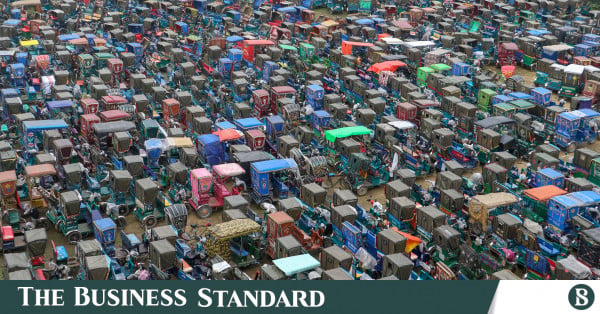
🛵 Dhaka, Bangladesh — Illegal charging of battery-run autorickshaws is causing an estimated Tk 4,000 crore annual revenue loss to the government, with the electricity needed to charge these vehicles accounting for around 5% of Bangladesh’s total electricity generation, State Minister for Power, Energy and Mineral Resources Salahuddin Ahmed told Parliament on 7 September 2026.
📊 Although an estimated 50-80 lakh battery-run autorickshaws operate nationwide, there are only around 3,300 legal charging points, he said. The minister disclosed the figures in response to an urgent public-importance notice under Rule 71 of the Rules of Procedure in parliament, submitted by reserved women’s seat MP Rehana Akhter Ranu on the “uncontrolled operation of autorickshaws”.
📊 Scale of the Problem
📊 Battery-run autorickshaws, e-rickshaws and other electric three-wheelers have become an important part of urban and rural transport over the past decade. But their rapid and largely unregulated growth has increased pressure on:
- ⚡ Power system — charging accounts for ~5% of total generation
- 🛣 Roads — traffic congestion and road accident risks
- 🌿 Environment — unsafe battery recycling causing pollution
📊 The electricity needed to charge the vehicles could account for around 5% or more of the country’s total generation. Large-scale simultaneous charging is also putting pressure on local distribution networks, while illegal commercial use of residential connections is overloading transformers and distribution lines.
💰 Revenue Loss Breakdown
📊 The Tk 4,000 crore annual revenue loss comes from:
- 💰 Unpaid electricity tariffs — illegal connections bypass metering
- 💰 Residential rate abuse — commercial charging on residential connections
- 💰 Distribution system damage — transformer overloads requiring replacement
- 💰 Unregistered vehicles — no registration fees or road tax
- 💰 Unlicensed drivers — no licensing revenue
📊 Road Safety Crisis
📊 Salahuddin said the unregulated operation of autorickshaws is also increasing traffic congestion and road accident risks. According to data presented by him:
- 📊 Battery-run autorickshaws accounted for 13.54% of vehicles involved in 6,729 road accidents recorded in 2025
- 📊 Unregistered vehicles
- 📊 Untrained drivers
- 📊 Faulty designs, defective brakes and lights
- 📊 Speeding and operation of slow-moving vehicles on highways
🌿 Environmental and Health Concerns
📊 The minister also raised concerns over unsafe handling and informal recycling of lead-acid batteries, which can cause:
- 🌾 Soil and water pollution
- 👥 Child labour health risks — child labourers face particular health risks
- 🌾 Agriculture impact — agricultural production affected
- 🐔 Poultry production impact
🏛 Government Policy Response
📊 The government is formulating a policy to bring autorickshaws under a regulated system:
- 📋 Authorised vehicles will have number plates and QR codes
- 👥 Drivers will be registered, trained and gradually brought under licensing
- 🛣 Routes, vehicle numbers and movement will be regulated
- 💻 Digital system planned to track vehicles and batteries
💬 Salahuddin said the policy would balance employment, environmental protection and traffic management.
💬 MP Rehana Akhter Ranu: Regulation Not Ban
💬 Ranu said she did not seek a ban on autorickshaws but their regulation. She proposed:
- 🛣 Moving them from major roads to secondary routes
- ☀ Introducing solar-powered charging
- 🏛 Making BRTA registration mandatory
- 🗺 Introducing zone-based operation in Dhaka
📞 AI Traffic Cameras in Dhaka
📊 The minister also informed parliament that:
- 🤖 50 AI-based traffic cameras are operating at 17 intersections in Dhaka
- 🤖 Another 200 cameras being installed under Ramna and Tejgaon traffic divisions
🌏 Strategic Context: Bangladesh Power Sector
📊 For Bangladesh’s power sector, the autorickshaw charging crisis has significant implications:
- ⚡ 5% of total generation — significant portion of national power consumed by illegal charging
- ⚡ Energy crisis compounding — adds to existing gas/LNG shortage pressures
- 💰 Tk 4,000cr revenue loss — significant fiscal impact on power sector
- 📊 Distribution network damage — transformers and lines overloaded by illegal connections
- 📊 Industrial power diversion — power diverted from productive industrial use to illegal charging
💰 Implications for Bangladesh Economy
📊 For Bangladesh’s broader economy, the autorickshaw charging crisis represents a complex challenge:
- 👥 Employment dimension — 50-80 lakh vehicles represent significant informal employment
- 💰 Fiscal dimension — Tk 4,000cr revenue loss affects government finances
- ⚡ Energy dimension — 5% of generation diverted to unregulated use
- 🏭 Industrial dimension — power diverted from industrial production
- 🌿 Environmental dimension — lead-acid battery pollution
- 📊 Safety dimension — 13.54% of road accidents involve these vehicles
- 💻 Regulatory dimension — need for comprehensive policy framework
✅ For Bangladesh’s policymakers, the autorickshaw regulation challenge requires balancing multiple competing interests: employment for millions of drivers, revenue for the government, power for industrial use, road safety for citizens, and environmental protection for communities. The government’s planned policy — with number plates, QR codes, driver registration, route regulation and digital tracking — represents a comprehensive approach that, if implemented effectively, could transform the autorickshaw sector from an unregulated burden on the power system into a properly managed contributor to the formal economy.
🌏 For the broader energy security agenda, reducing the 5% of total generation consumed by illegal autorickshaw charging could provide meaningful relief to Bangladesh’s strained power sector — particularly at a time when gas supply shortages and LNG import costs are already constraining industrial production. The transition to solar-powered charging, as proposed by MP Ranu, could further reduce the grid power burden while supporting Bangladesh’s renewable energy targets — creating a win-win outcome for employment, energy security and environmental protection.
This news was originally published by The Business Standard. For the full original report, please visit: https://www.tbsnews.net/economy/illegal-auto-rickshaw-charging-drains-tk4000cr-revenue-every-year-salahuddin-1536006
📬 Get Bangladesh Trade News in your inbox
Weekly digest of export industry news, policy updates, and market analysis.
📰 Related Stories