Bangladesh Gas Shortage Halts Production at 100+ Narsingdi Textile Factories
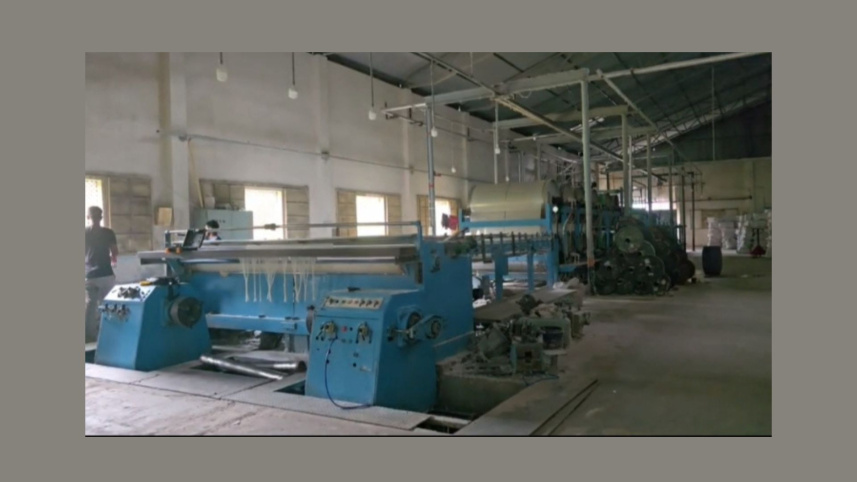
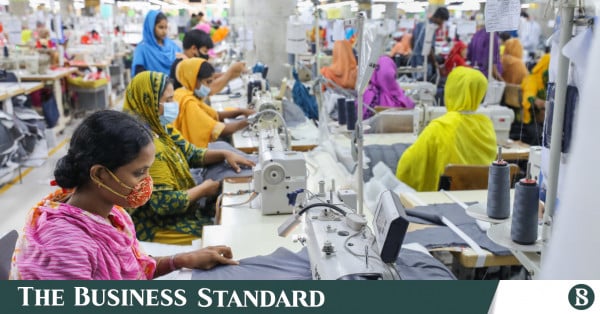
Narsingdi, August 20, 2026 — An acute gas shortage has halted or severely disrupted production at more than 100 small and large textile factories in Narsingdi — one of Bangladesh's most important textile manufacturing hubs — leaving thousands of workers idle and piling financial pressure on mill owners as gas pressure has fallen to near zero. The crisis has deepened over the past week, with more than 100 factories completely stopping production over the past two days after gas pressure dropped from the normal 15 psi to 2–4 psi and then to near zero, according to The Daily Star report by Jahidul Islam on 20 August 2026.
📊 The Numbers Behind the Crisis
- 🏭 100+ factories — halted or severely disrupted in Narsingdi
- 👥 Thousands of workers — left idle
- 💰 ~10% production — maintained over past month through limited supply + alternatives
- 🚧 100+ factories — stopped production completely in past 2 days
- 🔴 2–4 psi — gas pressure drop in past week (vs normal 15 psi)
- 🚧 Near zero — gas pressure over the past few days
- 📅 20 days — Abed Textile Mills without production
- 🌾 Narsingdi Sadar upazila — Ghordia and Chowala areas worst affected
🏭 Factory-Level Impact: Two Case Studies
The Daily Star's field visit to Narsingdi documented the impact at specific factories:
🏭 Abed Textile (Ghordia area, Narsingdi Sadar upazila)
- 🚧 20 days — no production at the factory
- ⏳ 30 minutes — attempted morning operation before shutting down again
- 👥 Workers assigned maintenance and cleaning — to prevent frustration
- 💰 Wages, bank interest, utility bills — cannot be paid if disruptions continue
Abdullah Al Mamun, Managing Director of Abed Textile Mills and spokesperson for the Bangladesh Textile Mills Association (BTMA), shared the factory's situation. The fact that a BTMA spokesperson's own factory has been out of production for 20 days underscores the depth of the crisis — this is not a marginal disruption but a structural breakdown affecting major industry players.
🏭 Bhai Bhai Textile (Chowala area)
- 🚧 Production suspended indefinitely — halted yesterday after Titas Gas authorities failed to respond satisfactorily
- 👥 Workers sent on leave — no timeline for resumption
- 🤝 Titas Gas — repeated contacts with no satisfactory response
Jahangir Alam, owner of Bhai Bhai Textile, said he halted production indefinitely after failing to receive a satisfactory response from Titas Gas authorities despite repeated contacts. The mill has sent its workers on leave — a particularly damaging outcome for workers who depend on daily wages for household subsistence.
📊 The Pressure Drop Timeline
The crisis has been building gradually over the past month, with a sharp deterioration in the past week:
- 📅 Past month — gradual pressure decline; factories operated in shifts; ~10% production maintained through limited supply and alternative arrangements
- 📅 Past week — pressure dropped from normal 15 psi to 2–4 psi
- 📅 Past few days — pressure fell to near zero
- 📅 Past two days — 100+ factories stopped production completely
The gradual pressure decline over the past month had already forced factories into shift-based operations — with overall production running at only around 10 percent of normal capacity even before the complete halt. This means the textile sector in Narsingdi has effectively been operating at one-tenth of its capacity for the past month — an extraordinary figure that reflects both the depth of the crisis and the limited media attention it has received outside the affected industrial community.
🚢 The Root Cause: LNG Supply Disruptions
The Narsingdi gas crisis is the latest manifestation of Bangladesh's broader energy sector challenges, which have intensified dramatically in August 2026:
- 🚢 Excelerate FSRU accident — an accident at a floating LNG terminal in Cox's Bazar curtailed gas supplies (referenced in CPD's rooftop solar discussion)
- 🚢 LNG supply from Excelerate terminal halted — gas crisis intensifying (per The Daily Star front page)
- 🌟 Domestic gas field decline — long-running structural decline in domestic natural gas production
- 💰 LNG import dependency — Bangladesh increasingly dependent on LNG imports to fill the gap
- 📊 43% of annual LNG subsidy spent in 1.5 months — per Financial Express report, indicating the subsidy budget is being exhausted far faster than planned
For Narsingdi specifically, the crisis is exacerbated by the area's dependence on Titas Gas transmission infrastructure — which has historically been a bottleneck in the country's gas distribution network. The fact that factory owners have repeatedly contacted Titas Gas authorities without receiving satisfactory responses suggests a breakdown in communication between industry and gas utility — leaving factory owners to make operational decisions in an information vacuum.
👥 Worker Welfare and Wage Pressure
The human cost of the Narsingdi gas crisis is substantial. With thousands of workers left idle and many factories sending workers on indefinite leave, the wage and welfare implications are severe:
- 👥 Workers sent on leave — no income for indefinite period
- 💼 Wage payment uncertainty — factory owners warned they cannot pay wages if disruptions continue
- 💰 Bank interest burden — factory loan instalments continue to accrue
- 💰 Utility bills — fixed costs continue even with zero production
- 🏭 Worker frustration — management assigns maintenance and cleaning tasks "to prevent frustration"
The reference to preventing "frustration" is particularly telling — it acknowledges that workers who have been idle for weeks or sent on indefinite leave face not just income loss but psychological stress. The garment and textile sector in Bangladesh has historically seen significant labour unrest during periods of wage uncertainty — and the Narsingdi crisis creates exactly the conditions that have led to protests and factory violence in the past.
🏭 Strategic Significance for Bangladesh's Textile Export Economy
Narsingdi is one of Bangladesh's most important textile manufacturing hubs — producing yarn, fabric, and other textile inputs that feed the country's RMG export sector. A halt to production at 100+ Narsingdi textile factories has direct implications for the entire RMG export value chain:
- 👕 RMG fabric supply disruption — domestic textile mills are a major supplier of fabric to RMG factories
- 💰 Import substitution reversal — with domestic production halted, RMG factories may need to import more fabric, increasing dollar demand
- 📈 Export order delays — RMG factories depending on Narsingdi textile supply may face production delays
- 💰 Working capital strain — factories without production still need to service debt, pay workers, and cover fixed costs
- 🤝 Bonded warehouse disruption — back-to-back LC settlement may be affected if fabric supply cannot meet production schedules
The crisis also highlights the broader structural vulnerability of Bangladesh's export economy to energy supply disruptions. With energy-intensive sectors (textiles, RMG, pharmaceuticals, agro-processing, leather) accounting for the bulk of export earnings, the country's export competitiveness is directly tied to energy availability and pricing. The Narsingdi crisis shows how quickly a gas supply disruption can translate into a multi-million-taka production loss across an entire industrial cluster — and how limited the sector's resilience is when energy supply fails.
🤝 Policy Response and Industry Demands
The Narsingdi crisis requires immediate policy response to address both short-term worker welfare and medium-term gas supply restoration:
- ⛽ Emergency gas supply restoration — rerouting gas from other areas or accelerating LNG cargo procurement
- 🚢 Excelerate FSRU repair — the damaged floating LNG terminal must be repaired or replaced urgently
- 💵 Wage support for affected workers — government and BTMA could explore emergency wage support to prevent worker destitution
- 📜 Communication improvement — Titas Gas must provide transparent and timely updates to affected factories
- 🌞 Domestic gas field investment — long-term solution requires accelerating domestic gas exploration and production
- 💰 LNG subsidy rationalisation — the LNG subsidy framework must be made sustainable given the 43% spent in 1.5 months
- ☀ Renewable energy acceleration — rooftop solar (per CPD study) and agrivoltaics (per Chuadanga pilot) must be scaled rapidly
For the Bangladesh Textile Mills Association (BTMA), the Narsingdi crisis represents both a challenge and an opportunity. The challenge is the immediate production loss, worker welfare, and financial strain on member factories. The opportunity is to use the crisis as evidence in ongoing advocacy for energy sector reform — making the case that without reliable gas supply, the textile sector's contribution to export earnings and employment will be increasingly difficult to sustain. The next 30 days will be critical: whether gas supply can be restored to Narsingdi, whether workers will be paid their wages, and whether the broader lessons of this crisis translate into meaningful energy sector reform that prevents recurrence. For the thousands of workers left idle in Narsingdi, the answers to these questions will determine whether they can return to their jobs — or whether they will become the human cost of Bangladesh's slow-moving energy transition.
This news was originally published by The Daily Star. For the full original report, please visit: https://www.thedailystar.net/business/news/gas-shortage-halts-production-narsingdi-textile-factories-4252481
Related on BangladeshExport
📬 Get Bangladesh Trade News in your inbox
Weekly digest of export industry news, policy updates, and market analysis.
📰 Related Stories