Bangladesh and Netherlands Sign MoU to Advance Circular Economy in Textile and RMG Sector
Dhaka, August 17, 2026 — Bangladesh and the Netherlands have signed a memorandum of understanding (MoU) to strengthen cooperation on the circular economy, with a focus on promoting sustainable production, efficient resource use, and green transition in the apparel and textile sector. The agreement aims to make Bangladesh's readymade garment (RMG) and textile supply chains more sustainable, environment-friendly, and competitive in global markets.
🤝 The MoU Signing Ceremony
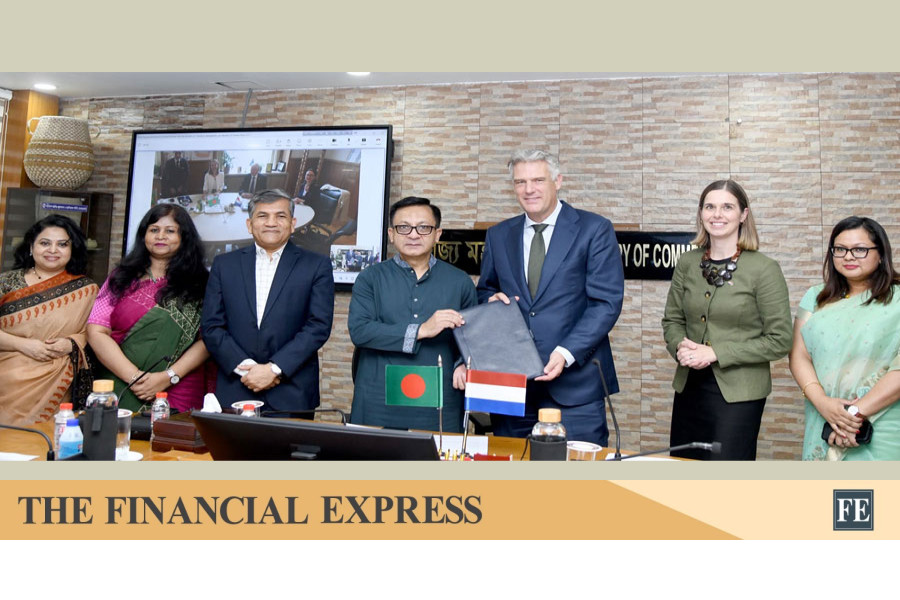
The MoU was signed at a ceremony titled “MoU Signing on Cooperation in the Field of Circular Economy” held at the Ministry of Commerce on Monday. The agreement was signed between:
- 🇧🇩 Bangladesh Ministry of Commerce — represented by Commerce Minister Khandaker Abdul Muktadir
- 🇳🇱 Netherlands Ministry of Economic Affairs and Climate Policy — represented by Minister for Climate and Green Growth Stientje van Veldhoven
Both ministers joined the ceremony virtually and signed the agreement on behalf of their respective governments. The ceremony was attended by Commerce Ministry Secretary Md Ataur Rahman Khan, Bangladesh Ambassador to the Netherlands Faiyaz Murshid Kazi, and Dutch Ambassador to Bangladesh Joris van Bommel.
📊 Key Cooperation Areas
The MoU is expected to expand cooperation between the two countries in several critical areas:
- 💰 Resource efficiency — across the textile value chain
- 🧵 Waste reduction — minimising textile and garment waste
- 🔄 Recycling — developing recyclable production systems
- 🏭 Sustainable production — adopting eco-friendly manufacturing
- 🟢 Green industrialisation — transitioning to green factories
- 💻 Green technology adoption — new technologies for sustainable production
- 👥 Multi-stakeholder cooperation — government, industry, finance, research, consumers
🏛️ Commerce Minister's Statement
Commerce Minister Khandaker Abdul Muktadir described the MoU as “an important milestone in taking our partnership towards a greener, more resilient and future-oriented economy.”
The minister emphasised that adopting sustainable production systems and circular economy practices in the global textile industry has become an urgent necessity. As Bangladesh's apparel and textile supply chains are deeply integrated with the global market, international cooperation in this sector needs to be further strengthened.
“Circular economy is not merely about environmental protection. It is directly linked to strengthening the long-term competitiveness of Bangladesh's export sector, ensuring optimum use of resources, attracting sustainable investment, creating green jobs and responding to emerging demands in international markets,” Muktadir said.
🌐 LDC Graduation and Sustainability
The minister connected the circular economy MoU to Bangladesh's LDC graduation trajectory: “Bangladesh is on the path to graduating from the least developed country category. Against this backdrop, strengthening industrial sustainability, adopting environmentally friendly production systems and complying with international standards would help enhance Bangladesh's competitiveness in global trade.”
Muktadir stressed that the transition to a circular economy requires coordinated efforts involving the government, industries, financial institutions, development partners, research institutions, and consumers — not achievable by any single stakeholder alone.
🇳🇱 Dutch Minister: International Cooperation Essential
Dutch Minister Stientje van Veldhoven said expanding the circular economy has become increasingly important, but no country can complete the transition on its own. “International cooperation, commercial partnerships and coordinated initiatives are required across the entire supply chain,” she said.
She noted that officials from both countries had already discussed priority areas for action and stressed the need to translate those discussions into concrete measures quickly. She also expressed interest in Bangladesh and the Netherlands working together at international forums alongside bilateral cooperation, while voicing hope that collaboration would become more effective and result-oriented.
🤝 Bangladesh-Netherlands Partnership Context
The Netherlands is one of Bangladesh's important development and trade partners. The two countries have long been working as partners based on mutual trust, shared values, and strong economic cooperation across multiple sectors:
- 💧 Water management — Dutch expertise in flood control and water systems
- 🌾 Agriculture — agricultural technology and food security cooperation
- 🚢 Logistics — port development and supply chain management
- 🏭 Sustainable industrial development — green factory certification and circular economy
📊 Why Circular Economy Matters for Bangladesh's RMG Sector
Bangladesh's RMG sector — the world's second-largest apparel exporter — faces increasing pressure from international buyers to demonstrate sustainability. The circular economy transition addresses several critical competitive imperatives:
- 🟢 EU Green Deal compliance — EU buyers demand sustainable sourcing
- 💰 ESG investment access — sustainable factories attract green finance
- 📈 Resource cost reduction — circular systems reduce input waste
- 🌐 Buyer retention — major brands require sustainability credentials
- 🧵 Waste-to-value — textile recycling creates new revenue streams
- 👥 Green jobs — circular economy creates skilled employment
The MoU is expected to create new opportunities for adopting green technologies, promoting innovation and sustainable production, and enhancing the competitiveness of Bangladesh's textile and apparel sector in international markets. It is also expected to contribute to making Bangladesh's industrial sector more climate-resilient and better prepared for the evolving global trading environment — particularly as the EU implements stricter sustainability requirements under the EU Green Deal and the Corporate Sustainability Due Diligence Directive (CSDDD).
🌐 Strategic Context: Sustainability as Export Competitiveness
For Bangladesh's $45 billion RMG export economy, the circular economy MoU is not merely an environmental gesture — it is a strategic competitiveness investment. As LDC graduation approaches and EU preferential access evolves, Bangladesh's ability to demonstrate sustainability credentials will increasingly determine whether European buyers maintain or expand their sourcing from Bangladeshi factories. The partnership with the Netherlands — a global leader in circular economy innovation — positions Bangladesh to accelerate its sustainability transition at the pace and scale that international market demands require.
This news was originally published by The Financial Express. For the full original report, please visit: https://thefinancialexpress.com.bd/trade/bangladesh-netherlands-sign-mou-to-advance-circular-economy-in-textile-sector
Related on BangladeshExport
📬 Get Bangladesh Trade News in your inbox
Weekly digest of export industry news, policy updates, and market analysis.
📰 Related Stories