Economists Question Bangladesh's US Trade Deal Gains After New 10% Tariff
Despite signing $3.7B aircraft deal and buying American wheat, Bangladesh still faces additional duties
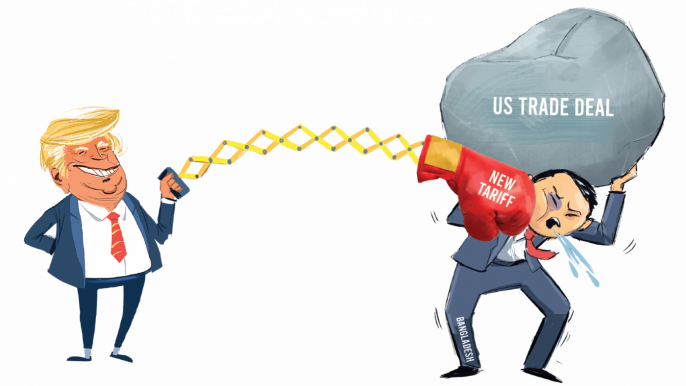
Dhaka, July 26, 2026 — Despite signing a $3.7 billion aircraft purchase agreement and agreeing to buy higher-priced American wheat, Bangladesh now faces an additional 10% US tariff over alleged forced labor, effective July 24. ⚠ Economists are questioning what Bangladesh actually gained from its trade concessions to the United States.
📊 Bangladesh also faces a separate US investigation into alleged excess production capacity that could expose the country to further duties, adding another layer of uncertainty for exporters. ⚠
💰 Bangladesh's Concessions to the US
🤝 Bangladesh made significant trade concessions to the United States, hoping to build goodwill and secure better trade terms:
- ✈ Aircraft deal: $3.7 billion purchase agreement signed
- 🌾 Wheat imports: Agreed to buy higher-priced American wheat
- 📊 Result: Still hit with 10% additional tariff despite concessions
👥 Economist Reactions
📊 Economists pointed out that Bangladesh's concessions were meant to build goodwill and potentially secure better trade terms. However, the new tariff suggests these concessions did not yield the expected benefits. ⚠
👕 The tariff comes at a time when Bangladesh's RMG exports are already declining — falling 1.64% year-on-year to $38.70 billion in FY2025-26. 📉 The additional 10% duty will make Bangladeshi garments more expensive in the US market, potentially losing market share to competitors like Vietnam and Cambodia.
🏛 Government Response
🤝 Commerce Minister Khandakar Abdul Muktadir has stated that the new US tariff is a "replacement, not an additional levy", suggesting it replaces previous tariff measures rather than adding to them. 📊 However, economists argue that the practical impact on exporters remains the same — higher costs in the US market.
⚠ Separate Investigation: Excess Production Capacity
🔍 A separate US investigation into alleged excess production capacity could expose Bangladesh to further duties. ⚠ This investigation targets industrial subsidies and export-focused policies that the US claims create unfair competitive advantages.
📊 For Bangladesh, this investigation is particularly concerning because:
- 👕 RMG sector subsidies — Bangladesh provides cash incentives to export-oriented sectors, which could be targeted
- 🏭 Export processing zones — EPZs and economic zones offer tax breaks that could be viewed as subsidies
- 💰 Cash incentives — Bangladesh Bank maintains export cash incentives for 43 sectors, which could come under scrutiny
🌏 Broader Context: US Tariffs on 60 Countries
📊 Bangladesh is not alone in facing new US tariffs. The Trump administration imposed duties of 10% to 12.5% on 60 countries over allegedly weak enforcement of forced-labor bans. 🌏 However, India secured exemptions for pharmaceuticals, smartphones, steel, and auto parts through bilateral trade negotiations — a strategy Bangladesh has not yet pursued effectively.
📈 The contrast with India is instructive: India has been negotiating a bilateral trade agreement with the US since 2025 and secured exemptions for 45% of its exports. 🤝 Bangladesh, which has not secured any exemptions, faces the full 10% tariff on its exports, making its products less competitive relative to India's in the US market.
📈 What Bangladesh Should Do
📊 Economists suggest Bangladesh should:
- 🤝 Proactively negotiate with the US for sector-specific exemptions
- 📝 Pursue a bilateral trade agreement similar to India's approach
- 👕 Diversify export markets — reduce dependence on the US market
- 🏭 Address forced labor concerns — demonstrate compliance with international labor standards
- 📋 Review cash incentive programs — ensure they comply with international trade rules
This news was originally published by The Business Standard. For the full original report, please visit: https://www.tbsnews.net/economy/economists-question-us-trade-deal-gains-after-new-tariff-1497991
📬 Get Bangladesh Trade News in your inbox
Weekly digest of export industry news, policy updates, and market analysis.
📰 Related Stories