Bangladesh Economic Recovery Requires Political Settlement, Says Economist Ashikur Rahman
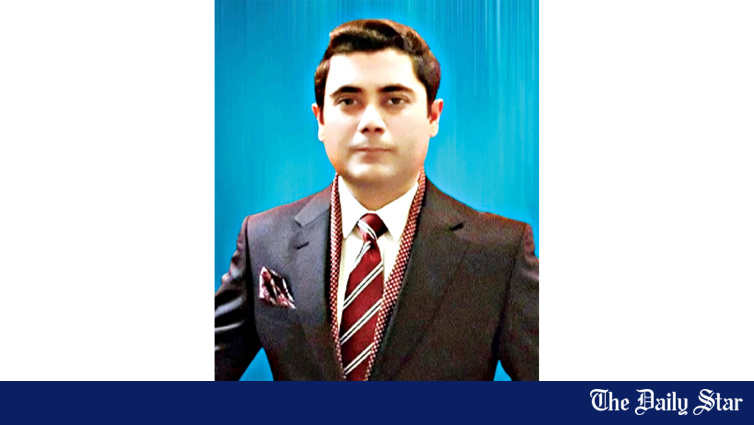
Dhaka, August 17, 2026 — Bangladesh's economic recovery is no longer only an economic problem — it has become a problem of political organisation, argues economist Ashikur Rahman in a compelling analysis published in The Daily Star. The country does not lack reform proposals; it lacks a political ecosystem capable of carrying them through. The economy is confronting three structural fractures that cannot be resolved through policy tinkering alone.
🏢 Fracture 1: Banking Sector Crisis
The first structural fracture is in banking. Nearly one-third of bank loans are classified as non-performing, reflecting years of connected lending, weak supervision, and accommodation of defaulters. A banking system burdened by bad assets cannot mobilise savings, price risk, or finance investment — creating a drag on the entire economy.
- 📉 ~33% NPL ratio — nearly one-third of bank loans classified as non-performing
- 🚧 Connected lending — years of lending to related parties
- 🚧 Weak supervision — inadequate BB oversight
- 🚧 Defaulter accommodation — systematic tolerance of non-payment
- 💰 Mobilisation failure — bad assets prevent savings mobilisation and investment financing
⚡ Fracture 2: Energy Sector Liabilities
The second fracture is in energy. Excess generation capacity, capacity-payment obligations, fuel dependence, and poorly designed contracts have burdened the Bangladesh Power Development Board (BPDB) and the national budget. The result is a cycle of arrears, subsidies, and renewed fiscal pressure — without improving reliable, affordable energy for industry.
- 🔌 Excess generation capacity — overbuilt relative to demand
- 💰 Capacity payments — obligated payments to power producers regardless of usage
- 🚢 Fuel import dependence — LNG and coal imports strain forex
- 📜 Poorly designed contracts — unfavourable power purchase agreements
- 📈 Subsidy cycle — fiscal pressure without improved energy reliability
💰 Fracture 3: Public Revenue Crisis
The third fracture is in public revenue. Bangladesh's tax-to-GDP ratio has fallen below seven percent, leaving the state short of resources for health, education, and social protection. This is not merely a problem of low tax rates — it reflects narrow coverage, extensive exemptions, weak enforcement, limited digital integration, and an unreformed revenue administration.
- 📉 Tax-to-GDP below 7% — one of lowest in Asia
- 📜 Narrow tax base — over 90% of economic units have no TIN
- 🚧 Extensive exemptions — reducing effective tax collection
- 🚧 Weak enforcement — limited capacity to pursue tax evasion
- 💻 Limited digital integration — NBR modernisation still incomplete
🚧 The Combined Effect
Together, these fractures have trapped Bangladesh in a combination of elevated inflation, subdued private investment, and weak growth. Rahman argues that we cannot resolve a crisis rooted in impaired bank balance sheets, energy-sector liabilities, and fiscal incapacity through policy tinkering. Economic recovery now requires structural repair.
- 📈 Elevated inflation — 9.21% headline (Q4 FY2025-26)
- 📉 Subdued private investment — banking crisis prevents credit flow
- 📉 Weak growth — structural fractures drag GDP below potential
- 🚧 Policy tinkering insufficient — structural repair needed
💼 The Reform Agenda
Rahman argues that the reform agenda is not mysterious. The steps needed are clear:
- 🏢 Banking: Asset-quality reviews, resolution, recapitalisation — accompanied by loan recovery and stronger governance
- ⚡ Energy: Transparent review of power contracts and capacity obligations — renegotiation of unfavourable terms
- 💰 Revenue: Tax base broadening, exemption removal, digital integration — NBR modernisation and enforcement strengthening
🏛️ The Political Settlement Argument
Rahman's central argument is that these reforms require political backing that goes beyond technocratic policy adjustments. The structural fractures are deeply embedded in political economy — connected lending involves powerful vested interests, power contracts benefit specific investors, and tax exemptions serve particular constituencies. Resolving these requires:
- 🤝 Political consensus — across parties for long-term reform
- 🏛️ Institutional independence — BB, NBR, BPDB free from political interference
- 📜 Legal framework — stronger laws against connected lending and tax evasion
- 👥 Civil society engagement — public pressure for accountability
- 🌐 International support — IMF, World Bank conditionality as reform leverage
🌐 Strategic Context: LDC Graduation and Structural Reform
The analysis comes as Bangladesh prepares for LDC graduation in November 2026 (potentially extended to November 2029). Without structural reform of the banking, energy, and revenue sectors, Bangladesh risks entering the post-LDC era with fundamental economic vulnerabilities that will constrain its ability to compete in global markets without preferential access. The three structural fractures — banking, energy, and revenue — are not just domestic policy challenges; they are direct determinants of export competitiveness, investor confidence, and the country's ability to finance the infrastructure and skills development needed for the post-LDC economy.
For Bangladesh's export community, the message is clear: the path to sustained export growth runs through structural reform of the banking sector (to finance trade and investment), the energy sector (to power factories reliably), and the revenue system (to fund public investment in trade facilitation). Without these structural repairs, no amount of export promotion, trade agreement negotiation, or market development will be sufficient to sustain Bangladesh's competitive position in the global marketplace.
This news was originally published by The Daily Star. For the full original report, please visit: https://www.thedailystar.net/business/economy/news/economic-recovery-requires-political-settlement-4250211
📬 Get Bangladesh Trade News in your inbox
Weekly digest of export industry news, policy updates, and market analysis.
📰 Related Stories