Bangladesh Capital Machinery Imports Yet to Recover Despite Macro Stability: TBS Analysis
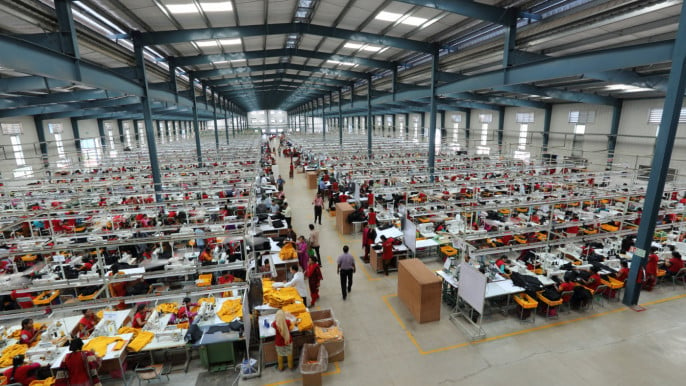
Dhaka, August 18, 2026 — Bangladesh's capital machinery imports have failed to recover during the BNP government's first six months in office, even as remittance inflows, foreign exchange reserves and overall imports have picked up, signalling persistent weakness in private investment and posing a direct threat to the country's medium-term industrial capacity expansion, according to a TBS economic analysis published 18 August 2026 by economist MA Razzaque.
📊 The Mixed Recovery Picture
While some macroeconomic indicators have stabilised during the first six months of the BNP government, the underlying investment picture remains concerning:
- ✅ Remittance inflows: increased, helping rebuild foreign exchange reserves
- ✅ Forex reserves: decline halted, stabilised at $20–22 billion (BPM6)
- ✅ Overall imports: picked up — a positive sign
- ⚠ Capital machinery imports: have NOT recovered — a critical concern
- ⚠ Inflation: remains high
- ⚠ Lending rates: reduced somewhat but private investment remains sluggish
- ⚠ GDP growth: under considerable pressure; 6.5% target unlikely to be achieved
- ⚠ Manufacturing contribution to GDP: has turned negative
- ⚠ Job creation: little progress over the past six months
🚧 Why Capital Machinery Matters
Capital machinery imports — comprising industrial equipment, factory machinery, power generators, textile and RMG manufacturing equipment, pharmaceutical production lines, plastic injection moulding machines, leather processing equipment, and other productive capital goods — are the single most reliable leading indicator of private investment in any developing economy. When capital machinery imports rise, businesses are expanding production capacity; when they stagnate or fall, businesses are not investing in future output. Bangladesh's failure to recover capital machinery imports, despite the broader pick-up in overall import volumes, is therefore a deeply worrying signal.
The pattern suggests that the overall import recovery is being driven by consumption goods and raw materials for existing production lines — not by capacity expansion. In other words, Bangladesh's businesses are replenishing inventories and serving current demand, but they are not investing in the new factories, additional production lines, or productivity-enhancing equipment needed to drive medium-term growth. For an export economy that needs to scale up non-RMG sectors to absorb the post-LDC transition, this is a particularly damaging signal — the productive capital base is not being expanded at the pace needed to deliver the government's 6.5 percent growth target or the GED's longer-term 8.5 percent ambition.
💰 The Investment Climate Conundrum
The TBS analysis highlights a fundamental conundrum in the government's current economic policy stance. On one hand, the government is providing liquidity support to banks, lowering lending rates and offering stimulus packages (including the Tk 60,000 crore stimulus). On the other hand, it has formally adopted a contractionary monetary policy stance — creating conflicting signals that leave businesses uncertain about the true direction of policy and reluctant to commit to multi-year capital investment decisions.
For capital machinery investment, which typically involves long payback periods of 5–10 years, this uncertainty is particularly damaging. Businesses need clarity on interest rate trajectory, exchange rate stability, power and energy pricing, and regulatory predictability before committing to large-scale capital expenditure. The current mix of expansionary fiscal stimulus within a contractionary monetary framework leaves each business to interpret the actual policy stance — and the safest interpretation, in the absence of clear forward guidance, is to defer investment until the picture clarifies.
📜 The Implementation Gap
The review notes that the government has taken several initiatives to attract domestic and foreign investment, but these have yet to translate into stronger investment flows. It is also preparing a five-year reform and development framework that may outline sector-specific priorities. However, the analysis offers a withering verdict on this approach: "Bangladesh has always been good at producing policy documents; the problem is that implementation rarely matches the plans."
This implementation gap is a recurring theme in assessments of Bangladesh's economic governance. The country has produced an impressive sequence of high-quality policy documents in recent years — the Eighth Five-Year Plan, the Perspective Plan 2041, the LDC Transition Strategy, the Mujib Climate Prosperity Plan, and now the GED's new five-year transformation plan — but the operational follow-through has consistently fallen short of the ambition set out in these documents. Capital machinery imports are the most direct measurable indicator of this gap: businesses invest when they see implementation, not when they see plans.
🏭 Sectoral Implications
- 👕 RMG and textile — without capital machinery recovery, factories cannot adopt the automation, robotic process automation (RPA), and AI-driven productivity improvements needed to remain competitive as wages rise and Western buyers demand shorter lead times.
- 💊 Pharmaceuticals — expansion into regulated markets (US FDA, EU EMA, UK MHRA, TGA Australia) requires continuous investment in GMP-certified production lines, quality control equipment, and API synthesis capacity.
- 🧴 Plastics and chemicals — the new EPR guidelines require investment in recycling infrastructure, feedstock recovery, and circular production technologies.
- 🔌 Electronics and light engineering — building domestic capacity for PCB assembly, semiconductor packaging, and consumer electronics requires sustained capital machinery imports.
- 🚢 Leather and footwear — moving up the value chain from wet-blue to finished leather goods requires modern tannery equipment and design studios.
- 🌾 Agro-processing — scaling up to global export standards requires cold-chain infrastructure, modern packaging lines, and food safety compliance equipment.
📈 GDP Growth and Manufacturing Stress
The review's finding that manufacturing's contribution to GDP has turned negative is particularly alarming for the export economy. Manufacturing has historically been the engine of Bangladesh's growth — with RMG alone contributing over 11 percent of GDP and accounting for roughly 84 percent of merchandise exports. If manufacturing is now contracting as a share of GDP, the country is losing the very sector that has driven its economic rise over the past four decades.
For the government's 6.5 percent growth target for FY27, the review suggests it is unlikely to be achieved — with implications for employment, poverty reduction, and the fiscal capacity needed to fund the public investment programme. Without a recovery in capital machinery imports and manufacturing, Bangladesh will struggle to deliver the growth needed to absorb the 2 million young people entering the labour force each year, let alone the broader economic transformation envisioned in the GED's five-year plan.
🤝 Policy Implications: What Needs to Change
The TBS analysis implies several specific policy directions needed to restart capital machinery investment:
- 📜 Resolve monetary policy clarity — the government must choose between expansionary stimulus and contractionary monetary stance, not run both simultaneously.
- 💰 Lower effective cost of capital — not just headline lending rates but the all-in cost of capital machinery financing, including LC confirmation charges and hedging costs.
- 🏢 Operationalise BIDA, BEZA, BEPZA one-stop services — so investors face fewer procedural hurdles when implementing capital projects.
- 🌐 Make the National Single Window functional — so capital machinery imports can be cleared within days, not months.
- 🤝 Restore Bangladesh Bank autonomy — so businesses have confidence that monetary policy will be predictable over the multi-year horizon of capital investment decisions.
- 💲 Reduce policy uncertainty on power and energy tariffs — a major input cost for capital-intensive manufacturing.
- 📜 Convert policy documents into implementation roadmaps — with measurable milestones and accountable officials for each commitment.
For Bangladesh's export economy, the message of the TBS analysis is unambiguous: macroeconomic stabilisation is a necessary but not sufficient condition for sustained export-led growth. Without a recovery in capital machinery imports — the most concrete signal of private investment confidence — the country's medium-term export capacity will stagnate, the non-RMG diversification agenda will stall, and Bangladesh will enter its post-LDC era with the same RMG-dependent export structure it has been trying to escape for over a decade. The next six months must be about translating macro stability into micro-level investment recovery — or the stabilisation gains will prove as temporary as the policy documents that have preceded them.
This news was originally published by The Business Standard. For the full original report, please visit: https://www.tbsnews.net/economy/capital-machinery-imports-yet-recover-1517991
Related on BangladeshExport
📬 Get Bangladesh Trade News in your inbox
Weekly digest of export industry news, policy updates, and market analysis.
📰 Related Stories