Sugar Rises Tk 200 Per Maund in Khatunganj Amid Supply Squeeze: Bangladesh Wholesale Market
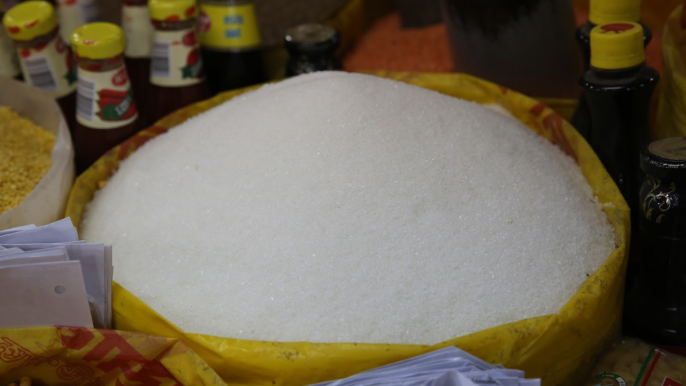
Chattogram, August 20, 2026 — Wholesale sugar prices in Chattogram's Khatunganj market — Bangladesh's largest wholesale commodity trading hub — have risen by Tk 200 per maund (37.32 kg) in just two weeks, climbing from Tk 3,600 per maund to Tk 3,800 per maund, as gas and power shortages have reduced local sugar production and tightened supplies. Traders fear prices could rise further unless the supply situation improves — with potentially significant implications for consumer food inflation already running at elevated levels across Bangladesh.
📊 The Numbers at a Glance
- 💰 Tk 3,800/maund — current wholesale sugar price in Khatunganj
- 💰 Tk 3,600/maund — price two weeks ago
- 💰 Tk 200/maund — increase in two weeks
- 📏 37.32 kg per maund — traditional Bangladeshi wholesale unit
- 📅 2 weeks — duration of price increase
- 🚧 Gas + power shortages — primary driver of reduced production
- 🚧 S Alam factory shutdowns — further tightening supplies
- 🚧 Stock drawdown — many factories now supplying from existing stocks
- 📈 5.6% increase — in two weeks (Tk 200 / Tk 3,600)
📍 Khatunganj: Bangladesh's Wholesale Commodity Hub
Khatunganj — located in Chattogram (Chittagong), Bangladesh's premier port city — is the country's largest wholesale commodity trading hub, particularly for imported and domestically processed food products. The market sets benchmark prices for:
- 🍭 Sugar — both refined and unrefined
- 🌾 Edible oil — palm oil, soybean oil, mustard oil
- 🧅 Onion — domestic and imported
- 🌾 Pulses — lentils, chickpeas, mung beans
- 🧂 Salt — refined and unrefined
- 🍬 Gur — traditional unrefined sugar
- 🌾 Spices — dry spices used in daily cooking
- 🥚 Dry goods — including dried fruits and nuts
Price movements in Khatunganj typically translate into retail price changes within 7–14 days — meaning the Tk 200 per maund wholesale increase will likely be felt by consumers across Bangladesh in the coming weeks. For an economy already facing elevated food inflation (8.32 percent headline inflation in July 2026), the sugar price surge adds another layer of consumer price pressure that the BNP government's macro stabilisation programme is trying to contain.
🚧 Gas and Power Shortages: The Root Cause
The primary driver of the sugar price increase — according to traders and market insiders — is the gas and power shortage that has affected industrial production across Bangladesh in August 2026. The impact on sugar refining has been particularly acute:
- 🏭 Reduced production at Chattogram factories — gas shortages have cut production at several sugar refiners
- 🚧 Some factories suspended operations — due to insufficient gas pressure for refining processes
- 🏢 Stock drawdown — many factories now supplying from existing stocks rather than fresh production
- 🚧 S Alam Group shutdowns — once supplied a significant share of sugar to the Chattogram market
- 💰 Fresh production falling — stocks being depleted quickly, raising fears of further tightening
- 🚢 Narsingdi textile factory halts — parallel energy-driven disruption in industrial clusters
- 💰 LNG subsidy overshoot — 43% of annual budget spent in 1.5 months
- 🚢 Excelerate FSRU accident — contributing to gas supply disruption
The sugar market disruption is therefore not an isolated market dynamic — it is a direct manifestation of the broader energy crisis that has been documented across multiple Bangladeshi industrial sectors in August 2026. The same gas shortage that has halted 100+ textile factories in Narsingdi has also cut sugar refining capacity in Chattogram — demonstrating how the energy crisis cascades through the economy, affecting not just industrial production but also consumer food prices.
💰 International vs Domestic Price Disconnect
Market insiders have noted an important disconnect: international sugar booking rates have not increased significantly, but domestic prices in Khatunganj have risen sharply. This suggests that the price increase is being driven by domestic supply-side factors (gas shortage, factory shutdowns) rather than global sugar price movements.
The disconnect has led to allegations that some mills may be creating artificial shortages:
- 🕵 Syndicate allegations — some traders allege mills are creating artificial shortage through syndicates
- 📜 "As in the past" — reference to historical patterns of price manipulation
- 🤝 City Group — one of country's major sugar refiners; Director Biswajit Saha did not respond to TBS queries
- 🤝 S Alam Group — previously supplied significant share of sugar to Chattogram market; shutdowns have tightened supply
- 🏢 Chattogram refinery landscape — dominated by a small number of large refiners with concentrated market power
The combination of genuine supply disruption (gas shortage, factory shutdowns) and allegations of artificial shortage creation creates a complex market dynamic where price formation reflects both real supply constraints and potential market manipulation. For consumers, the distinction matters less than the outcome — higher prices at the wholesale and retail levels that compound the broader cost-of-living pressure.
🤝 Trader Rejection of Syndicate Allegations
Md Mohiuddin, general secretary of the Chaktai-Khatunganj Aratdar General Traders' Welfare Association, rejected the syndicate allegations — offering a market-based explanation for the price increase:
- 📊 "Commodity markets are never stable" — price fluctuations are normal
- 📊 "Sometimes booking prices rise, while at other times supply falls" — supply and demand dynamics drive prices
- 📊 "Whenever the price of a commodity rises, allegations of syndication emerge, but no such questions are raised when prices fall" — asymmetry in market scrutiny
- 📊 "Commodity prices fluctuate based on demand and supply" — market fundamentals
- 📊 "No scope to raise prices through a syndicate" — competition prevents coordinated price increases
The trader association's defense reflects the long-running debate in Bangladesh about whether commodity price spikes reflect genuine supply disruption or coordinated market manipulation by mill owners and large traders. The reality is often a combination — genuine supply constraints creating the conditions for opportunistic price increases that go beyond what pure supply-and-demand would justify. Without transparent pricing data and effective market monitoring, distinguishing between the two is difficult.
💼 Implications for Consumer Welfare and Inflation
The Tk 200 per maund wholesale sugar price increase carries direct implications for consumer welfare and broader inflation dynamics:
- 🚧 Retail price pass-through — wholesale increases typically translate into retail price increases within 7–14 days
- 👥 Consumer impact — sugar is a staple in Bangladeshi households, used in tea, sweets, cooking
- 📈 Food inflation contribution — sugar price increases directly affect food CPI
- 💰 Bakery and confectionery sector — significant sugar user; will face higher input costs
- 💰 Beverage industry — carbonated drinks, fruit juices affected by sugar price increases
- 💰 Restaurant and food service — higher sugar costs feed into menu prices
- 💼 Pharmaceutical sector — sugar used in some syrup formulations
- 💰 Industrial users — including food processing and alcohol production
For the BNP government — which has made inflation control a central priority — the sugar price surge is a particularly visible signal that the broader energy crisis is now cascading into consumer food prices. Commerce Minister Khandaker Abdul Muktadir's 18 August acknowledgment that he is "not satisfied" with commodity prices takes on added resonance in light of the sugar price surge, with the minister's own diagnosis (logistics costs, energy prices, lending rates, productivity, transport, infrastructure) directly applicable to the sugar situation.
🌐 Policy Response Options
The government has several potential policy responses to the sugar price surge:
- 💰 Open Market Sales (OMS) — release sugar from government stocks at subsidised prices
- 💰 Import duty reduction — temporarily reduce sugar import duties to encourage fresh imports
- 📜 Anti-hoarding enforcement — crackdown on traders holding excess stocks
- 📜 Market monitoring — strengthen the commerce ministry's price monitoring capability
- 💰 Trading margin caps — impose temporary wholesale and retail margin limits
- 🚧 Emergency gas supply — prioritise gas supply to sugar refiners to restore production
- 💰 Subsidised imports — facilitate state-owned enterprise sugar imports at preferential rates
- 🤝 Bilateral sourcing — explore direct sugar imports from India, Brazil, Thailand under government-to-government arrangements
For the BNP government, the sugar price surge represents both a challenge and an opportunity. The challenge is the immediate consumer welfare impact and the broader inflation pressure. The opportunity is to demonstrate that the government's structural reform agenda — including the Tk 60,000 crore stimulus, the energy sector reform programme, and the broader macro stabilisation effort — is producing tangible improvements in consumer outcomes. The next 30 days will reveal whether the government can stabilise the sugar market through targeted interventions — or whether the broader energy crisis will continue to cascade into consumer food prices, undermining the macro stabilisation gains achieved over the past six months. For the millions of Bangladeshi households who consume sugar daily — in tea, in sweets, in cooking — the price increase is not an abstract economic indicator but a daily financial reality that erodes household budgets already under pressure from four years of elevated inflation.
This news was originally published by The Business Standard. For the full original report, please visit: https://www.tbsnews.net/economy/sugar-rises-tk200-maund-khatunganj-amid-supply-squeeze-1519931
Related on BangladeshExport
📬 Get Bangladesh Trade News in your inbox
Weekly digest of export industry news, policy updates, and market analysis.
📰 Related Stories