Bangladesh Seeks UK Support To Remove EU High Risk Cargo Status As Airport Security Scores Hit 94-98 Percent
Civil Aviation Minister Rashiduzzaman Millat cites strong UK Department for Transport assessment scores at Osmani and Shahjalal airports, urges faster withdrawal of restrictions imposed since June 2017.
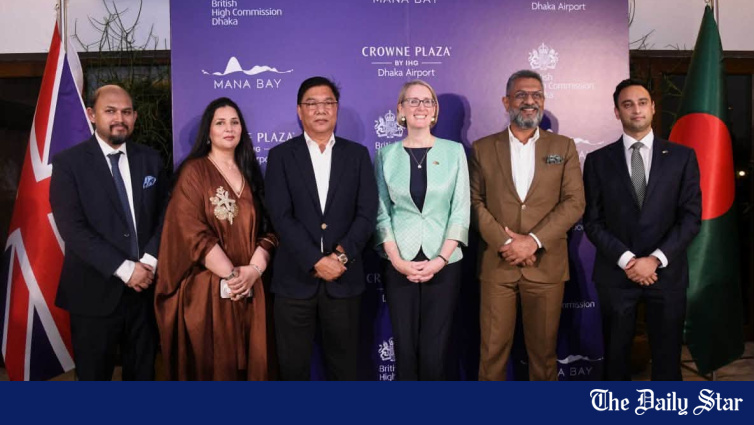
🌏 Bangladesh has formally sought the United Kingdom''s support in securing the withdrawal of the European Union''s "High Risk Cargo & Mail" designation on cargo and postal shipments originating from the country, citing strong recent security assessment scores at two major international airports. Civil Aviation and Tourism Minister M Rashiduzzaman Millat made the request at a reception on UK investment in Bangladesh''s tourism sector held at the British High Commissioner''s residence in Baridhara on 29 September 2026.
📊 The EU has categorised cargo and mail shipments from Bangladesh as "high risk" since June 2017, following a series of security concerns at the country''s airports. The designation imposes additional screening and handling requirements on cargo bound for EU destinations, raising costs and transit times for Bangladeshi exporters — particularly those in the readymade garments, leather goods and pharmaceuticals sectors that rely heavily on air freight to European markets.
🏛 Strong security assessment scores
Minister Millat told the reception that the government has been working continuously to address the concerns behind the EU restriction since 2017, and that significant progress has been made in upgrading security infrastructure at the country''s international airports. Referring to a recent assessment by the UK Department for Transport, he said Osmani International Airport in Sylhet received a score of 98 percent, while Hazrat Shahjalal International Airport in Dhaka scored 94 percent on 17 July 2026.
"In light of these results, we expect the cooperation and support of the British High Commission for the speedy withdrawal of the restriction," Millat said, urging the UK to use its influence within the EU framework to support Bangladesh''s case for removal from the high-risk cargo list.
The assessment scores are a significant improvement over previous years and demonstrate that Bangladesh''s investment in airport security infrastructure is paying off. The UK Department for Transport assessments are considered among the most rigorous in the world, and scores in the 94-98 percent range indicate that Bangladesh''s major airports are now operating at international best-practice levels for cargo security screening.
👥 Why the EU high-risk cargo designation matters
The EU''s High Risk Cargo & Mail designation has been a persistent irritant for Bangladesh''s export economy since it was first imposed in June 2017. The designation requires all cargo and mail shipments originating from Bangladesh to undergo enhanced screening before being loaded onto EU-bound flights, including X-ray screening, physical inspection of suspicious items, and documentation reviews that add time and cost to air freight shipments.
For Bangladesh''s export sector — particularly the readymade garments (RMG) industry, which exports billions of dollars worth of apparel to EU markets annually — the designation has meant higher logistics costs, longer lead times and reduced competitiveness relative to rivals such as Vietnam, Cambodia and India that do not face similar restrictions. The designation has also created challenges for Bangladesh''s pharmaceutical and leather goods exporters, who rely on air freight for time-sensitive shipments to European buyers.
Removal from the EU high-risk cargo list would deliver an immediate boost to Bangladesh''s export competitiveness, reducing costs and transit times for air-freighted exports and improving the country''s positioning in European supply chains. It would also send a positive signal to international buyers about Bangladesh''s commitment to maintaining international security standards — an important consideration for global brands that have been tightening their supplier compliance requirements in recent years.
🤝 Biman fleet renewal and tourism investment push
Linking aviation development with tourism growth, Minister Millat said the government is working to build a "sustainable and balanced mixed fleet" for Biman Bangladesh Airlines, comprising both Boeing and Airbus aircraft. The mixed-fleet strategy represents a shift from Biman''s historical reliance on a single manufacturer and is designed to give the national carrier more flexibility in route planning, capacity management and fuel efficiency.
The minister also invited UK investors to invest in Bangladesh''s tourism and hospitality sector, saying the government is taking steps to attract foreign direct investment and improve the investment environment. "Bangladesh''s tourism potential extends beyond major destinations such as the Sundarbans, Cox''s Bazar, the hills and lakes of Chattogram, and the tea gardens of Sylhet," Millat said, adding that the government aims to transform the country''s scattered tourism assets into a planned, sustainable and internationally competitive industry.
Creating greater opportunities for private investment in tourism and hospitality forms part of the government''s broader strategy for economic diversification and job creation, Millat said. Bangladesh has historically under-invested in tourism relative to regional peers such as Thailand, Malaysia and Sri Lanka, despite having significant natural and cultural attractions — including the world''s longest natural sandy beach at Cox''s Bazar, the Sundarbans mangrove forest (home to the Royal Bengal Tiger), and the tea-growing hills of Sylhet.
🌏 Diplomatic context
The reception where Millat made the request was attended by representatives from the UK, Germany, France, Spain and the EU, alongside senior officials from the Bangladesh Tourism Board, Bangladesh Parjutan Corporation, and Biman Bangladesh Airlines. The diplomatic attendance underscores the importance that European governments attach to their economic relationship with Bangladesh — and provides a useful platform for advancing the cargo security dialogue at a working level.
The UK, in particular, plays an outsized role in the EU cargo security framework despite having left the European Union. The UK Department for Transport''s assessments of airport security standards are widely respected in international aviation circles, and a positive UK endorsement can carry significant weight in EU decision-making on cargo risk designations. Bangladesh''s strategy of engaging the UK as an advocate within the broader European security dialogue is a pragmatic approach that leverages the UK''s expertise and diplomatic influence.
💰 Strategic significance for Bangladesh''s export economy
For Bangladesh''s broader export economy, the push to remove the EU High Risk Cargo designation is strategically important for several reasons. First, it directly addresses a long-standing non-tariff barrier that has raised costs and reduced competitiveness for Bangladesh''s air-freighted exports. With Bangladesh preparing for LDC graduation and the potential loss of duty-free market access in key export destinations, reducing logistical barriers to trade is becoming increasingly critical.
Second, the strong airport security assessment scores demonstrate that Bangladesh can meet international best-practice standards when it invests in the necessary infrastructure and processes. This should help build confidence among international buyers and regulators that Bangladesh is a reliable and compliant trade partner — a message that is particularly important at a time when the country is seeking to diversify its export basket beyond readymade garments.
Third, the engagement with the UK on cargo security fits into a broader pattern of Bangladesh strengthening its economic diplomacy with key trade partners. By linking the cargo security dialogue to a broader conversation about UK investment in Bangladesh''s tourism and hospitality sector, the government is creating a multi-track engagement that should help advance both trade and investment objectives simultaneously.
The coming months will tell whether Bangladesh''s diplomatic push pays off. If the EU agrees to review and ultimately lift the high-risk cargo designation, it would represent a meaningful win for Bangladesh''s export economy and a validation of the country''s investment in airport security infrastructure. If the designation remains in place, it will continue to be a drag on Bangladesh''s export competitiveness — particularly in air-freighted sectors where speed and cost are critical factors in winning business from international buyers.
This news was originally published by The Daily Star. For the full original report, please visit: https://www.thedailystar.net/business/economy/aviation/news/bangladesh-seeks-uk-support-remove-eu-high-risk-cargo-status-4286121
📬 Get Bangladesh Trade News in your inbox
Weekly digest of export industry news, policy updates, and market analysis.
📰 Related Stories