Bangladesh to Reduce Dependence on Imported Agri Products: Agriculture Minister
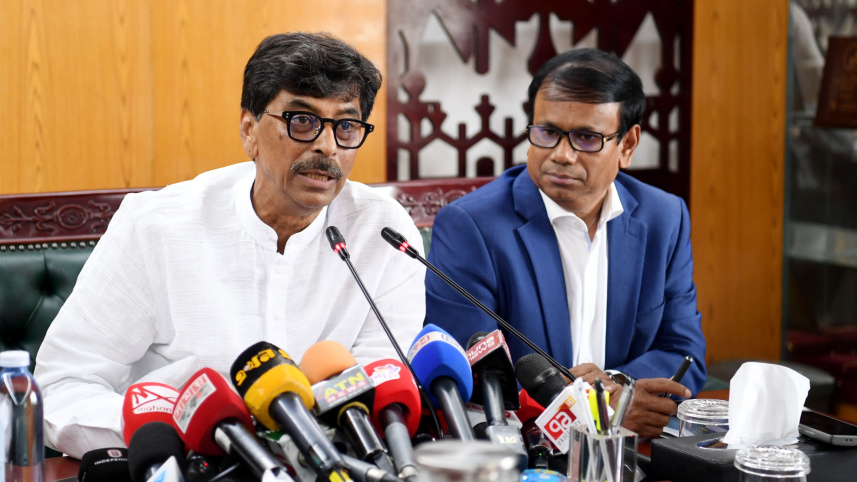
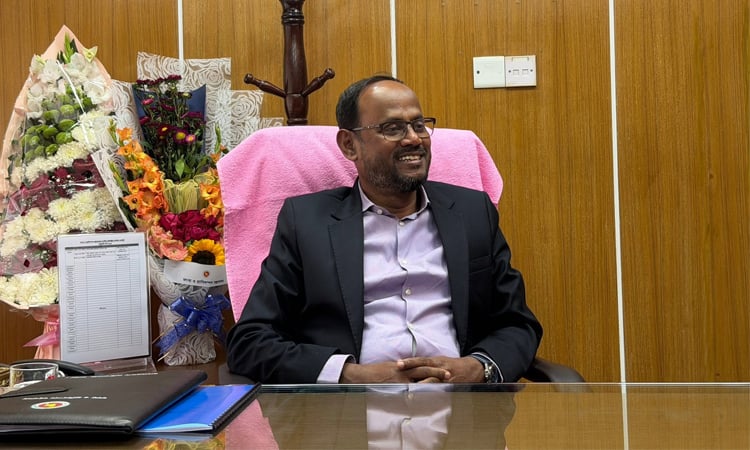
Dhaka, August 18, 2026 — Bangladesh's Agriculture Minister has pledged to gradually reduce the country's dependence on imported agricultural products by boosting domestic farm production, expanding storage facilities, increasing the use of modern technology, and converting irrigation pumps to solar power — in remarks to journalists at the conference room of the Ministry of Agriculture on 18 August 2026. The minister highlighted satisfactory performance during the government's first 180 days in office and announced concrete initiatives across fertiliser supply, onion storage, Farmer Card distribution, seed self-sufficiency, and rice variety development.
📊 Key Initiatives Announced
- 🌾 Fertiliser supply — no current shortage; stocks higher than demand and higher than the same period last year
- 💳 Farmer Card distribution — 350,000–400,000 farmers per month; 1.4 million farmer database prepared under pilot programme
- 🧅 Onion self-sufficiency — no onion imports so far this year; new technology allows storage up to 6 months; 300,000 tonnes storage capacity planned
- 🌿 Seed self-sufficiency — gradual reduction of jute seed, onion seed, and ginger seed imports planned
- 🌾 BRRI 118 rice variety — cultivation from next year; can be planted 10–15 days earlier in haor areas to protect against flash floods
- ☀ Solar irrigation pumps — preparations completed to convert 60,000–62,000 pumps to solar power
- 📅 180 days — government's first 180 days in office; performance rated "satisfactory"
🧅 Onion Self-Sufficiency: A Milestone Achievement
The minister's announcement that Bangladesh has not had to import any onions so far this year marks a significant milestone in the country's long-running effort to achieve self-sufficiency in this politically sensitive commodity. Onion prices have historically been a major source of consumer frustration and political pressure — with shortages leading to sharp price spikes that have toppled previous governments' popularity ratings.
The improvement reflects two specific interventions:
- 🧵 Modern storage technology — previously, large quantities of onions would rot and go to waste due to inadequate storage facilities. With the use of technology, onions can now be stored for up to six months, smoothing the seasonal supply cycle.
- 🏢 Storage capacity expansion — the government plans to develop infrastructure for 300,000 tonnes of onion storage capacity, providing a buffer against seasonal supply fluctuations and reducing reliance on imports during the off-season.
For Bangladesh's agriculture sector and consumer welfare, this represents a structural shift. Bangladesh has historically been one of the world's largest onion importers, sourcing from India, China, Egypt, and the Netherlands — with imports typically peaking during the September-November lean season before the main winter harvest. Eliminating or sharply reducing onion imports would ease pressure on the trade balance, reduce consumer price volatility, and improve farmer incomes through more stable farm-gate prices.
💳 Farmer Card: Database and Distribution
The minister said the Farmer Card would be distributed gradually to 350,000–400,000 farmers every month — building on a database of around 1.4 million farmers already prepared under the pilot programme. The Farmer Card is a critical piece of digital agriculture infrastructure that enables:
- 💰 Direct subsidy transfers — bypassing intermediaries and ensuring subsidies reach the actual farmer
- 💳 Credit access — formalising farmer identity for collateral-free agricultural lending
- 🌾 Input distribution — ensuring fertiliser, seed, and pesticide distribution reaches verified farmers
- 📊 Crop tracking — building a national database of cultivated crops and yields
- 🤝 Insurance enrolment — enabling weather-indexed crop insurance
The pace of 350,000–400,000 cards per month implies that 4–5 million farmers could be brought under the formal system within a year — a meaningful step toward digital agriculture governance. With 1.4 million farmers already in the database under the pilot, the distribution programme can build on existing infrastructure rather than starting from scratch.
🌿 Seed Self-Sufficiency: Reducing Import Dependency
The minister said the government has taken initiatives to gradually reduce the country's dependence on imports of jute seeds, onion seeds, and ginger seeds. Seed self-sufficiency is a critical component of agricultural sovereignty — particularly for jute, which is a major export commodity for Bangladesh. Currently, Bangladesh imports a significant share of its jute seed from India, creating supply chain vulnerability in a strategically important export sector.
Reducing seed import dependence would have multiple benefits:
- 💰 Foreign exchange savings — reduced outflow of foreign currency for seed imports
- 🌐 Supply chain resilience — domestic seed production is less exposed to international supply disruptions and trade restrictions
- 🧬 Variety development — domestic seed breeding allows the development of varieties adapted to local agro-climatic conditions
- 🌾 Farmer cost reduction — domestic seed is typically cheaper than imported seed, lowering farmer input costs
- 🤝 Strategic autonomy — reducing dependence on a small number of source countries for critical agricultural inputs
🌾 BRRI 118 Rice Variety: Climate Resilience for Haor Areas
The minister announced that cultivation of a new rice variety, BRRI 118, would begin next year. Developed by the Bangladesh Rice Research Institute (BRRI), BRRI 118 can be planted 10–15 days earlier than the usual planting period in haor areas — making it particularly useful in protecting crops from flash floods. This is a critical climate resilience innovation for the haor region of north-eastern Bangladesh, which produces a significant share of the country's rice but is vulnerable to early monsoon flash floods that can destroy an entire harvest in a matter of days.
The haor region covers roughly 800,000 hectares of low-lying wetlands across Sunamganj, Habiganj, Moulvibazar, Sylhet, Kishoreganj, Netrokona, and Brahmanbaria districts. The region's single annual rice crop (Boro) is typically planted in November-December and harvested in April-May — but flash floods in late March or April can wipe out the harvest just weeks before maturity. A variety that matures 10–15 days earlier would allow farmers to harvest before the typical flash flood window, dramatically reducing the risk of total crop loss.
☀ Solar Irrigation Pumps: A Clean Energy Transition
The minister highlighted the high cost of irrigation as a major concern for farmers — and announced plans to bring all irrigation pumps across the country under solar power. As an initial step, preparations have already been completed to convert 60,000–62,000 pumps to solar power.
This initiative is significant on multiple fronts:
- ⛽ Diesel savings — many irrigation pumps currently run on diesel, which is expensive and polluting; solar conversion reduces both fuel cost and emissions
- ⚡ Grid relief — pumps currently connected to the grid create a significant load on the rural electricity distribution system; solar conversion frees up grid capacity for other uses
- 💰 Farmer cost reduction — solar irrigation has near-zero operating cost once the capital investment is recovered, lowering farmer input costs significantly
- 🌞 Climate contribution — supports Bangladesh's renewable energy targets and NDC commitments under the Paris Agreement
- 🌾 Agricultural productivity — reliable solar-powered irrigation can support higher cropping intensity and crop diversification
The 60,000–62,000 pump conversion target represents the first phase of a broader programme to eventually solarise all of Bangladesh's estimated 1.5 million irrigation pumps. If achieved, this would represent one of the largest solar irrigation programmes in the world — positioning Bangladesh as a global leader in agricultural decarbonisation while simultaneously addressing farmer affordability concerns.
📊 Strategic Significance for Bangladesh's Agriculture Economy
The agriculture minister's announcements collectively represent a comprehensive agricultural reform agenda with significant implications for Bangladesh's food security, farmer welfare, and trade balance. By targeting seed self-sufficiency, storage expansion, Farmer Card distribution, climate-resilient rice varieties, and solar irrigation, the government is addressing the sector's most binding structural constraints in a coordinated way — rather than pursuing isolated interventions.
For Bangladesh's broader economy, the agriculture initiatives carry particular significance in the context of LDC graduation in November 2026. The country's LDC-specific flexibilities on agricultural subsidies and intellectual property will phase out over the coming transition period — making domestic agricultural resilience a strategic priority rather than just a development goal. Reducing import dependence on onions, seeds, and other agricultural inputs is one of the most concrete ways to insulate the economy from external shocks during the post-LDC transition.
For the export economy, agriculture initiatives have specific relevance:
- 🌾 Agro-processing export base — stable domestic production supports the agro-processing export sector (PRAN-RFL, ACI Foods, etc.)
- 🧴 Jute export supply chain — domestic jute seed production supports the country's jute goods export industry
- 💰 Foreign exchange savings — reduced agricultural imports free up foreign exchange for capital machinery imports
- 🌾 Rural demand — higher farmer incomes support rural consumption, which is a major driver of domestic demand for industrial products
- 🌐 Climate resilience — climate-resilient rice varieties protect the food security foundation of the export economy's labour force
The challenge now is implementation. Bangladesh has a long history of ambitious agriculture policy announcements that have not always translated into measurable outcomes at the farm level. The minister's reference to the "first 180 days" suggests the government is tracking performance against specific milestones — but the real test will be whether the Farmer Card distribution, onion storage capacity, solar irrigation conversion, and seed self-sufficiency targets are met on the timeline implied by these announcements. For an agriculture sector that employs roughly 40 percent of Bangladesh's labour force and contributes over 12 percent of GDP, the stakes of getting this implementation right are substantial — both for the farmers who depend on the sector for their livelihoods and for the broader economy that depends on agriculture for food security, rural demand, and export supply chains.
This news was originally published by The Daily Star. For the full original report, please visit: https://www.thedailystar.net/business/news/dependence-imported-agri-products-will-be-gradually-reduced-minister-4250811
Related on BangladeshExport
📬 Get Bangladesh Trade News in your inbox
Weekly digest of export industry news, policy updates, and market analysis.
📰 Related Stories