Bangladesh-Myanmar Gas Pipeline: Geopolitical and Security Challenges Stall Proposal
Dhaka proposes importing gas via pipeline from Myanmar; experts warn Arakan Army control, Rohingya crisis, and declining Myanmar production make project unviable in short term
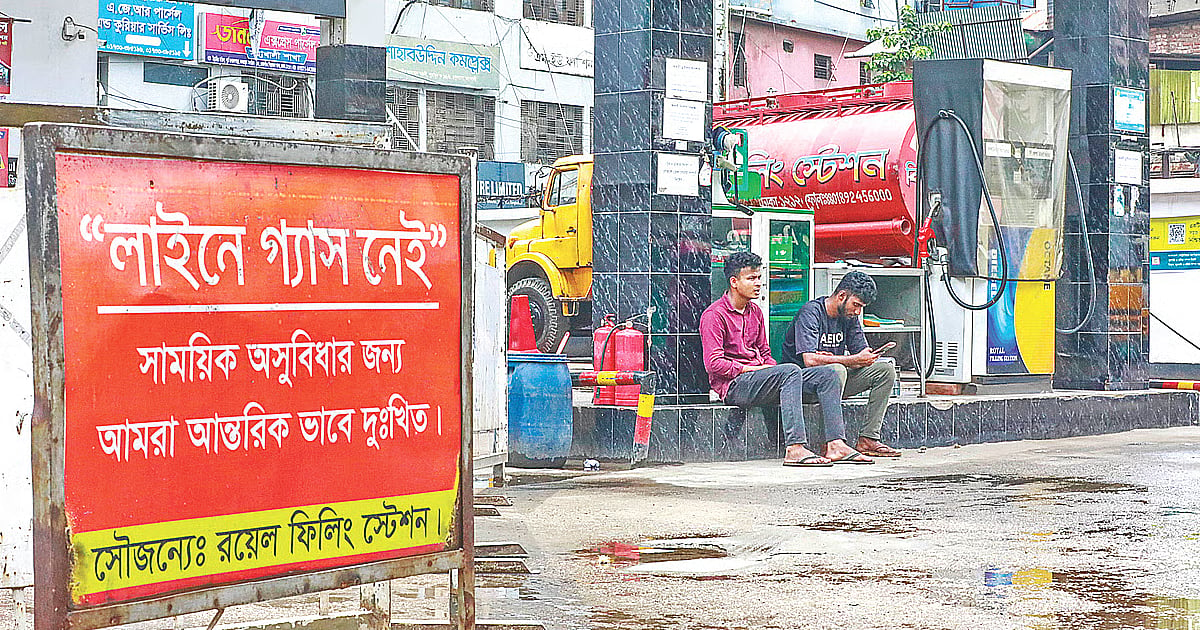
Dhaka, August 4, 2026 — The Bangladesh government is exploring new sources of natural gas to tackle the country's ongoing energy crisis, and following its initiative to import liquefied natural gas (LNG) from Malaysia, the issue of importing gas from Myanmar through a cross-border pipeline has now come under active discussion between the two countries.
Bangladesh has proposed importing gas directly through a pipeline from Myanmar. As an alternative, Myanmar has also expressed interest in discussing the possibility of supplying LNG to Bangladesh. However, the proposal is still at the preliminary stage of talks — and energy sector experts warn that, for multiple geopolitical and security reasons, gas from Myanmar cannot provide an immediate solution to Bangladesh's ongoing gas shortage.
🤝 The Diplomatic Engagement
Last Sunday, Myanmar Ambassador to Bangladesh Kyaw Soe Moe met Power, Energy and Mineral Resources Adviser Iqbal Hasan Mahmud at the Secretariat in Dhaka. During the meeting, the energy adviser expressed Bangladesh's interest in importing gas from Myanmar through a pipeline to help address the country's natural gas shortage.
According to a press release issued by the Ministry of Power, Energy and Mineral Resources, Bangladesh has proposed reopening talks on constructing a gas pipeline from Myanmar to Chattogram. The Myanmar ambassador responded positively to the proposal, while also expressing interest in holding detailed discussions on the possibility of supplying gas to Bangladesh in the form of LNG alongside the pipeline option.
🛢️ Two Options, Very Different Practicality
The two options under discussion — pipeline gas and LNG supply — have very different practical implications. Importing gas through a pipeline would require a lengthy process involving identification of the source gas field, a long-term gas purchase agreement, route selection, security arrangements, financing, and construction of cross-border infrastructure that does not currently exist.
By contrast, importing gas as LNG would not require a new cross-border pipeline. However, LNG could be more expensive because of the costs associated with liquefaction infrastructure, transportation by ship, and regasification at terminals in Bangladesh. It is also not yet clear whether Myanmar has the necessary infrastructure and capacity to export LNG — a significant uncertainty given the country's political isolation and economic sanctions since the 2021 military coup.
📊 Myanmar's Gas Sector: Reserves, Production, Exports
According to data from Myanmar's Ministry of Energy, the World Bank, and the International Energy Agency (IEA), Myanmar has proven gas reserves of approximately 22 trillion cubic feet. The country produces around 1.5 billion cubic feet of gas per day, which at the current rate of production would, on paper, last for about 40 years.
- 📊 Proven gas reserves: ~22 trillion cubic feet
- 🛢️ Current production: 1.5 bcf/day (down from 2 bcf/day in 2016-17)
- ⏱️ Reserves-to-production ratio: ~40 years (on paper)
- 🌏 2024 export split: 50% Thailand | 25% China | 25% domestic
However, Myanmar's gas production has declined compared with previous years. The country has been facing a political crisis since the 2021 military coup and has come under Western economic sanctions. Two international oil and gas companies have withdrawn their investments from the country's gas sector, and Western oil and gas companies have also refrained from making new investments — limiting Myanmar's ability to maintain, let alone expand, production capacity.
According to the World Bank, in 2024, 50 percent of the gas produced in Myanmar was exported to Thailand, 25 percent to China, while the remaining 25 percent was used domestically. Myanmar has long-term supply agreements with both countries, meaning that any new export commitment to Bangladesh would have to come from production capacity not already committed under existing contracts — or from new gas field developments that have not yet come online.
Myanmar recently announced the discovery of an offshore gas field with reserves four times larger than its current proven reserves. However, these are not yet proven reserves — they can only be confirmed after additional exploratory wells are drilled, a process that typically takes years. Experts say any decision on a pipeline should be made only after verifying all the information and assessing the project's economic viability.
💬 Expert View: Badrul Imam
Geologist Badrul Imam told Prothom Alo that Bangladesh is facing a gas shortage and production from its own gas fields has been declining steadily. Since Myanmar has gas reserves, it could be a potential source. However, he cautioned that any decision must take into account whether Myanmar has the capacity to supply the gas, what the price would be, and how it would be transported — three questions for which there are currently no clear answers.
📜 Three Decades of Pipeline Discussions
People associated with the energy sector note that discussions on a gas pipeline with Myanmar date back nearly three decades. In 1997, a private company proposed constructing a pipeline from Myanmar through Bangladesh to Tripura in India. The proposal, however, was not intended to bring gas to Bangladesh — rather, it was aimed at exporting gas to India, with Bangladesh earning regular transit fees from the pipeline. The government at the time did not attach importance to the proposal.
Formal talks on the issue among the three countries — Bangladesh, Myanmar, and India — began in 2004. In 2005, a technical committee was also formed with the agreement of all three countries. At the time, Bangladesh sought transit access through India to Nepal and Bhutan as a condition for its participation. As India did not agree to that condition, the pipeline initiative was effectively abandoned.
Discussions on a gas pipeline from Myanmar have now resumed — but this time, Bangladesh wants to import the gas for its own use rather than serving as a transit country for Indian gas imports. The shift in objective reflects how dramatically Bangladesh's energy position has deteriorated in the two decades since the original trilateral discussions.
📊 Bangladesh's Gas Crisis in Numbers
Bangladesh has been facing a gas shortage since 2007. Gas production has been declining steadily since 2017, with production falling by 1.05 billion cubic feet per day over the past nine years. Current production stands at 1.65 billion cubic feet per day — higher than Myanmar's production, but far below Bangladesh's demand of approximately 3.8 billion cubic feet per day.
- 📈 Bangladesh gas shortage since: 2007
- 📉 Production decline since 2017: 1.05 bcf/day lost
- 🛢️ Current production: 1.65 bcf/day
- 💰 Current demand: ~3.8 bcf/day
- 💳 Supply-demand gap: ~2.15 bcf/day
- 🚢 LNG imports since: 2018
To meet the additional demand, Bangladesh has been importing LNG since 2018. Even so, the shortfall has not been eliminated. The gas crisis worsened significantly after July 21, when a fire forced the closure of one of the country's LNG supply terminals — prompting the government to search urgently for new sources of gas.
🚦 Security and Geopolitical Barriers
Experts say the current reality on the Bangladesh-Myanmar border is fundamentally different from what it was during the earlier rounds of pipeline discussions. The situation in Myanmar remains unstable, and constructing and operating an overland pipeline through territory outside the control of the Myanmar government would be nearly impossible without some form of security and political understanding with the Arakan Army, which now controls much of the Rakhine State border region.
In addition, Bangladesh and Myanmar remain at diplomatic odds over the Rohingya crisis. Myanmar has yet to agree to repatriate the Rohingya refugees who fled to Bangladesh in 2017, and a genocide case against Myanmar is also pending before an international court — making any major bilateral infrastructure project politically sensitive on both sides.
💬 Altaf Parvez: Seabed Pipeline Could Be Different
South Asian geopolitics researcher Altaf Parvez told Prothom Alo that Bangladesh effectively no longer has a border with Myanmar, as almost the entire frontier is under the control of the Arakan Army. He said it would be difficult to build a pipeline without peace being established in Myanmar, as it could come under attack at any time.
He added that the situation would be different if the pipeline were laid beneath the seabed — an option that would significantly increase construction costs but would largely bypass the security risks of overland transit through conflict-affected territory. He also cautioned that, under the current circumstances, a cooperation agreement between the two countries could be beneficial for Myanmar but might weaken Bangladesh's position on the Rohingya issue — a reminder that energy diplomacy and human rights diplomacy cannot be cleanly separated.
📋 Strategic Context
The Bangladesh-Myanmar gas pipeline discussion reflects the desperation of a country running out of easy options. With domestic gas production declining, LNG imports constrained by damaged infrastructure, and the FSRU fire exacerbating an already severe shortfall, Dhaka is exploring every plausible supply source — even those that present enormous geopolitical, security, and economic challenges.
The Myanmar pipeline option is unlikely to provide short-term relief, given the complexity of the negotiations, the security situation in Rakhine, and the lead time required for any major cross-border infrastructure project. But the very fact that Bangladesh is reviving a three-decade-old proposal — one that was abandoned in 2005 due to trilateral disagreements — signals how much the country's energy position has deteriorated, and how few good options remain for closing the structural gap between gas supply and demand.
This news was originally published by Prothom Alo English. For the full original report, please visit: https://en.prothomalo.com/business/local/0oov29hpl1
📬 Get Bangladesh Trade News in your inbox
Weekly digest of export industry news, policy updates, and market analysis.
📰 Related Stories