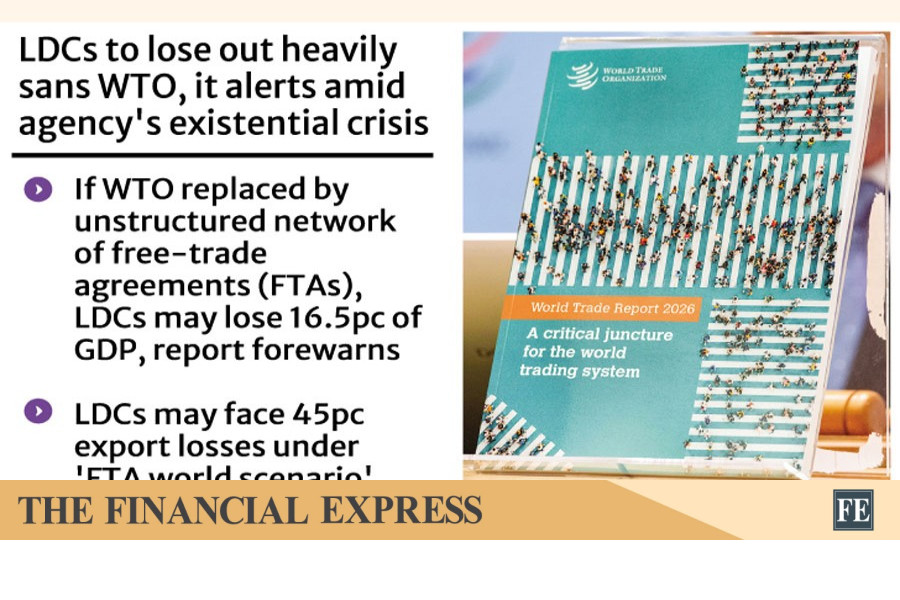
Global Trading System At A Critical Juncture: WTO World Trade Report 2026
WTO report warns global output could fall 10% if multilateral system weakens; LDCs face 10.6% GDP decline in geo-fragmented world, with Bangladesh as largest LDC exporter at 17% of LDC exports
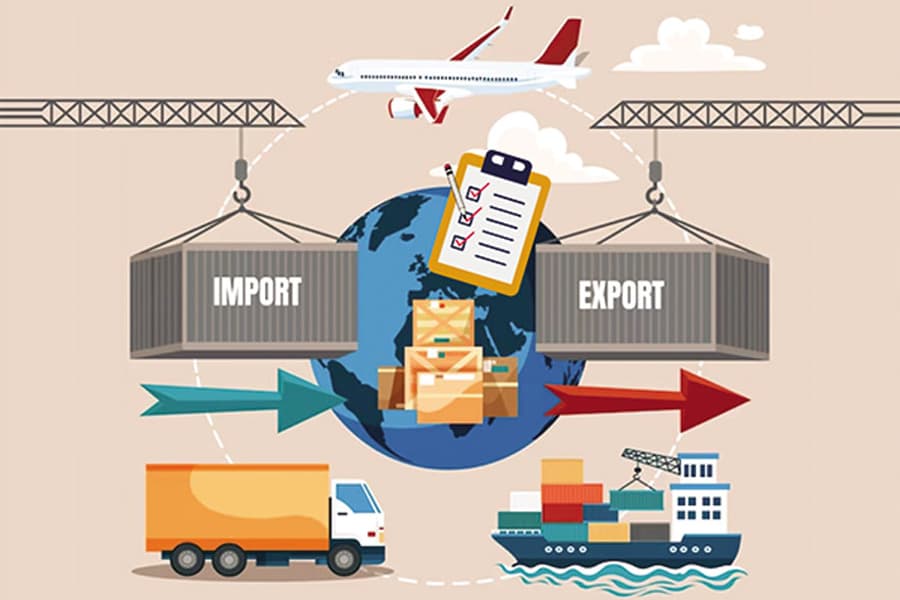
🌏 The warning in the WTO's World Trade Report 2026, aptly titled "A Critical Juncture for the World Trading System", is more than a projection about global trade and GDP. It is also a grim reminder of what could happen when rules give way to power and influence. The report suggests that failure to strengthen the global trading system could reduce global output by up to 10 per cent. More significantly, the losses would not be distributed evenly.
📊 In a world increasingly divided along geopolitical lines, global GDP could decline by 5.1 per cent and exports by 18.6 per cent. The projected fall in real GDP for least-developed countries (LDCs) would be 10.6 per cent, compared with 7.3 per cent for middle-income economies and 2.9 per cent for high-income economies. In an even more fragmented 'FTA world', where multilateral cooperation is replaced by a network of free-trade agreements without meaningful cooperation among the groupings, the losses for LDCs would be even more severe.
👥 Bangladesh: Largest LDC Exporter
There are currently 44 LDCs on the UN list, 37 of which are WTO members. Bangladesh, the largest merchandise exporter among them, accounts for about 17 per cent of LDC exports. Its experience illustrates both the possibilities and vulnerabilities of integration into the global trading system. LDC exports collectively rose 11 per cent last year to $309 billion, while their share of world merchandise exports reached 1.21 per cent in 2025. Yet these gains remain modest in the context of world trade.
- 📊 Global output decline (inaction): up to 10%
- 📊 Global GDP decline (geo-fragmented): 5.1%
- 📊 Global export decline (geo-fragmented): 18.6%
- 📊 LDC GDP decline (geo-fragmented): 10.6%
- 📊 Middle-income GDP decline: 7.3%
- 📊 High-income GDP decline: 2.9%
- 👥 Total LDCs: 44 (37 WTO members)
- 📊 Bangladesh share of LDC exports: ~17%
- 💰 LDC exports 2025: $309 billion (+11% YoY)
- 📊 LDC share of world exports: 1.21%
📜 Rules Vs Power: The Fundamental Choice
This is perhaps the most important message. For countries still trying to move beyond structural vulnerability, an open trading system is not merely an economic convenience; it is part of the development architecture. The choice before the world is, therefore, not simply between different trade arrangements. It is between a system in which rules can moderate differences in economic power and one in which those differences increasingly determine who gets access to markets. For Bangladesh, now preparing to graduate from LDC status, the stakes are particularly high.
The framing — rules versus power — captures the essence of the multilateral trading system's value proposition. In a rules-based system, small and developing countries can rely on agreed rules (WTO agreements, dispute settlement) to protect their trade interests against larger powers. In a power-based system, market access is determined by bilateral leverage, geopolitical alignment and economic size — dimensions where developing countries are structurally disadvantaged. The WTO report's warning is that the world is drifting from the rules-based model toward the power-based model, with devastating consequences for the most vulnerable economies.
🌏 Bangladesh's Vulnerability And Opportunity
For Bangladesh, the report's findings carry particular significance. As the largest LDC merchandise exporter (17% of LDC exports), Bangladesh has the most to lose from the erosion of the multilateral trading system. The country's RMG sector — which accounts for over 84% of merchandise exports — depends on rules-based market access to EU and US markets. If the multilateral system weakens and market access becomes contingent on bilateral power dynamics, Bangladesh's trade position would be significantly compromised.
At the same time, the report highlights Bangladesh's potential role in demonstrating that LDCs can successfully integrate into the global trading system when rules are in place. The country's export growth from near-zero to $48 billion over three decades illustrates what the rules-based system can deliver for developing countries. The preservation and strengthening of this system is, therefore, not merely a diplomatic preference for Bangladesh — it is a strategic economic necessity.
The coming months will reveal whether the WTO report's warnings catalyse meaningful reform momentum — or whether the geopolitical forces driving trade fragmentation overwhelm the multilateral system. For Bangladesh and other LDCs, the stakes could not be higher: the difference between a functioning WTO and a fragmented trade world is the difference between manageable post-graduation transition and potentially catastrophic export revenue loss.
This news was originally published by The Financial Express. For the full original report, please visit: https://thefinancialexpress.com.bd/editorial/global-trading-system-at-a-critical-juncture
📬 Get Bangladesh Trade News in your inbox
Weekly digest of export industry news, policy updates, and market analysis.
📰 Related Stories