Can BRICS Reshape The Prevailing World Order? New Delhi Summit Assessment
BRICS 18th summit concludes with multipolar world consensus as combined GDP of 11 members approaches $35 trillion; columnist examines whether bloc can challenge Western economic hegemony
🌏 The US Airforce Secretary Troy Meink's public admission that America has deployed 'space control weapons' in Earth's orbit has drawn sharp reactions from both Russia and China. Russian spokesman Dmitry Peskov stated that space "must be free of any kind of weapons" and appealed to the international community to work for demilitarisation of the outer space. China also expressed its deep concern about turning space a battlefield and escalating arms race. The 1967 Outer Space Treaty, to which the US, Russia and China are signatories, prohibits in no uncertain terms the deployment of nuclear weapons and other weapons of mass destruction in orbit.
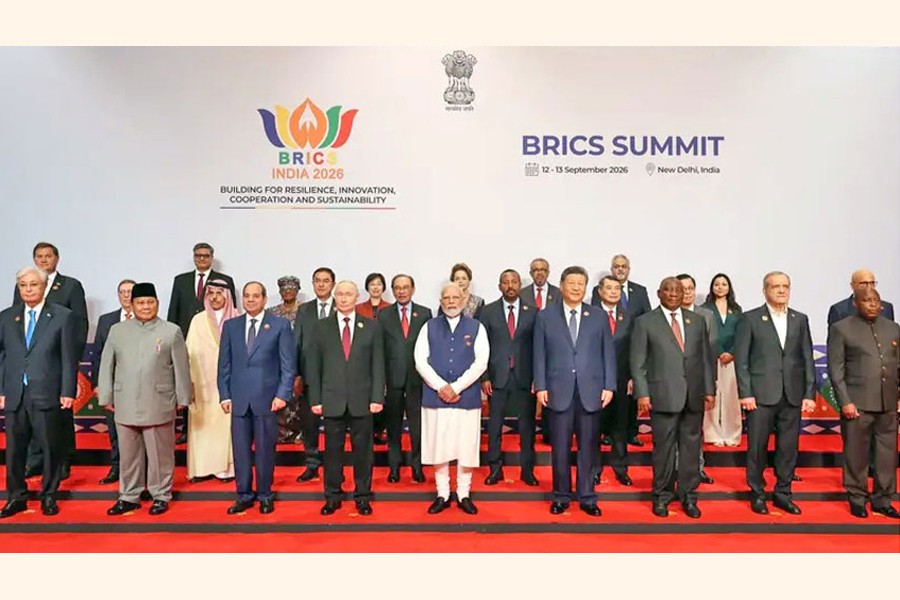
📊 Troy Meink's disclosure comes at a time when the 18th BRICS Summit has just concluded with a consensus stand on a multipolar world rather than a unipolar one. Although the landmark 20th anniversary of the BRICS chose a modest theme of 'building for resilience, innovation, cooperation and sustainability', the deliberations opposed prevalence of unipolar hegemony by any nation. The purpose organisations like the BRICS are likely to serve is consolidation of economic might of the global South.
💰 BRICS Economic Weight: $35 Trillion GDP
Now the question is, can the BRICS reshape the international order? Well, if the existing 11 countries — with more to join — can get their option right, they can more than challenge the West's economic might. The combined population in these 11 countries is almost half the number of the global total. Their combined nominal GDP is likely to exceed $35 trillion, accounting for a significant share of global economic output. Indeed, the momentum is in favour of the global South.
- 👥 BRICS members: 11 countries (founding: Brazil, Russia, India, China, South Africa)
- 💰 Combined GDP: ~$35 trillion
- 👥 Combined population: ~half of global total
- 📜 Summit theme: Building for resilience, innovation, cooperation and sustainability
- 📜 Position: Multipolar world, not unipolar hegemony
- 🌏> US space weapons disclosure: Troy Meink (Airforce Secretary)
- 📜> 1967 Outer Space Treaty: Prohibits WMDs in orbit
📜 Avoiding Arms Race: The Critical Condition
If the bloc can avoid wars between and among them and against other non-member countries, there is every likelihood of reshaping the world order. It is because of this, dragging the rivals, some of which are key members of the BRICS, into an arms race in outer space can be potentially dangerous not only from the strategic military point of view but also from a global economic point of view. The trade war, now given a nasty and hostile form, has already shown that nations have to create their own blocs in order to survive the clashes of economic interests.
In this respect, closer cooperation between and among members of the BRICS can provide the cushion they need to overcome the consequences of unilateral aggressive trade policies followed by the US under president Trump. Only four nations — America, Russia, China and India — have proved their capability of space war. But it is highly costly. If resources have to be diverted to weapons of mass destruction in the space from development budget, it would indeed be a sad day for the planet Earth.
🏛 UN Reform: Multipolar Representation
It is exactly why the BRICS Summit has argued in favour of reforming multilateral institutions and the UN. Accommodation of greater developing-country representation in the UN Security Council (UNSC) has been recommended so that the reformed UN has reflection of the multipolar realities. The New Delhi BRICS declaration also recognised the aspirations of African nations as reflected in the Ezulwini Consensus and Sirte Declaration. Chinese and Russian support for the aspirations of Brazil and India to play a greater role in the UNSC reflects the BRICS commitment to multipolar governance.
Indeed, such points among others in the New Delhi declaration are directly opposed to pushing the UN sideway and into insignificance by the Trump administration. The BRICS' stature is likely to grow taller if its members can consolidate its position in the UN forums and advance agendas closer to the hearts of the wider world. That will give the forum more credibility to the loss of the US's. US hawkish agenda of outer-space warfare will receive disapproval from the rest of the world, paving the way for reshaping the prevailing world order.
🌏 Implications For Bangladesh
For Bangladesh, the BRICS multipolar agenda carries strategic significance. As a country preparing to graduate from LDC status in November 2026, Bangladesh benefits from a multilateral system where rules are negotiated among multiple power centres rather than imposed by a single hegemon. The BRICS push for WTO dispute settlement restoration, IMF/World Bank governance reform and UN Security Council expansion aligns with Bangladesh's interest in a rules-based, representative international order.
Bangladesh's geographic position — bridging South and Southeast Asia, with growing economic ties to both China and India — places it at the intersection of BRICS influence. Active engagement with BRICS initiatives, while maintaining Bangladesh's non-aligned foreign policy tradition, could provide the country with access to diversified financing sources (including the New Development Bank), expanded trade partnerships and a stronger voice in multilateral forums that shape the rules governing international trade and development finance.
The coming years will reveal whether BRICS can translate its economic weight into institutional influence — reshaping the world order from unipolar to multipolar — or whether internal contradictions and external pressures limit the bloc to declaratory advocacy without operational outcomes. For Bangladesh and the global South, the stakes are significant.
This news was originally published by The Financial Express. For the full original report, please visit: https://thefinancialexpress.com.bd/columns/can-brics-reshape-the-prevailing-world-order
📬 Get Bangladesh Trade News in your inbox
Weekly digest of export industry news, policy updates, and market analysis.
📰 Related Stories