Bangladesh Islamic Banks NPL Ratio Surges to 58.4%, Liquidity Crisis Deepens
Bangladesh Bank Banking Sector Update shows full-fledged Islamic banks NPL doubled to 58.4% in March 2026 from 29.2% a year earlier, while fourth-generation banks hit 52.2% as ADRs exceed 100% in both segments
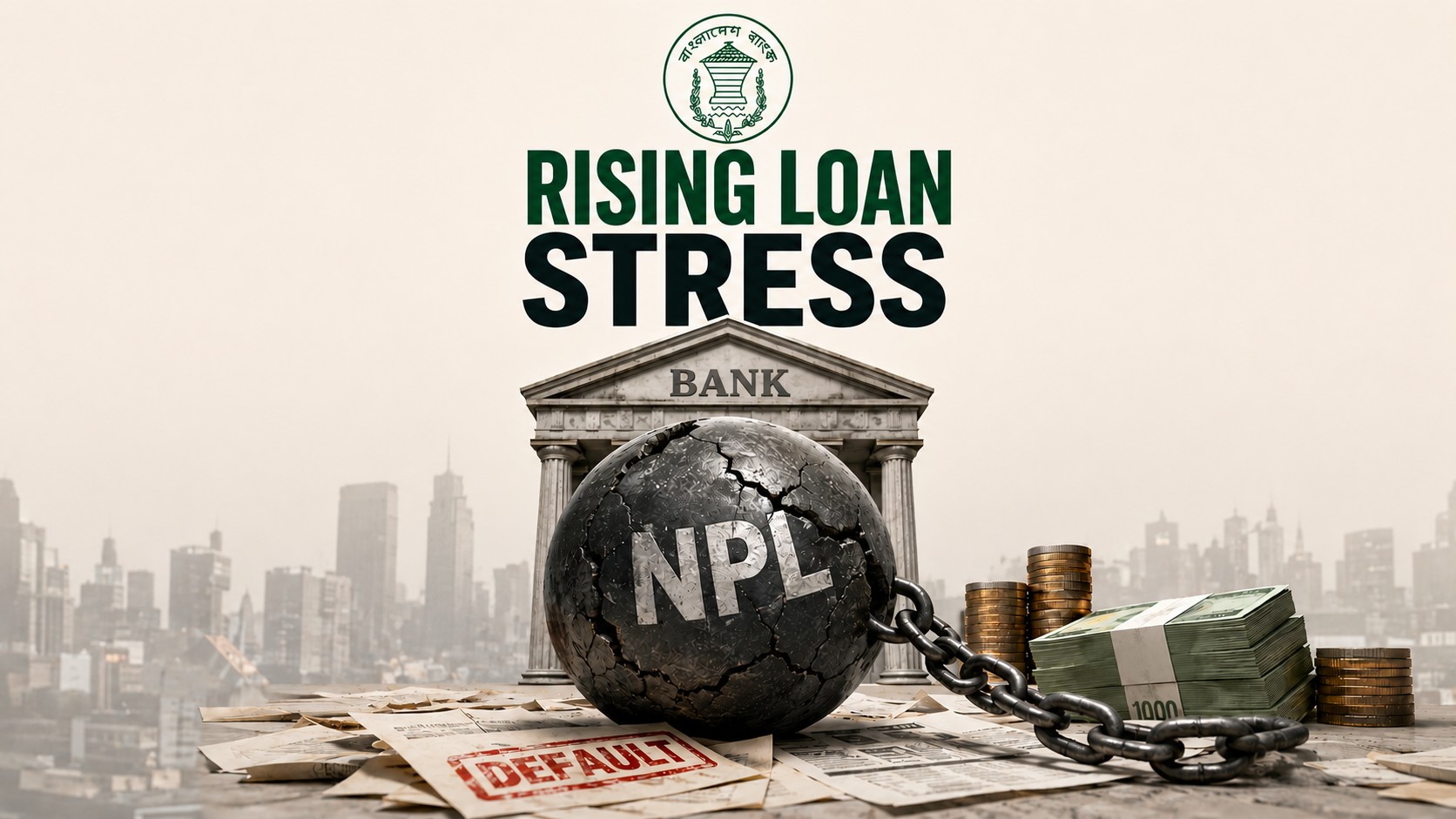
Dhaka, July 27, 2026 — Full-fledged Islamic banks and fourth-generation private commercial banks in Bangladesh are facing mounting pressure from rising default loans and worsening liquidity shortages, making them the most vulnerable segments of the country's banking sector, according to Bangladesh Bank's latest Banking Sector Update. The central bank warned that without urgent corrective action, the existing weaknesses could evolve into broader systemic risks threatening financial stability and economic growth. ⚠
📊 The most striking finding in the central bank's report is the dramatic deterioration in the asset quality of full-fledged Islamic banks. Their non-performing loan (NPL) ratio surged to 58.4 percent in March 2026, more than double the 29.2 percent recorded a year earlier. This means that more than half of all loans disbursed by full-fledged Islamic banks are now classified as non-performing — a level of distress that raises serious questions about the solvency of these institutions.
📈 Fourth-Generation Banks Also Under Pressure
🏛 Fourth-generation private commercial banks — the nine banks established in 2013 — recorded the second-highest NPL ratio at 52.2 percent in March 2026, compared with 44.4 percent in March 2025. The report said both groups are under severe liquidity pressure due to aggressive lending and elevated credit risk, with several lenders posting Advances-to-Deposit Ratios (ADR) above 100 percent.
📊 The ADR picture highlights the depth of the liquidity strain:
- 💰 Full-fledged Islamic banks ADR: 120.3 percent in March 2026
- 💰 Fourth-generation banks average ADR: 101.6 percent
- 💰 Banking sector average ADR: 82.7 percent
- ⚠ Foreign commercial banks ADR: 53.4 percent (strongest liquidity buffer)
⚠ An ADR above 100 percent means a bank has lent out more than the total deposits it has received — an unsustainable position that requires borrowing from interbank markets or the central bank to bridge the gap. The fact that full-fledged Islamic banks are operating at 120.3 percent ADR indicates severe structural liquidity stress.
🏭 Structural Weaknesses in Islamic Banking
📜 The Bangladesh Bank report noted that Islamic banks have long struggled with structural weaknesses, including limited liquidity management tools and rapid credit expansion. The sharp increase in bad loans at these banks points to weak credit discipline and possible governance failures, the central bank said.
📊 While the overall banking sector reduced its ADR to strengthen liquidity during the period, Islamic and fourth-generation banks remained highly exposed despite relatively slow deposit growth — suggesting that they continued to lend aggressively even as their deposit base failed to keep pace.
🤝 Government's Merger Intervention
🏛 Last year, the government merged five troubled Islamic banks — First Security, Global, Social Islami, Union, and EXIM Bank — to form Sammilito Islami Bank PLC after they suffered acute liquidity shortages and alleged loan irregularities linked to the S Alam Group and Nazrul Islam Mazumder. The merger was one of the most significant interventions in Bangladesh's banking sector in recent years, designed to consolidate weaker banks into a single, better-capitalised entity.
📊 However, the latest Bangladesh Bank data suggests that the structural issues facing Islamic banking extend well beyond the five merged banks, with the broader full-fledged Islamic banking segment continuing to show deteriorating asset quality and liquidity stress.
📈 Other Banking Segments Perform Better
✅ Other banking segments performed comparatively better, providing some offset to the distress in Islamic and fourth-generation banks:
- 🏢 Second-generation private commercial banks: NPL ratio of 19.2 percent
- 🌏 Foreign commercial banks: NPL ratio of 6.3 percent, ADR of 53.4 percent — the strongest position
📊 Foreign commercial banks maintained comfortable liquidity buffers, enabling them to weather the broader sector stress with relative ease. Their conservative lending practices and strong governance frameworks appear to have insulated them from the worst of the deterioration seen in other segments.
⚠ Systemic Risk Warning from Bangladesh Bank
🏛 Bangladesh Bank warned that aggressive lending and rising default loans at Islamic and fourth-generation banks pose a significant risk to the stability of the banking sector as a whole. The central bank's assessment is unequivocal:
"Urgent measures are needed to reduce NPLs and bring ADRs under control. Without corrective action, the existing weaknesses could evolve into broader systemic risks, threatening financial stability and economic growth."
⚠ The warning is particularly significant given that international ratings agencies have already adopted a cautious stance on Bangladesh's sovereign credit profile. S&P Global on July 27 revised Bangladesh's outlook to negative, citing weak banking sector as one of the key vulnerabilities, while Fitch Ratings had earlier taken a similar step in May.
📜 ADR Above 100% — Why It Matters
💰 The ADR is a critical indicator of banking sector liquidity. A ratio above 100 percent means a bank has lent out more than its deposit base, which is structurally unsustainable. Such banks typically rely on interbank borrowing, central bank refinancing, or wholesale funding to bridge the gap — all of which carry higher costs and refinancing risks.
📊 For full-fledged Islamic banks to be operating at 120.3 percent ADR means they have effectively lent out 20 percent more than their deposit base. This suggests that these banks are likely borrowing heavily from the call money market or using Bangladesh Bank's special liquidity facilities to maintain operations — a position that becomes increasingly precarious as NPLs rise and fresh deposit growth slows.
💰 Connection to S Alam Group and Sector Governance
🏛 The reference to alleged loan irregularities linked to the S Alam Group and Nazrul Islam Mazumder in the Bangladesh Bank report connects the Islamic banking sector's distress to one of the country's most high-profile corporate governance scandals. S Alam Group, one of Bangladesh's largest conglomerates, has been at the centre of allegations regarding large-scale loan defaults and governance failures at multiple banks.
⚠ The fact that five Islamic banks had to be merged due to exposures linked to a single corporate group highlights the concentration risk that has built up in the Islamic banking segment — a risk that the central bank's latest data suggests has not been fully resolved through the merger intervention.
📈 Implications for Bangladesh's Banking Reform Agenda
🤝 The Bangladesh Bank report's findings will reinforce the case for accelerated banking sector reforms under the IMF programme and other multilateral engagements. The IMF has consistently identified weak banking sector governance as a key vulnerability in Bangladesh's macroeconomic framework, and the latest data on Islamic and fourth-generation banks provides fresh evidence of the structural challenges.
📊 For the BNP-led government, addressing the distress in Islamic and fourth-generation banks will be one of the most pressing priorities in the coming months. Potential measures could include:
- 💰 Additional capital injections — for banks with severe capital adequacy shortfalls
- 🤝 Further mergers or consolidations — if individual bank-level recovery proves impossible
- 📜 Stricter governance reforms — particularly on related-party lending and large exposure limits
- 🔍 Enhanced supervisory oversight — with more frequent and detailed examinations of weak banks
- 💲 Asset management company — to systematically resolve legacy NPLs across the sector
🌏 The 58.4 percent NPL ratio at full-fledged Islamic banks is not just a banking sector statistic — it is a macroeconomic warning sign that demands urgent and decisive policy action. With the broader economy already facing headwinds from energy sector stress, weak export growth, and rising court-stayed loans, the cost of inaction on the banking sector front would be substantial and would further delay Bangladesh's return to a sustained high-growth trajectory.
This news was originally published by The Daily Star. For the full original report, please visit: https://www.thedailystar.net/business/news/islamic-4th-gen-banks-buckle-under-npl-liquidity-crises-4234016
📬 Get Bangladesh Trade News in your inbox
Weekly digest of export industry news, policy updates, and market analysis.
📰 Related Stories