Bangladesh Hikes Fuel Prices By Tk 20 Per Litre: Diesel To Tk 135, Octane To Tk 165
Government raises all four petroleum product prices by Tk 20/litre effective September 21; BPC incurred Tk 22,876 crore losses in 6 months as international prices doubled amid Iran war
⛽ The government has increased the retail prices of diesel, octane, petrol, and kerosene by Tk 20 per litre, with the revised rates set to take effect from Monday (21 September). The Energy and Mineral Resources Division issued a gazette notification on Saturday night (20 September), revising the consumer-level selling prices of the four petroleum products. With the new price adjustment, this is the second time the government has hiked fuel prices after assuming power in February this year. The last price hike was back in April.
📊 Under the revised rates, the price of diesel has been raised to Tk 135 per litre from Tk 115, marking an increase of Tk 20, or 17.4%. The price of octane has been increased to Tk 165 from Tk 145, also a Tk 20 hike, equivalent to 13.8%. The price of petrol has been raised to Tk 160 per litre from Tk 140, an increase of Tk 20, or 14.3%. Meanwhile, kerosene will cost Tk 155 per litre, up from Tk 135, marking a Tk 20, or 14.8%, increase.
💰 Revised Price Structure
- ⛽ Diesel: Tk 115 → Tk 135/litre (+Tk 20, +17.4%)
- ⛽ Octane: Tk 145 → Tk 165/litre (+Tk 20, +13.8%)
- ⛽ Petrol: Tk 140 → Tk 160/litre (+Tk 20, +14.3%)
- ⛽ Kerosene: Tk 135 → Tk 155/litre (+Tk 20, +14.8%)
- 📅 Effective: Monday, September 21, 2026
- 📅 Previous hike: April 18 (diesel +Tk 15)
- 💰 BPC losses (March-August): Tk 22,875.66 crore
- 💰 BPC daily loss on diesel: ~Tk 109 crore
- 💰> Projected annual diesel loss: ~Tk 40,000 crore
- 💰> Loss reduction from hike: ~Tk 10,000 crore/year
🌏 Rationale: Middle East War And International Price Surge
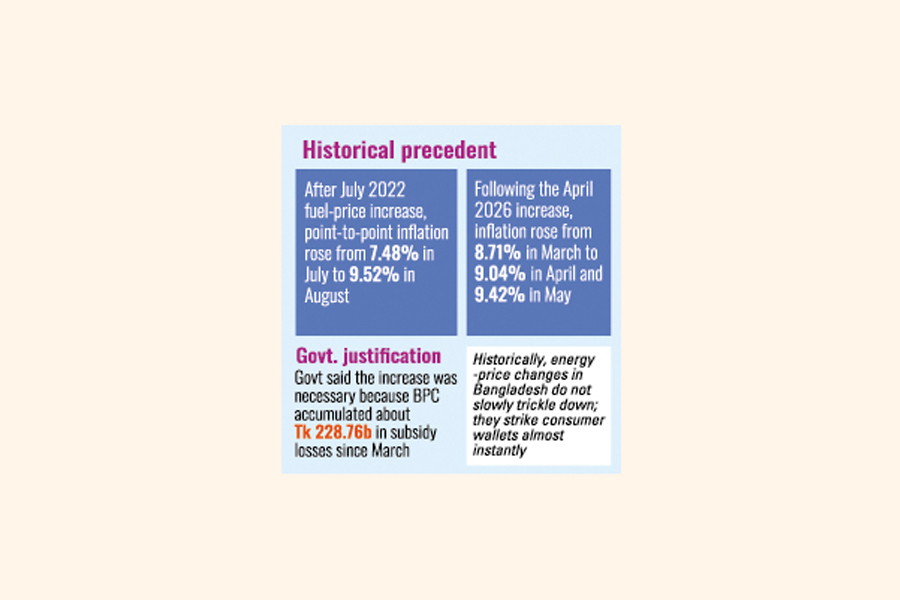
Laying out the perspective and rationale of the latest fuel price hike, the energy division said: "The ongoing war in the Middle East has caused a significant increase in the international prices of all types of petroleum products and freight charges since March 2026, and the upward trend continues." Although international fuel prices have more than doubled, the government refrained from increasing domestic fuel prices in the public interest since April. As a result, the Bangladesh Petroleum Corporation (BPC) incurred losses of approximately Tk 22,875.66 crore between March and August this year.
Fuel prices in neighbouring and other Asian countries are currently considerably higher than in Bangladesh, said the energy division. Diesel is priced at Tk 134.76 per litre in Kolkata, India; Tk 164.83 in Myanmar; Tk 161.24 in Nepal; Tk 179.42 in Sri Lanka; Tk 185.48 in Pakistan; and Tk 144.79 in the UAE. "The relatively low domestic fuel prices have created a risk of fuel being smuggled to neighbouring countries. The smuggling of petroleum products purchased with foreign currency earned through the hard work of Bangladeshi expatriates is not acceptable," said the division.
💰 BPC Loss Economics
At current international market prices, BPC is incurring a loss of approximately Tk 89 per litre on diesel. This translates into a daily loss of around Tk 109 crore. At this rate, the annual loss on diesel alone would reach approximately Tk 40,000 crore. According to the energy division, increasing domestic fuel prices by Tk 20 per litre, in line with prices in neighbouring countries, would reduce BPC's annual losses by around Tk 10,000 crore.
The government is also providing substantial subsidies to keep electricity and gas supplies uninterrupted amid the impact of the war on the LNG market. In this context, the energy division said there is no alternative to increasing fuel prices to sustain the government's social safety net programmes and prevent fuel smuggling.
⚠ Economic Impact: Inflation And Essentials Price Fears
Talking to The Business Standard, Dr Fahmida Khatun, distinguished fellow at the Centre for Policy Dialogue (CPD), said that the latest price increase seems to be another adjustment to a continuing external energy-price shock. "Nevertheless, increasing all major petroleum prices by the same absolute amount at once is a substantial policy intervention, especially when inflation and household financial pressure are already high," she said in her immediate reaction.
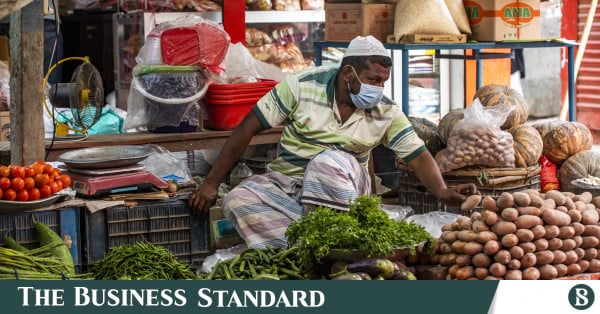
"The increase will have wide-ranging consequences. Individuals will face higher expenses for transportation. Even households that do not purchase fuel directly will be affected as transportation costs raise the prices of food and other essentials." The inflation transmission channel — fuel price hike → transport cost increase → food and essentials price rise → consumer inflation spike — is well-established in Bangladesh's economy, where road transport dominates the movement of goods from agricultural regions to urban markets.
🌏 Strategic Context: Energy Security And Fiscal Balance
For Bangladesh's broader economic management, the fuel price hike represents a difficult trade-off between fiscal sustainability (BPC cannot absorb Tk 40,000 crore annual losses indefinitely) and inflation management (the Tk 20/litre hike will feed into transport costs, food prices and industrial production costs at a time when inflation is already above 8%). The government's decision to raise all four fuel types by the same Tk 20 amount — rather than differential increases reflecting different international price movements — simplifies the communication but may not reflect the actual cost structure of each product.
The anti-smuggling rationale — that low domestic prices create arbitrage opportunities for cross-border fuel smuggling — is particularly relevant for border districts where diesel price differentials between Bangladesh and India can drive informal trade. By aligning domestic prices closer to Indian levels (diesel at Tk 135 in Bangladesh vs Tk 134.76 in Kolkata), the government narrows the arbitrage gap that has historically incentivised smuggling.
The coming weeks will reveal the inflationary impact of the Tk 20/litre hike — and whether the government's simultaneous social safety net expansion (Family Card, Farmer Card) can cushion the household-level impact for the most vulnerable populations. For Bangladesh's export economy, the fuel price hike raises industrial production costs at a time when export competitiveness is already under pressure from US tariffs and global demand softness — making the margin compression particularly challenging for RMG and textile exporters.
This news was originally published by The Business Standard. For the full original report, please visit: https://www.tbsnews.net/economy/energy/fuel-prices-hiked-tk20-litre-1548591
Related on BangladeshExport
📬 Get Bangladesh Trade News in your inbox
Weekly digest of export industry news, policy updates, and market analysis.
📰 Related Stories