Bangladesh Gas Supply To Improve Today: Chevron-Bapex Joint Drilling Agreed
LNG supply expected to rise from 764mmcfd to 950-1,000mmcfd as Excelerate FSRU resumes operation, while Chevron agrees to joint-venture drilling with Bapex in major policy shift

🔥 Industries struggling with gas shortages may get some relief from this evening as LNG supplies are expected to rise after a technical fault that disrupted ship-to-ship LNG transfer in July is finally fixed. The expected supply improvement — combined with the landmark agreement by Chevron to undertake joint-venture gas drilling with state-run Bapex — represents the most concrete progress on Bangladesh's energy crisis in months.
📊 LNG supply stood at 764 million cubic feet per day (mmcfd) as of 4pm yesterday. Energy ministry officials said the supply could rise to 950-1,000mmcfd from today. The 200-250 mmcfd supply increase would meaningfully ease the gas shortage that has constrained industrial production across Bangladesh — though full recovery to pre-crisis levels will require both FSRUs operating at full capacity plus adequate LNG cargo availability.
🤝 Chevron-Bapex Joint Drilling: Major Policy Shift
The meeting also brought another significant development for the country's gas sector. Chevron has agreed to drill new wells in a joint venture with state-run Bapex, according to businesses who attended the meeting. The agreement marks a shift from the US energy company's earlier position, when Chevron had denied that it would undertake such joint-venture drilling with Bapex.
The Chevron-Bapex joint drilling agreement represents a structural breakthrough in Bangladesh's domestic gas exploration strategy. Chevron operates three of Bangladesh's largest producing gas fields — Bibiyana, Moulvibazar and Jalalabad — under production sharing contracts (PSCs) with Petrobangla. The company has historically resisted calls for joint-venture exploration with Bapex, preferring to operate independently under its existing PSC framework. The shift in position — likely driven by both Chevron's commercial interest in expanding its Bangladesh footprint and the government's push for accelerated domestic gas production — opens the door for meaningful new production capacity from previously undeveloped reserves.
- 📊 LNG supply (4pm yesterday): 764 mmcfd
- 📊 LNG supply target (today): 950-1,000 mmcfd
- 📊 Excelerate FSRU capacity (post-repair): up to 600 mmcfd
- 📅 FSRU shutdown (July 21): Fire during ship-to-ship LNG transfer
- 📅 FSRU partial resumption: ~25 days after shutdown
- 📅 Second shutdown: August 19 (LNG cargo shortage)
- 🔍 Joint drilling: Chevron + Bapex (new agreement)
- 🔍 Bapex drilling rigs: 2 new rigs to be procured
- 🌏 Deep-sea exploration: International tender planned
- 💰 Furnace plant dues released: Tk 6,000 crore of Tk 14,000 crore owed
- 📊 Furnace plants generation: 3,000-3,500MW (capacity: 5,637MW)
🚢 Excelerate FSRU Repair And Resumption
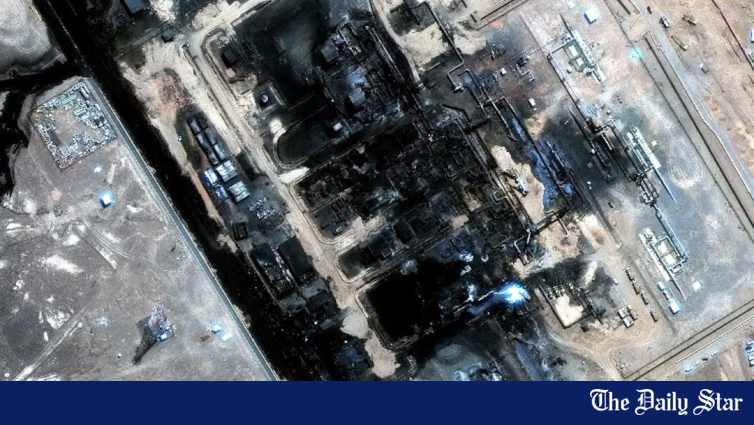
On 21 July, the FSRU operated by Excelerate Energy in Maheshkhali was shut down after a fire damaged its boiler-related system during an LNG ship-to-ship transfer. The terminal resumed partial operations about 25 days later but stopped supplying gas again on 19 August amid a shortage of LNG cargoes. Following repairs, the FSRU is now back in operation and can supply up to 600mmcfd of gas. Actual supply, however, will depend on LNG cargo availability and operational conditions.
However, BGMEA President Mahmud Hasan Khan Babu told TBS that the country's two FSRUs would be able to operate at full regasification capacity by Wednesday evening. It could take another three to four days for the increased supply to reach industries, he said. Even when both FSRUs were operating at full capacity, industries faced a gas shortage, Babu said. Business leaders have therefore proposed increasing generation from oil-fired power plants and shutting some gas-fired plants to free up gas for industries.
🌏 Deep-Sea Exploration Tender Planned
Bangladesh Chamber of Industries (BCI) President Anwar-ul Alam Chowdhury Parvez said the government plans to invite an international tender soon for energy exploration in deep-sea blocks. It is also reviewing why companies that bought tender documents in the previous round did not participate, he said. The reference to the previous tender's failure — where companies purchased documents but did not submit bids — underscores the structural challenge Bangladesh faces in attracting international oil companies (IOCs) to its offshore exploration blocks.
The government also plans to reassess capacity charges and introduce a "no electricity, no capacity charge" policy for power plants whose lease agreements have expired, Parvez said. The capacity charge reform — long demanded by energy sector analysts — would structurally reduce the fiscal burden of paying capacity charges to idle power plants, redirecting fiscal resources toward more productive energy sector investments.
💰 Furnace Plant Dues: Tk 6,000 Crore Released
Business leaders said the government has released Tk 6,000 crore of the Tk 14,000 crore owed to furnace oil-based power plants. The plants are currently generating 3,000-3,500MW against a combined capacity of 5,637MW across 53 plants. The Tk 6,000 crore partial payment — covering 43% of the outstanding dues — should enable furnace oil-based plants to purchase additional fuel supplies, supporting the proposed shift from gas-fired to oil-fired generation to free up gas for industrial use.
The remaining Tk 8,000 crore in dues will need to be cleared in subsequent tranches to fully restore the financial health of the furnace oil-based power plant sector. The Tk 14,000 crore total liability reflects the accumulated burden of capacity charges, fuel supply costs and energy purchase obligations that have built up as the government struggled to manage the power sector's financial position amid the broader energy crisis.
📜 Barapukuria Coal Mining Decision
The government has decided in principle to extract coal from the Barapukuria mine, he said. Before extraction, authorities will consult residents who need to be relocated. The Barapukuria coal mining decision reflects a pragmatic shift in Bangladesh's energy strategy — moving away from the previous blanket opposition to domestic coal mining that had constrained the country's energy options. The Barapukuria mine, located in Dinajpur, has estimated reserves of approximately 390 million tonnes of high-quality bituminous coal, which could support both domestic power generation and industrial use if developed responsibly.
🌏 Port Operations And Foreign Investment
Another business leader said the government is prioritising foreign companies to operate and manage the country's ports, with Invest Bangladesh working on the initiative. The reference to foreign port operation aligns with earlier reports that Bangladesh is considering engaging international terminal operators for major ports — a move that could improve operational efficiency and reduce the dwell-time issues that have constrained port throughput. The business community also raised concerns over the quality of services at Chattogram port. Government officials at the meeting, however, pointed out that the port operates round the clock and urged businesses to make greater use of its 24-hour operating capacity.
🤝 Broader Reform Agenda: Capacity Charges, Closed Factories
At the meeting, business leaders proposed running oil- and coal-fired plants while keeping gas-fired plants offline to free up more gas for industries. FBCCI administrator Fazlul said they recommended urgently ensuring full-capacity generation from these plants. Bankers opposed financing closed factories from a Tk 60,000 crore fund set up by Bangladesh Bank, while business leaders backed efforts to reopen viable factories, Fazlul said.
The disagreement over the Tk 60,000 crore closed factories fund — with bankers opposing financing on prudential grounds and business leaders supporting reopening of viable factories — reflects the structural tension between banking sector prudence and industrial recovery imperatives. The fund's effectiveness in reviving shuttered industrial capacity will depend on how this tension is resolved through clear eligibility criteria, viability assessment frameworks and risk-sharing mechanisms between the central bank and commercial lenders.
📜 Strategic Implications For Bangladesh's Energy Security
For Bangladesh's broader energy security strategy, the developments from the PM-business leaders meeting represent meaningful structural progress on multiple fronts. The Chevron-Bapex joint drilling agreement, the deep-sea exploration tender plan, the Barapukuria coal mining decision, the furnace plant dues release, the capacity charge reform proposal and the FSRU repair collectively address both the immediate supply constraints and the medium-term structural sources of Bangladesh's energy vulnerability.
If successfully implemented, these initiatives would meaningfully improve Bangladesh's gas supply position within 12-24 months — supporting the industrial production recovery needed to sustain export growth through LDC graduation. The Chevron-Bapex joint drilling agreement, in particular, could unlock meaningful new domestic gas production capacity from Chevron's existing fields, reducing the country's growing dependence on imported LNG. The coming months will reveal whether the announced initiatives translate into specific project commitments and measurable production increases — or whether they join the long list of energy sector plans that have failed to translate ambition into operational outcomes.
This news was originally published by The Business Standard. For the full original report, please visit: https://www.tbsnews.net/economy/energy/gas-supply-improve-today-chevron-agrees-drill-new-wells-bapex-1542821
Related on BangladeshExport
📬 Get Bangladesh Trade News in your inbox
Weekly digest of export industry news, policy updates, and market analysis.
📰 Related Stories